
Dieser Beitrag ist auch verfügbar auf:
Deutsch
Bis dato sind Projekte und Geräte oft noch ordentlich in Themenbereiche sortiert: Wir tauschen die Heizung, wir schrauben eine PV-Anlage aufs Dach, der Elektriker saniert die Elektrik. Vernetzt werden diese Themen selten. Das könnte sich nun mit KI ändern – und vor allem vereinfachen. By enabling the management and conservation of resources, as well as smart assistance solutions for older adults and people with disabilities, AI takes buildings to a whole new level: different departments are connected, and human needs are placed at the center.
“Sensors are actually ‘stupid’. They do recognize that a door has been opened – but is someone going in or out, or just standing in the doorway? It’s often impossible to tell,” explains Axel Albrecht, Managing Director of uCORE Systems. He won first place in the “Best Project” category of the Smarthome Deutschland Award 2024 with his “Clou” AI solution and the WoQuaZ residential and district center in Weiterstadt, Germany. The company had only received the SmartHome Award in the “Best Start-Up” category in 2023.
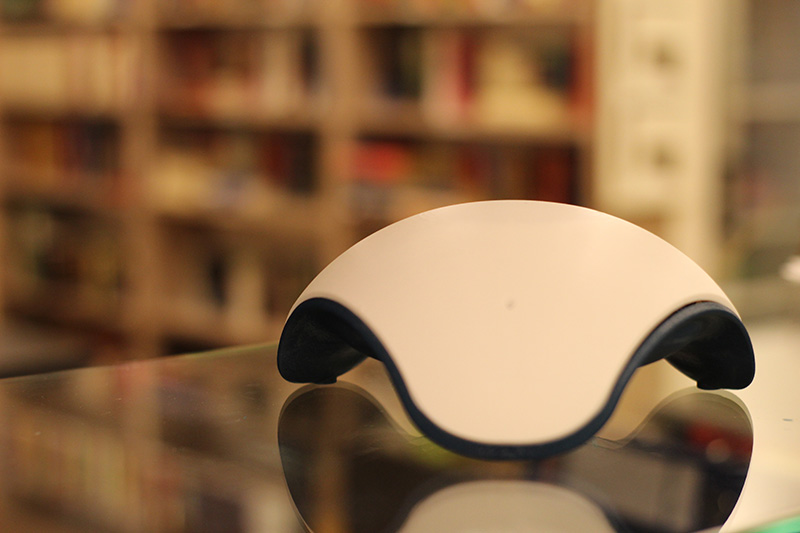
What does the “Clou” do? It links the information and functions of the existing sensors and devices in the home, combines them into an overall picture and thus works at the level of meaning. “It’s the thinking center of an apartment or house. It uses the device information to recognize critical situations and react individually tailored to the user,” says Albrecht.
Our interview partner Axel Albrecht is Managing Director of uCore Systems GmbH, which was founded in 2022 as a Fraunhofer spin-off with the aim of making IoT manageable in residential buildings. Together with the WoQuaZ residential and community center in Weiterstadt, Germany, he won first place at the 2024 Smarthome Germany Award in the “Best Project” category for the “Clou” system. Since 2014, WoQuaZ has been researching and developing the first applications in the field of assisted living. (Photo credit: uCORE Systems GmbH)
Alerting through deviation from routines – and resident feedback
The controller’s operating system is the result of 20 years of international development work in the Fraunhofer environment under the title UniversAAL-IoT. It controls everyday processes in a house or apartment based on the learned daily routine. The AI learns from individual user feedback: this enables it to detect behaviour and changes to it, optimize the system or react early to deterioration in mobility or behaviour that indicates dementia, for example.
In a new research approach, the “Clou” is now being expanded so that it recognizes deviations from routines and acts in accordance with resident feedback. This capability is at the heart of the Weiterstadt residential and district center: the senior citizens’ residence is the most modern in Europe and uses technology to help its residents remain independent in their own four walls for as long as possible.
Existing devices in the rooms are used as sensors, which are connected to the “Clou”. The system also networks historically grown structures: “Most houses are not new builds, and that’s a good thing. Houses are intended to be used for over 100 years. We bring the existing structures together or build and add new sensor technology that is individually adapted to the needs of the residents,” explains Albrecht.
Since the “Clou” software runs in the home and not in a cloud, privacy is maintained. Residents and their relatives can decide for themselves what happens to the data. “That’s something special, but it’s essential if you want AI to be accepted,” Albrecht is convinced. In a user study involving 150 users, an acceptance rate of almost 95% was achieved.
AI: The next big step
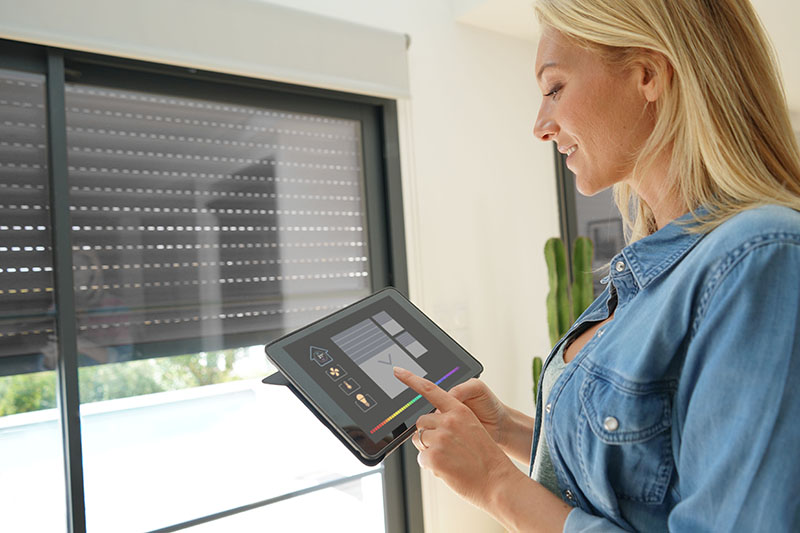
In addition to basic functions such as alarming and emergency detection, applications such as building control, which uses resources sparingly and energy efficiency are also basic functions. The “Clou” also recognizes when the existing automation of the devices needs to be optimized. One example: If the blinds are lowered automatically – to prevent the home from overheating, for example – the “Clou” detects if there are residents on the terrace and optimizes the automation by stopping it. The blinds are lowered so that people can come and go from the balcony door undisturbed.
Artificial intelligence could therefore achieve what has not been possible until now: connecting highly diverse systems within homes and buildings. AI doesn’t care what it controls—energy flows, assistance and alarm systems, or shading. An automated system can optimize our environment quickly and without our active involvement, better than we could ever do ourselves. It saves energy, ideally without sacrificing our usual comfort, because resources are used more efficiently. After all, as is so often the case, we don’t think to actively turn down the heat when we leave the house. This also makes it easier to use the home’s own energy supply—which includes a solar PV system combined with a storage unit and other energy-intensive household appliances—in a way that’s easier on the wallet.
Care no longer feasible without technology support
In addition to high building costs due to high energy and living costs, the issue of care is high on the agenda. In view of the shortage of nursing staff, AI-supported assistance systems are becoming increasingly urgent. In Germany alone, there will be a shortage of over 3 million homes suitable for the elderly and over 600,000 care workers by 2030. Figures that could not be more dramatic – with major consequences for those in need of care and their families.
More information about the “Clou”: https://www.ucore-systems.com/produkte/
Author: Anja Herberth
Chefredakteurin