Dieser Beitrag ist auch verfügbar auf:
Deutsch
After the attack on a power supply line in Berlin, the analysis and the crucial question began: What worked – and what didn’t? And who – which organizations and target groups – urgently need to improve their preparation?
Because crises do not affect everyone equally. For some, a power cut is ‘unpleasant’. It means cold, growing insecurity the moment you realize how many things you take for granted are dependent on electricity: In addition to heating, hot water, stove, toilets, light, elevator. And – very quietly, but decisively – the feeling of control disappears. For households where care is provided at home, these incidents can quickly become existential: Medication, equipment, routines, communication – many small building blocks must interlock reliably. If this chain breaks, an incident quickly becomes an emergency.
We have therefore researched which tools, checklists and information services already exist for households with care and support needs – and what lessons have been learned from the crises of recent years. Our aim is not to produce the next guidebook or checklist, but to provide context and orientation: to bundle, categorize and prepare existing information so that it can be found quickly and used in everyday life. If we want to be better prepared, we need to better connect the existing knowledge and make it easier to understand where it counts in an emergency.
Because one thing is always clear after crises: a lot is there – but not visible enough. There is also not always enough awareness that preparation is needed.
We have conducted several interviews with experts from Germany and Austria and have therefore decided to make the individual interviews available for in-depth study in addition to a summarizing section. After all, in addition to very central points that everyone considers to be particularly essential, it is the different perspectives and details that make an overall picture possible.
Our interview partners
Crises do not affect everyone in the same way – which is why crisis prevention needs to be adapted to the very personal reality of life.
Our interview partners explain the context – and what you need to pay particular attention to as a household carer.
However, we have also summarized the key statements from the interviews for you – as a compact overview of what really counts in crisis preparation and which correlations you should keep in mind:
It’s not always the big crises: There are always small regional outages
It’s not always the major power outages that cause the lights to suddenly go out or the heating to stop working. When the distribution box around the corner has a problem, floods, storm damage, snow loads: there are always smaller regional outages. And that’s exactly what you need to be prepared for.
Resilience arises where the preparation matches the personal situation
Resilience does not mean invulnerability – i.e. not the 100% perfect defense against every crisis. Resilience means remaining capable of acting in the face of disruption: Improvising, adapting and not succumbing to fear or excessive demands. It also means knowing your own network – family, neighbors, regional contact points – and knowing how organizations work in an emergency and where you can get support.
All of this is often only mentioned in general guides. They are a valuable guide, but something else is crucial: preparation only works if it fits your personal situation and environment. What conditions shape my everyday life? Is there support nearby – or am I on my own? Does my family work locally or commute, and how quickly can they be there in an emergency? Do I live in an apartment or a house – what consequences can I expect in the event of a power cut to the elevator, heating or water supply? Do I know my neighbors and is the contact strong enough for someone to check on me in an emergency?
This individual tailoring is also needed for medication and supplies. People with illnesses in particular are dependent on regular income. In crises, improvisation is limited, especially as pharmacies and supply chains can themselves be vulnerable to power outages due to automation and digitalization. It therefore makes sense to have a small reserve for at least a few days.
And the same applies to food: individualization beats theory. Who knows what can realistically be prepared from 10 kilos of flour and 5 kilos of lentils on the gas hob in a stressful situation? The pragmatic approach is usually the best: buy a little more of what you already eat and tolerate well. Store according to the “first in, first out” principle (new items at the back, older items at the front) so that nothing spoils. Also focus on foods that can be prepared quickly with little energy – pasta and rice are often more practical than dishes that take a long time to cook or need to be baked in the oven. This ensures a stable supply even when everyday life and infrastructure are temporarily disrupted.
Basically: network & relationship before equipment
In rural areas, support networks are often a matter of course and closely interwoven with everyday life. While it is not uncommon to be lost in anonymity in cities, such support structures are crucial in rural areas, e.g. to compensate for gaps in care and infrastructure. Mutual support is a key prerequisite for quality of life and safety. Neighborhood help also showed what it can do during the major power outage in Berlin: People played cards together by candlelight, invited their freezing neighbors into apartments where a fireplace provided soothing warmth. People were invited to take showers and do laundry.
The personal network helps when everyday life suddenly becomes chaotic. Therefore, not all older people are automatically at particular risk, but those older people who do not have a care service, relatives or neighbors looking after them. This network is built up in good times, in everyday life. The basis for this is the conscious thinking of others, as Nicolas Tobaben explains: “If each person only thinks of themselves, they haven’t thought of everyone. Only when a few people consciously think about others does it become truly sustainable.” The more anonymous and dense the structures, the more neighbourhoods have to be actively organized and they no longer emerge on their own.
This not only applies to informal networks: in professional structures, too, the network is crucial to how smoothly the cooperation and communication between organizations functions in a crisis.
The older generation is often more resilient than the younger generation
Resilience does not manifest itself in times when everything is running smoothly. It manifests itself when the system is already shaky – and we still find a way to safeguard the essentials. The interviewees tell me that end consumers hardly do anything preventively. Not because it’s unimportant, but because preparation takes time, money and attention. And because no one knows for sure whether preparation will ever be needed – especially in times of peace, when stability is taken for granted.
Prevention has a communication problem: it does not reward immediately, it demands now and only ‘pays off’ later. This is precisely why we are so often inadequately prepared when a disruption suddenly turns into a crisis.
The older generation is often physically and medically more vulnerable, but has a decisive advantage here: they have already experienced a lot. Many people lived through the Second World War as children and grew up under hardship and great challenges. As a result, the older generation still knows tips and tricks and in some respects seems more relaxed and prepared than the younger generation. For example, many still have radios in the cellar that can be operated with batteries.
Resilience is structured very differently in the regions
The discussions made one thing very clear: resilience varies greatly from region to region. What is everyday life in one area can immediately become a problem elsewhere – a few centimetres of snow is often enough to cause chaos in cities, while in ski regions the same weather conditions are more likely to be seen as welcome fresh snow.
Added to this is the federal organization of crisis management in Germany and Austria: responsibilities, guidelines and preparation logics lie largely with the federal states. In practice, this means that different rules, concepts and procedures apply depending on the federal state – both in terms of prevention and in the event of a crisis.
Structure instead of the principle of hope
Neither Germany nor Austria has a nationwide care register that would allow emergency services to quickly identify where people in need of support live at home in the event of a crisis. Information is often stored decentrally by care organizations – and it is precisely there that it can be difficult to access in the event of power outages or system malfunctions in an emergency. People who have not yet been registered because their everyday lives still function without formal support can easily be overlooked in a crisis.
However, there are voluntary approaches, such as the international directory emergencyregister.eu or local models such as a voluntary care register in the German district of Wesermarsch (for people from care level 3). Apart from such solutions, however, official, complete registers are legally tricky – especially due to data protection and the GDPR. As a result, emergency services often do not know where help is needed particularly quickly at the start of an incident.
There is also a need to catch up in disaster care. While emergency services, the armed forces, civil protection and disaster control usually work in a clearly structured manner, civilian health and care structures – such as long-term care and mobile care – are often less systematically prepared for crises. In many places, there is a lack of clear roles, coordinated processes and interfaces capable of coordination.
Although there are a few specialists with the relevant specialist training, there is often a lack of overview: Who is qualified, where does this person work and how can they be contacted in an emergency? This is precisely where the profile of the disaster nurse comes in: They coordinate within facilities in the event of a crisis, link care and operational structures and translate between the different logics and responsibilities.
When crisis events – such as extreme weather – become more frequent, spontaneous improvisation is no longer sufficient as a system principle. What is needed is the ability to plan and train for action: clearly defined roles, practiced interfaces and people who, in the event of an incident, don’t have to organize but can coordinate immediately.
If you would like to delve deeper: We are also making the individual interviews available in full length to accompany this concise overview. After all, it is only in detail that it becomes clear how different perspectives, practical examples and priorities are – and which concrete steps can be derived from them for your own everyday life. Take your time: each interview adds nuances to the overall picture that are inevitably lost in a summary – and this is often where the greatest benefit lies.
Nicolas Tobaben explains why older people are not automatically the most vulnerable in a crisis. Rather, it is mainly those who live alone, have no relatives nearby, do not yet use a care service and have no one to look after them.
In rural areas, neighborly help is often taken for granted, whereas in urban areas many older people live in isolation. In these areas in particular, crisis prevention only becomes viable when people consciously think about others – because the more anonymous and dense the structures, the more actively neighbourhoods need to be organized. Click here for the interview
For all those who – like us – honestly don’t know what to do with 10 kilos of flour and 5 kilos of lentils on the gas stove in a crisis: This interview is a real lifeline.
Christoph Sterbenz explains how a family emergency plan works, why crisis preparedness must always be tailored to your own life situation and why older people in particular should have a personal network behind them. He explains to us which mindset helps in the event of a crisis and how to organize stockpiling in such a way that it also works in a crisis. Click here for the interview
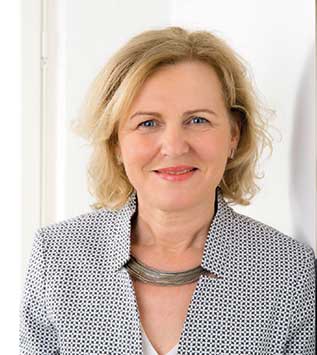
Elisabeth Potzmann pleads for more well thought-out structures – instead of following the principle of hope. The armed forces, the emergency services, civil protection and disaster control are excellently trained – civil health and care structures, such as long-term care and mobile care, are in a much worse position.
For this, there is the profession of disaster nurse. However, these specially trained people are not yet anchored in the civilian care structure. In addition, there is no register of nurses (neither in Austria nor in Germany): The emergency services do not know where people are who need acute help in a crisis. Furthermore, crises are not always large-scale, but also personal: there is often a lack of structures for transitional care, but there is movement in this area. Click here for the interview
Sr. Cornelia is not only responsible for the crisis management of her community: she contributes experience from German nationwide project groups for crisis prevention and is a founding member of the German Federal Initiative for Networked Emergency Response.
We talk to her about simple, everyday measures to prepare older people for a crisis without overwhelming them – and where they can get help. She also emphasizes the importance of networking – for older people, especially those with dementia, but also for organizations such as care facilities and outpatient care services. A concept is only resilient if it is clarified in advance who will cooperate with whom in an emergency. Click here for the interview
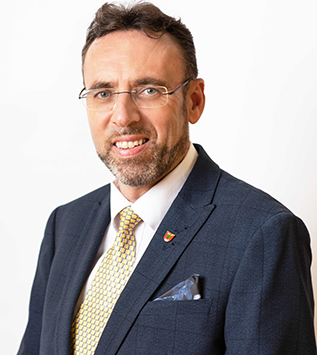
Christian Gamsler explains how the federal state of Carinthia built up regional resilience – after it was discovered in 2016 that provisioning structures had been greatly reduced and outsourced due to the long period of peace.
To enable the regions to help themselves if help cannot arrive immediately, community centers and schools in the regions were designed as crisis contact points and mobile emergency power generators were promoted. An emergency power supply was also made mandatory for care and nursing facilities.
And he also advises the 3 C’s: Know people in times of crisis. You can’t survive the crisis without networking – neither for end consumers nor for professionals. And they are built up in good times. Find out more
Author: Anja Herberth
Chefredakteurin