Dieser Beitrag ist auch verfügbar auf:
Deutsch
Our interview partner Christian Gamsler is the deputy disaster prevention officer of the Carinthian state government. The militia officer talks to us about why public and private care structures have been gradually cut back in recent decades – and which “lighthouse” projects Carinthia is now using to take targeted countermeasures. He also explains why the General Data Protection Regulation makes it considerably more difficult to obtain a reliable overview of people in need of care and support in practice.
SBC: The Berlin blackout at the beginning of January: As an expert, how do you assess the situation and what lessons should we learn from it?
Gamsler: First of all, I would like to clarify: It was a power failure – not a blackout. The term ‘blackout’ is used very quickly in everyday life, but technically it means something else. According to the usual definition, a blackout is a large-scale, supra-regional power failure – sometimes transnational, in extreme cases with effects extending to large parts of Europe. That was not the case.
What happened: A regionally limited power outage triggered by a targeted terrorist attack with massive consequences for the affected region. But a blackout looks different. I’m not saying this to relativize, quite the opposite: The effects of a regional outage can be dramatic for the households affected. But we should use the terms correctly because they describe different scenarios and also different precautionary measures.
And perhaps that is precisely what we are learning: Many people call it a ‘blackout’ when the local substation fails. From a technical point of view, this is just a power failure – but it shows how dependent we are on a functioning infrastructure.
>> From a technical point of view, this is just a power cut – but it shows how dependent we are on functioning infrastructure. <<
In Carinthia, we therefore made a conscious decision back in 2016 to sit down with the disaster management department and other organizations and ask ourselves an honest question: Would we even be able to help in the event of a prolonged power outage, or would we need help ourselves? The answer was sobering: We realized that in many areas, we were not as well prepared as we would have liked to be. Over the last 30 to 40 years, during which we in Europe have been living relatively peacefully, public and private contingency planning structures have been increasingly scaled back because they were simply no longer considered necessary. There were no major crises, no wars.
I see this pattern not only in Austria, but also in Germany and elsewhere. And that is also where the risk picture has changed: Those who outsource or reduce resources for a long time will only notice what is missing when a crisis hits. A concrete example: Carinthia was the last federal state to remove the mandatory construction of shelters as a requirement in its building regulations back in 1997. Since then, shelters have no longer been mandatory. If someone asks us today how many shelters there are in Austria, we have to be honest and say that there are certainly still some old ones. However, there is no longer a comprehensive and systematic shelter infrastructure. This shows very clearly how priorities have shifted over the decades.
SBC: What crisis situation do you currently see for a province like Carinthia?
Gamsler: When I look back, 2016 was such an `aha´ moment for many of us. At the time, we realized that many areas had been silently outsourced or dismantled across the structures over the years. Things that used to be taken for granted had become unnecessary over time – or we thought so. And to be honest, hardly anyone talked about it for a long time. The topic simply didn’t exist.
Then came events that changed the picture: The Covid pandemic, selective power cuts and recurring discussions about the stability of supply in certain winter phases. Suddenly it became clear that an energy system is not just a question of peak power, but of continuous load. Renewables provide a strong supply – but are dependent on wind, sun and water. If several factors are weak at the same time, sources are needed that can reliably step in. And it is precisely these debates that have become very real in recent years.
What always surprises me is that much of this information is publicly available—but hardly anyone looks at it. A good example is the APG Power Monitor where anyone can see the current situation in the electricity system, where the electricity is coming from and when the system is under particular strain. And yes: There are phases in which it is clearly communicated that the system is under heavy strain and that load shifting will help. In other words, electricity should only be used more intensively again when there is less load on the grid. These are not secrets, but this information rarely get through in everyday life.
And that is precisely why we have started to gradually increase our focus on the topic: Not as scaremongering, but as realism and to improve our ability to act.
And perhaps that’s my most important point: I’m not afraid of the big scary scenario of people starving to death or dying of thirst in a power cut. What worries me more is something more down-to-earth: That we have relied too long on ‘it will work out’ – and overlooked how quickly systems can reach their limits when many small factors coincide. Resilience means seeing this soberly – and drawing practical conclusions from it.
SBC: What does the phrase “we need help ourselves” mean in a crisis? What does that mean for a province like Carinthia?
Gamsler: My line manager has worked hard on the health issue. And that’s precisely why we deliberately planned two blackout exercises in Carinthia in 2019. We ran through this as a simulation game – together with the district of Klagenfurt-Land, among others. I myself come from Ferlach, and there is a district retirement home there. We assumed in the scenario: There is no emergency power supply – and we have to evacuate 20 care beds.
In the course of this exercise, we discovered that there is not even the transport capacity in the whole of Carinthia to move 20 people from care beds in the medically and organizationally correct way. These capacities are simply not available. And at that moment it was clear: We have a real issue.
It became even clearer when the reflexes set in during the simulation: Doctors and facilities said: ‘Then we’ll take everyone to the hospital in Klagenfurt.’ At the same time, the hospital said: ‘We’ll send everyone we don’t absolutely need in the hospital home.’ Suddenly we had a completely absurd picture in the simulation – the worst place was the intersection at the hospital, because many people were streaming in and out at the same time. You realize very quickly that ‘blackout= everyone goes to hospital’ doesn’t work.
And that brings us to the core: In a real blackout – i.e. a large-scale, prolonged outage – you cannot assume that help will come from outside. If an entire federal state is affected, then all districts need their own power generators, their own resources, their own forces. Every organization, every company, every institution will first fall back on what they have themselves. This means that you have to remain capable of acting locally – because no one from outside can step in quickly.
>> You have to remain capable of acting locally – because no one from outside can step in quickly. <<
This is precisely why Berlin is an important comparison for me: one region was affected there, but forces and support from unaffected areas could be brought in. The logic is completely different for a large-scale outage – and that is precisely why we make such a strict distinction between a regional power outage and a blackout: not because one is harmless, but because the deployment and supply plans are completely different.
And another point that is often overlooked: In the end, a lot depends on the municipal level. Mayors and municipalities are the first line of responsibility in an emergency – with all the consequences. The district and state intervene to provide support, but always under one premise: Personal responsibility does not fall away.
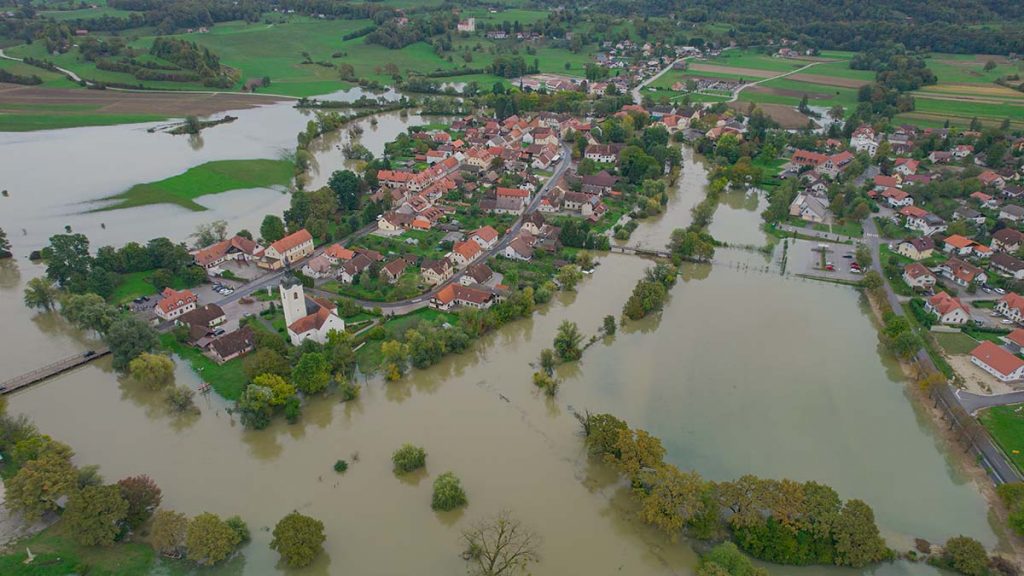
SBC: What I noticed during the interviews is that the regions are very differently prepared for crises. Carinthia is a federal state with many crisis operations: There are floods in summer and a lot of snow in winter. There is a lot of crisis practice. When we were affected by flooding in the Vienna area in 2024, we were completely unprepared.
Gamsler: We tick a little differently. If it snows half a meter in the Carinthian Gailtal, the world doesn’t end there. The Gailtal people are relaxed and happy because it’s great snow for the snow regions.
>> I have a mnemonic: In a crisis, the three ‘Cs’ count: Knowing people in a crisis. <<
I have a mnemonic: In a crisis, the three ‘Cs’ count: Knowing people in a crisis. Or to put it more casually: in a crisis, what counts is that you know the right people – before things get serious. Because then it’s no longer the perfect checklist that counts, but whether you can get to the right contacts quickly and keep distances short. Responsibility is also important here: in Austria, disaster control is primarily a state matter, not a federal one. There are only a few real ‘federal disasters’ – such as a pandemic, animal diseases or radiation protection issues. A large-scale blackout could fall into this dimension, but then it would also be clear that coordination alone is not enough because no one from outside can help so quickly.
This is precisely why we have had to rethink our approach: Shifting responsibility does not work in a crisis. When traffic lights break down, roads are blocked and infrastructure is shaky, help does not automatically arrive where it is needed. So local resilience must increase.
In Carinthia, we have therefore focused specifically on nursing and care facilities. Together with operators, municipalities and private providers, we have launched an initiative to significantly improve the emergency power supply in inpatient facilities. Carinthia has around 78 residential and care facilities for the elderly, where coverage with inpatient emergency power solutions is now almost universal.
In addition, the Carinthian building regulations were adapted: For new buildings and major conversions of nursing and care facilities, an emergency power supply is mandatory – at least in the sense that the technical connections must be prepared. This does not always have to be a permanently installed generator, but the infrastructure must be designed in such a way that an emergency power generator can be safely connected.
Daniel Fellner, we implemented the “Lighthouse” campaign together with the Carinthian municipalities. And this is currently an area in which a great deal of positive development is taking place – the campaign is still ongoing. We currently have 152 lighthouses in all 132 Carinthian municipalities. This is not just a concept on paper: you can even track these locations online – via the disaster control map in Carinthia’s KAGIS, the province’s geo-referenced system.
>> We currently have 152 lighthouses in all 132 Carinthian municipalities. This is not just a concept on paper: you can even track these locations online – via the disaster control map in Carinthia’s KAGIS, the province’s geo-referenced system. <<
The idea behind it is simple: the state has provided the municipalities with financial support to purchase mobile emergency power generators – specifically where a real point of contact can be created in the event of an emergency. The municipalities have registered suitable facilities for this purpose: For example, community centers, schools or cultural facilities that have a kitchen and are barrier-free, WCs and ideally also offer shower facilities. A large proportion of the costs for the mobile units were funded for these locations – and this is how this lighthouse network was created.
Why mobile? Because of the flexibility. Stationary systems are fixed where they are installed. Mobile units, on the other hand, can be moved to wherever they are needed. And that makes a huge difference in practice: if one community is doing well and a neighboring community is doing badly, you can provide support – that’s almost impossible with stationary solutions. That was the core of the concept, and it works.
SBC: Round 80% of people in need of care are cared for at home. How are family caregivers specifically considered and integrated into crisis prevention – are there already structures or concepts in place?
Gamsler: That is a very central question. And yes, this is precisely where we have clearly reached our limits. We recognized the problem early on and it became clear to us again and again in exercises and discussions: There is no reliable, data protection-compliant overview of where people in need of care and support are located and who is particularly vulnerable in an emergency. We have tried to connect to various sources – such as health insurance structures – but the data is available in different forms, is not centralized and is not easy to use due to the data protection situation. In short, we failed because of the data protection constellation.
>>There is no reliable, data protection-compliant overview of where people in need of care and support are located and who is particularly vulnerable in an emergency.<<
An example that makes the dimension tangible: My supervisor at the time familiarized himself with this topic and made phone calls throughout Austria. He came across a figure that many people underestimate: There are around 3,000 people with home ventilators in Carinthia. And that immediately makes it clear what we are talking about: These devices are not “nice to have”. These households have spare batteries at home for crises, but in the event of a prolonged power cut, this quickly becomes existential.
That’s why we work with a time horizon of 72 hours. In disaster management, this is seen as a kind of limit to what can still be managed in a reasonably structured way. After that, it becomes very difficult to keep order and supplies stable. Why exactly 72 hours? One reason is that the electricity industry often assumes that it will be able to restore the supply within 24 hours – at least for classic technical faults. But this is only realistic if there are no targeted attacks on infrastructure. An attack like the one in Berlin changes the rules of the game.
At the same time, a distinction must be made: Regionally limited outages can be handled differently because support from unaffected regions can be brought in. A blackout in the true sense – i.e. over a large area, several regions at the same time – is a different situation: then everyone is in the same boat, resources are scarce everywhere and outside help does not arrive as quickly as one would wish.
And this is precisely why the issue of family caregivers is so explosive: we know that they provide the majority of care – but we do not automatically have a resilient structure in place to reach and support these households in a targeted manner in an emergency. This is a real gap that we need to address if we are serious about resilience.
SBC: What advice would you give family caregivers? What is the most important thing they should have prepared for a crisis?
Gamsler: The greatest risk for individuals lies in medicines and, above all, specialty medicines. Because certain medicines that people urgently need are not available in stock during a crisis or can’t be picked up anywhere quickly. If transport, communication and logistics are all disrupted at the same time, this is simply not possible.
This is precisely why, in my view, this is one of the most dangerous gaps in the healthcare sector: What someone needs individually is often exactly what cannot be stored, cannot be replaced and cannot be procured at short notice. And as a family caregiver, you are just as affected by this: You get lost in the chaos when suddenly many things stop working at the same time.
>> What someone needs individually is often exactly what cannot be stored, cannot be replaced and cannot be procured at short notice. <<
A second blind spot that we see again and again: Mobile care and support in crisis mode. Today, many processes depend on cell phones: tours, documentation, contacts. A smartphone does not work reliably in the event of a breakdown. In practice, this means that printouts, clear paper backups and simple routines are needed. Otherwise, nobody knows who has to go where, who needs which medication and who is prioritized.
And yes – the frustrating thing is that as long as nothing happens, hardly anyone does anything about prevention. This applies not only to citizens, but also to organizations. Only once it has really hurt does the willingness to prepare increase. But even then, too little is often done consistently. Prevention is simply inconvenient as long as the benefits are not immediately noticeable.
We are therefore trying to tackle the issues that are realistic: For example, with solutions that work in everyday life – and with agreements that do not depend on digital infrastructure in an emergency. There are also concrete steps in cooperation with professional associations – doctors, pharmacies – to make at least basic care more practicable. But you have to be honest here too: This works in household quantities, not as a full supply in a prolonged crisis.
And that is perhaps the most important sentence: You will never be ‘finished’. The deeper you go, the more you discover. But that is precisely why every step that increases your ability to act is worthwhile – especially for those people who are dependent on medication, care and stable routines.
Thank you for the interview!
This way:
Author: Anja Herberth
Chefredakteurin