• de Deutsch
  • en English
Smart Buildings Compass
  • Home
  • Living
  • Building & Renovation
  • Everyday aids
  • Care
  • Dementia
  • Health
  • Finance & Planning
No Result
View All Result
  • Home
  • Living
  • Building & Renovation
  • Everyday aids
  • Care
  • Dementia
  • Health
  • Finance & Planning
No Result
View All Result
Smart Buildings Compass
No Result
View All Result
Home Dementia

How can we protect people with dementia from deception and fraud, Raphael Schönborn?

Our interviewee: Dementia expert Raphael Schönborn (Credit: Miriam Eberhard)

Our interviewee: Dementia expert Raphael Schönborn (Credit: Miriam Eberhard)

This article is also available in: Deutsch

In a new series, we’re focusing on safety issues, deception, and fraud targeting older adults. We’re starting with an article that outlines the unique challenges associated with dementia.

After all, when people talk about fraud targeting older adults, most think of fake police officers on the phone or strangers who use a made-up story to gain access to their homes and assets. However, according to experts, the greater danger for people with dementia often lies elsewhere: namely, within their own social circle and family. In situations where dependence grows and hardly anyone from the outside is able to see what’s going on.

You might also be interested in

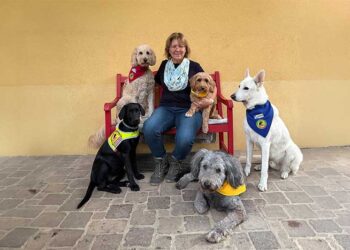
Our interviewee: Assistance dog trainer Birgit Monschein (Credit: Birgit Monschein)

How does a therapy dog help people with dementia maintain everyday skills, Birgit Monschein?

20. November 2026
Our interviewee: End-of-life caregiver and emergency chaplain Frank Pape (Credit: Ein Lächeln für Dich e.V.)

How can family members support someone who is dying, Frank Pape?

20. November 2026
Our interviewee: Assistance Dog Trainer Alexandra Schemm (Photo credit: Private)

How can assistance dogs help older adults, Alexandra Schemm?

10. October 2026
Get dressed yourself without struggling with the buttons: simply overlap the fastenings – and you’re ready to go. Credit: Yorokani

Getting Dressed in Seconds: How Magnetic Clothing Helps Older Adults Stay Active

11. June 2026

Raphael Schönborn is the executive director of the dementia initiative and expertise platform promenz; he works with people living with dementia and their families. In this interview, he explains why people with dementia are not the most reliable sources of information, why concealment is a form of self-protection, and what family members and caregivers can do if they suspect something is wrong.

Header SBC English

What to Expect in This Interview

  • Why people with dementia hide their lapses and sometimes blame others for them,
  • why a diagnosis of the disease is necessary to provide clarity and, consequently, peace of mind,
  • why the risk of fraud and exploitation is more likely to come from within the family than from outside,
  • how a lasting power of attorney for financial matters protects against financial loss, and
  • which organizations in Austria you can contact if you want to report a case of abuse.
SBC: Mr. Schönborn, when we talk about fraud and deception targeting older adults, many people first think of fraud from outside sources. Fake police officers, scammers who gain access to their homes and assets. You say that when it comes to people with dementia, we also need to look at the issue from the other side. What do you mean by that?

Schönborn: Older adults are more vulnerable and need protection from fraud and deception. Of course, I fully agree with that. But when it comes to protecting people with dementia, we also have to take the disease and its various aspects into account.

For example, people with dementia often say that they’ve been robbed, that strangers were in their home, or that someone broke in. Then it turns out that none of that happened. Instead, they’ve misplaced or lost something, or they can’t remember something. These are defensive statements they use to frame their own mistakes in a way that makes it seem as though they themselves are not responsible.

SBC: Such accusations can have drastic consequences for caregivers as well as family members and loved ones, because they are suddenly suspected of theft.

Schönborn: If you ask the staff at residential care facilities, this happens time and time again. And in 24-hour care, it’s a huge problem because the agencies, of course, always have to investigate such suspected cases. Even if they don’t know whether there’s any truth to the accusation, it’s a delicate situation every time. After all, trust in the caregivers is absolutely essential. If you can’t trust a caregiver, you can’t place them with a client.

It’s important to understand that people with dementia don’t make these accusations out of malice. It’s a defense mechanism they use to protect themselves from acknowledging that they have dementia and are increasingly losing control over themselves. Anyone who has forgotten, misplaced, or hidden something would have to admit that something is no longer right with them—and that they are no longer the person they used to be. Many people cannot and do not want to accept this.

That is why things are hidden and concealed. It is a form of self-protection, just as we all protect ourselves from things in one way or another.

People who are becoming increasingly forgetful and are reluctant to admit that they have dementia tend to respond with defensive statements. It is a defense mechanism that can, however, cause significant problems for those who are wrongly accused. (Credit: Shutterstock)
SBC: What does this mean for the protection of those affected?

Schönborn: That’s why a conscious effort to address the issue is necessary. Educating people about the condition and assessing it provide clarity—and thus a sense of security. Only when you know what the condition is and where the deficits and difficulties lie can you effectively support the person and also identify potential risks.

SBC: What specific questions arise in this context?

Schönborn: For example, how banking matters are handled, legal capacity in general, and, of course, mental responsibility. And then there’s the question of how to protect people who are dependent on those around them and are therefore more vulnerable. Depending on the nature of that environment, this is precisely where the danger lies with dementia: because people are at the mercy of their social environment.

SBC: So you’re saying that the greatest danger for people with dementia doesn’t come from outside.

Schönborn: When people think of fraud, they always look outward and consider malicious strangers to be the greatest source of danger. I believe that the danger within the family and one’s own social circle is much, much greater. The more people with dementia are weakened by their condition, and the more their dependence increases, the greater the risk that family members or caregivers will enrich themselves at their expense.

They withhold information from them, empty their bank accounts, or siphon off the money in other ways. Vulnerable people are at risk of becoming victims. And it would be naive to believe that it’s always just “them.”

I am convinced that, upon closer analysis, the statistics would be very similar to those for sexual abuse: here, too, the danger rarely comes from outside and much more frequently from within families—from one’s own family systems. Of course, that doesn’t mean it can’t also happen from outside.

SBC: Are there any instances of deception or fraudulent situations that you would like to highlight in this context?

Schönborn: I keep hearing that care and support arrangements are being maintained even though they have long since ceased to be appropriate and no longer provide the best care for those affected—all to save money on care services. Assisted living or 24-hour care is less expensive than full-time residential care in a nursing home, a senior living facility, or a nursing clinic. Anyone admitted there as a self-paying patient pays the full amount.

This form of deception or fraud primarily affects people with assets.

SBC: Why does something like this often go undetected?

Schönborn: Because very few people are involved in these systems when it comes to home care. There might be a care service and the family members. But you usually don’t see what’s really going on there.

People always say: Systems need breathing room. Because if they have little breathing room, there’s a risk that abusive situations will arise. An outside perspective also serves a monitoring and protective function, because it makes it harder for people to be tempted into fraudulent behavior.

In a care facility, there would be many more people who could witness such a situation. The rule is always: The more dependent a person is, the greater the risk of abusive behavior or even fraud.

SBC: What about phone scams, such as those carried out by fake police officers or people claiming to be relatives? Hardly anyone is immune to that.

Schönborn: For this interview, I asked our supporters if something like this had ever happened before. And no one had heard of this being an issue for people with dementia. That doesn’t mean it never happens. After all, as I said, people with dementia aren’t always the best sources of information about things that have just happened.

I suspect, however, that people without cognitive impairments are more at risk in these situations. A person with dementia is often more suspicious because they need to protect themselves cognitively to a greater extent. And they’re more likely to shut out anything that seems unfamiliar or strange.

I also wonder how a woman with advanced dementia could suddenly give someone 30,000 euros. I can hardly imagine that she’s still capable of making bank transfers. Or that she has 30,000 euros hidden at home, still remembers where it’s hidden, and would give a stranger access to it. To me, this seems more like a sensational headline than a realistic scenario when it comes to dementia.

SBC: What measures can help protect people with dementia from this type of fraud?

Schönborn: This is again a matter of planning ahead. If someone has dementia, a lasting power of attorney should be established as early as possible and activated as soon as the person is no longer legally competent. Then only the authorized, trustworthy person can access and manage the account. And those affected can no longer authorize large sums of money on their own.

SBC: Who can you contact if you suspect a problem?

Schönborn: It always depends on the specific circumstances. In Austria, the Ministry of Social Affairs is generally a good point of contact, especially when it comes to adult representation, expert opinions, or 24-hour care. For 24-hour care, there is a quality assurance programme with on-site visits, and in cases like this they can also check the situation in person.

It’s also important to know where the person lives, because local municipalities are responsible as well. In Vienna, that’s the Vienna Social Fund (FSW), and you can simply call the FSW’s care counseling hotline and say, “Listen, I’m worried about my neighbor and I have a suspicion.” They’ll certainly be able to help you there, and the FSW also has a complaint management system.

In Tyrol, every district has a home health care service you can contact. In other federal states, the local municipalities can provide information on which department is responsible.

However, when this happens within the family, it’s very difficult. In such cases, the VertretungsNetz is an important resource. If you suspect that family caregivers are endangering the well-being of the person in question, you can get information there on how to request court-appointed adult representation. Anyone can make such a request, and the court will then review it. So if you see that family members aren’t providing care at all or that the situation needs to be improved urgently, this is the way to proceed.

SBC: And when are the police the right authority to contact?

Schönborn: When there is a serious threat or serious fraud involved—and especially when violence is involved. In this context, we must distinguish between physical and psychological violence. Denying someone’s needs is also a form of violence—that is, when one fails to pay attention to a person’s needs or does not take their wishes into account.

As soon as you feel threatened or think someone else is in danger, you can always call the police—you don’t have to wait until there’s an immediate threat. The worst that can happen is that they’ll tell you they don’t have jurisdiction and refer you to another agency.

Thank you very much for the interview!

About Raphael Schönborn: Raphael Schönborn is an Austrian expert on dementia, delirium, and brain health. He is the executive director of the dementia initiative promenz and founder of the platform Kompetenz Demenz , and a member of the coordination group for the Austrian Dementia Strategy.


Why do people with dementia often accuse others of, for example, stealing from them?

According to Raphael Schönborn, executive director of the dementia initiative promenz, these are usually defensive statements that people with dementia use to explain their own mistakes—for example, when they have misplaced or forgotten something.

Behind this lies a defense mechanism that shields them from the painful realization that they have dementia. For nursing staff, 24-hour caregivers, and family members, however, such accusations can still have serious consequences.

What are the greatest safety risks for people with dementia?

Raphael Schönborn believes the greater danger lies not with strangers, but within the family and one’s own social circle. The more dependent a person with dementia becomes, the greater the risk that family members providing care or support will enrich themselves—for example, by withholding information or emptying the bank account.

This does not rule out fraud from outside sources, but it shifts the focus to where it is often lacking.

Why does fraud in home care often go undetected?

In home care, only a few people usually have insight into the situation: often just a care service and the family members.

Schönborn emphasizes that care systems need “breathing room” because an outside perspective also serves a protective and monitoring function. In a care facility, significantly more people see what is happening.

Are people with dementia particularly vulnerable to phone scams perpetrated by fake police officers?

Raphael Schönborn asked the supporters of promenz: No one was aware of any such cases involving people with dementia.

He suspects that people without cognitive impairments may actually be at greater risk in these situations, because people with dementia often react with greater suspicion toward strangers.

However, telephone scams cannot be ruled out entirely, especially since people with dementia are not always able to reliably describe what just happened.

How does a lasting power of attorney protect people with dementia from financial loss?

Raphael Schönborn recommends that, in cases of dementia, a lasting power of attorney be established as early as possible, which takes effect as soon as the person is no longer legally competent.

Then, only the authorized representative can access and manage the account, and the affected person can no longer authorize large sums of money on their own.

Note: This information pertains to the legal situation in Austria.

Who can I contact if I suspect that a person with dementia is being mistreated?

In Austria, the Ministry of Social Affairs is a good point of contact, especially for questions regarding adult representation or 24-hour care, as it provides quality assurance through home visits.

Local municipalities also have jurisdiction; in Vienna, for example, the Vienna Social Fund (Fonds Soziales Wien) offers a care counseling hotline and a complaint management system.

If you suspect abuse within the family, the VertretungsNetz is an important resource because it explains how to initiate court-appointed adult representation.

When should I contact the police if I suspect abuse?

The police are the right authority to contact if there is a serious threat, serious fraud, or violence—which also includes psychological abuse and the denial of basic needs.

According to Raphael Schönborn, you can always call the police as soon as you feel that you or someone else is in danger—not just when there is an immediate threat. If the police do not have jurisdiction, they will refer you to the appropriate agency.

Anja Herberth
Author: Anja Herberth

Tags: Relatives: Providing supportSupporting people with dementia
Previous Post

How does a therapy dog help people with dementia maintain everyday skills, Birgit Monschein?

Related Posts

Our interviewee: Assistance dog trainer Birgit Monschein (Credit: Birgit Monschein)
Dementia

How does a therapy dog help people with dementia maintain everyday skills, Birgit Monschein?

20. November 2026
Our interviewee: End-of-life caregiver and emergency chaplain Frank Pape (Credit: Ein Lächeln für Dich e.V.)
Care & relief

How can family members support someone who is dying, Frank Pape?

20. November 2026
Our interviewee: Assistance Dog Trainer Alexandra Schemm (Photo credit: Private)
Dementia

How can assistance dogs help older adults, Alexandra Schemm?

10. October 2026
Get dressed yourself without struggling with the buttons: simply overlap the fastenings – and you’re ready to go. Credit: Yorokani
everyday aids & technology

Getting Dressed in Seconds: How Magnetic Clothing Helps Older Adults Stay Active

11. June 2026
What should I consider when choosing a bath lift? Find out in this interview with Nico Rosenstädt, Managing Director of Idumo Austria (Image credit: Idumo Austria)
everyday aids & technology

How do I choose the right bath lift, Mr. Rosenstädt?

22. May 2026
Care is often a 24/7 job—without a break. “Vacation with Dementia” provides much-needed relief—Credit: MAS Alzheimerhilfe
Dementia

Vacations with dementia: When care needs relief

2. May 2026

Leave a Reply Cancel reply

Your email address will not be published. Required fields are marked *

  • Deutsch
  • English

.

loader

Newsletter

What tools and concepts are available for senior living, care and support - and where can they be found? Our newsletter provides answers!

I accept the terms and conditions

Smart Buildings Compass

Made with care. For you.

Our research and interviews on safe and independent living in old age are written by our team with a great deal of energy and passion. We hope you enjoy reading them!

Do you need more information? If so, you are welcome to contact us at redaktion@sbc.co.at.

All rights reserved (2026).

  • Deutsch
  • English

Follow us

Instagram
  • Home
  • Subscribe to our newsletter
  • Glossary
  • About us
  • Contact
  • Marketing: Information for businesses
  • Download your 10 tips for independent, safe living in older age
  • Presentations & workshops for local authorities & nonprofits
  • Contact & Legal Notice
  • Disclosure Statement
  • Nettiquette
  • Data protection
  • General Terms and Conditions (GTC)

© 2026 by owl lab e.U. Wir navigieren Wandel.

We use cookies on our website. Some of them are essential, while others help us improve this website and your experience.
Cookie SettingsAccept All
Manage consent

Privacy Overview

This website uses cookies to improve your experience while you navigate through the website. Out of these, the cookies that are categorized as necessary are stored on your browser as they are essential for the working of basic functionalities of the website. We also use third-party cookies that help us analyze and understand how you use this website. These cookies will be stored in your browser only with your consent. You also have the option to opt-out of these cookies. But opting out of some of these cookies may affect your browsing experience.
SAVE & ACCEPT
No Result
View All Result
  • Home
  • Home & Living
  • Everyday Aids & Technology
  • Care & Relief
  • Dementia & Health
  • Download: 10 tips
  • Find a solution
    • Special Feature: Age-friendly Construction & Renovation
    • Dementia
    • Crisis-resilient caregiving household
  • Deutsch
  • English

© 2026 by owl lab e.U. Wir navigieren Wandel.

Safe & independent living in old age

27 pages of tips for independent, safe living in old age—download now!

Download our PDF with tipps now!
loader

Email addresse*
I accept the privacy policy and agree that SmartBuildingsCompass.com may contact me beyond this request to send me its regular newsletter. I can unsubscribe at any time.