
Wednesday, February 4, 2026
  • en English
  • de Deutsch
SmartBuildingsCompass
Header SBC English
  • Home
  • Home & Living
  • Tech / Tools
  • Healthcare & Dementia
  • Care & Relatives
  • Download: 10 tips
  • Why we care
No Result
View All Result
  • Home
  • Home & Living
  • Tech / Tools
  • Healthcare & Dementia
  • Care & Relatives
  • Download: 10 tips
  • Why we care
No Result
View All Result
SmartBuildingsCompass
No Result
View All Result
Home Building & Renovating

Senior living: How to maintain quality of life in old age

Senior living: How to maintain quality of life in old age

Older people need structures and solutions that enable them to live barrier-free. Credit: Shutterstock

Dieser Beitrag ist auch verfügbar auf: Deutsch

The requirements for residential construction change over time. Anyone who has not yet heard of the term “Ambient Assisted Living” (AAL) will be increasingly confronted with it in the coming years. Because with demographic change and the impending shortage of medical nursing staff, we are facing a radical change: The care of the future will increasingly take place at home.
SBC editor Lena Schönthaler spoke to Gerhard Nussbaum, Technical Director and Managing Director of the Information Technology Competence Network to promote the integration of People with Disabilities (KI-I), the necessary changes in housing construction. The non-university research organization aims to improve the lives of people with disabilities and older people.
Demographic change and increasing life expectancy bring new challenges. The ageing population and people with disabilities or limited mobility need support in everyday life to enable them to live comfortably and safely in their own four walls.
“Needs-based design should enable independent living and participation in all areas of life” – Gerhard Nussbaum

This new construction method requires extensive adaptations and an expanded perspective on living. It is no longer just about the aesthetics or functionality of houses, but rather about how these buildings can support the lives of their residents. From intelligent lighting and networked security systems to technical assistance solutions – the requirements for construction methods are changing fundamentally.

The development of Ambient Assisted Living (AAL) not only has the potential to improve the lives of people in need of care, but also requires a comprehensive reorientation in the construction industry. New standards and legal requirements require architects and building owners to rethink planning and design. It is essential that they are aware of the current regulations in the area of “barrier-free construction” and integrate these into their planning. These standards serve as a guide that not only complies with legal requirements, but also offers maximum safety and comfort.

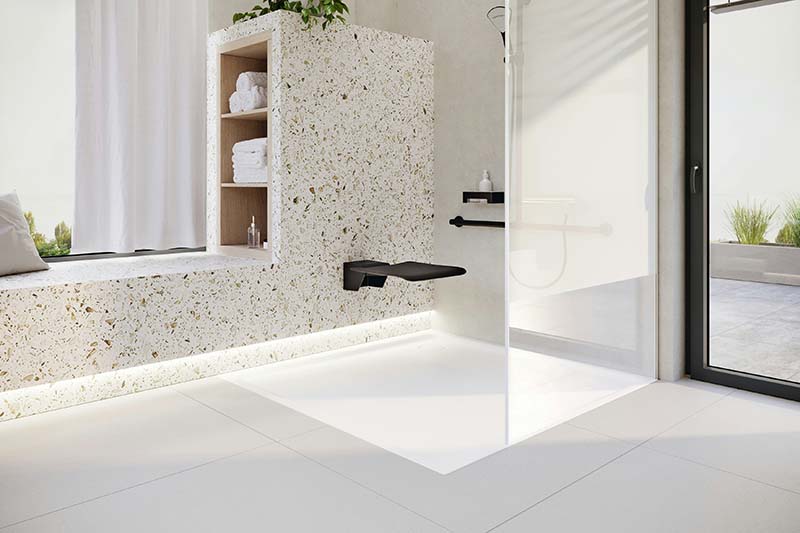
Example of a wheelchair-accessible shower (Credits: KALDEWEI)

The focus during planning should be on the design of disabled-friendly apartments and barrier-free construction. The aim is to design living spaces that are accessible to people with different needs. This requires not only the integration of specific AAL solutions, but also a holistic view of the architecture.

Header SBC English

Architects are faced with the challenge of rethinking their approach to planning residential buildings. They need to familiarize themselves with new concepts and technologies in order to integrate AAL solutions into construction methods and create future-oriented, accessible homes.

However, it goes beyond purely technical aspects, as Gerhard Nussbaum explains: He believes it is important to sensitize society to this issue in order to raise awareness of the importance of AAL solutions and barrier-free homes.

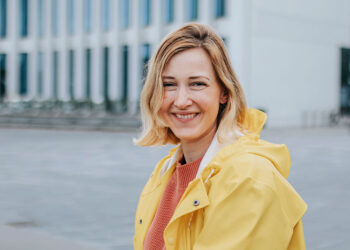
Thinking about accessibility & comfort

It is important to abandon the idea that Ambient Assisted Living has an exclusive status for older people and people with disabilities, because the benefits of it are for everyone. Gerhard Nussbaum is certain that a barrier-free living space automatically means more comfort for every resident. It is about recognizing that AAL is not only relevant for a specific group, but is a concept that can improve the quality of life of all people. Nussbaum: “It should be a standard procedure and must lose its ‘special status’.”

Accessible interior design not only creates a more pleasant environment, but also takes people’s needs into account, regardless of their age, abilities and circumstances. We should therefore move away from the idea that AAL concepts are only beneficial for certain groups and instead focus on the broad range of positive effects on quality of life. A steplessly accessible apartment not only benefits wheelchair users, it also makes it easier and cheaper to deliver goods. Step-free designs are also an advantage for families with baby carriages. AAL should not only be considered in the home, but also in everyday life in general.

Thinking out of social responsibility

Ambient Assisted Living is no longer just a wish, but an urgent necessity that should herald a new era in the construction industry. It is a path that shows us what the architecture of the future will look like – an architecture that actively adapts to the needs of a changing society and places them at the center. The ongoing process is crucial in order to meet the challenges of modern architecture and urban development and to create sustainable, forward-looking solutions.

The integration of AAL solutions into architecture is not just a purely technical challenge, but also a social responsibility. Architects should create an environment that is accessible and comfortable for everyone. The following can help you with this new concept People affected, health experts and associations such as the Information Technology Competence Network for the Promotion of Integration of People with Disabilities. Ultimately, Ambient Assisted Living should become “Active Assisted Living”, which should not have a special status in society, but should be taken for granted.

You can find out more about the KI-I competence network and Gerhard Nussbaum here: https://www.ki-i.at

Lena Schönthaler
Author: Lena Schönthaler

Previous Post

How cities can offer support to older people

Next Post

Care: What we can learn from Denmark

Related Posts

The pension study clearly shows that Austrians are very worried when they think about their pension - 40 percent rate their own risk of poverty in old age as high. Credit: Alexander Caminada/Ageing without limits
Home & Living

Study on retirement provision 2026: The fear of the future

14. January 2026
Bruges, West Flanders: With its Dementievriendelijk Brugge project, this Belgian city in the northwest of the country is demonstrating what active inclusion and quality of life in urban areas can look like. Photo: Shutterstock
Dementia

Bruges shows how it’s done: A city becomes dementia-friendly

3. July 2025
Anyone who buys an apartment or house now in their old age—or plans to renovate—has the opportunity to think about tomorrow today. Credit: Shutterstock
Building & Renovating

How to recognize whether a house is suitable for old age

16. June 2025
Free assistance service for boarding, changing trains, and alighting (at around 600 stations in Germany and 150 stations in Austria). Registration at least 24 hours in advance (by telephone or online). Credit: OEBB/Harald Eisenberger
Home & Living

Accessibility on vacation: How to travel safely and comfortably

3. June 2025
Hitze muss kein Risiko sein – wenn man weiß, wie man sich schützt. Wer frühzeitig Vorkehrungen trifft, auf Warnzeichen achtet und bei Bedarf moderne Hilfsmittel einsetzt, kann den Sommer auch im Alter genießen.  Credit: Shutterstock
Building & Renovating

Stay cool: How older people can get through the summer safely

27. May 2025
Remote monitoring
FAQs

Care and support in rural areas: Between challenge and opportunity

26. May 2025
Next Post
Care: What we can learn from Denmark

Care: What we can learn from Denmark

Leave a Reply Cancel reply

Your email address will not be published. Required fields are marked *

  • Deutsch
  • English

.

loader

Newsletter

What tools and concepts are available for senior living, care and support - and where can they be found? Our newsletter provides answers!

I accept the terms and conditions

Recent News

Interview: Leading complexity researcher Prof. Peter Klimek (Photo credit: CSH Eugenie Sophie)

Early warning system for heat waves: How an Austrian research project detects hotspots – and makes protective measures more targeted

29. January 2026
Women's hearts beat differently—and need more attention. (Credit: AHA/American Heart Association)

Go Red for Women 2026: Why women’s heart health needs more visibility

17. January 2026
The pension study clearly shows that Austrians are very worried when they think about their pension - 40 percent rate their own risk of poverty in old age as high. Credit: Alexander Caminada/Ageing without limits

Study on retirement provision 2026: The fear of the future

14. January 2026
The book "The unexpected journey" is a special kind of travel guide: For people who accompany a loved one with dementia. Book cover: Kailash

Emma Heming Willis: “The unexpected journey”

12. January 2026
The Picasso "Tête de Femme" (1941) - a gouache on paper, with an estimated value of around 1 million euros - will be raffled off. Credit: Picasso Estate, Paris, 2025

1 Picasso for 100 euros: A French idea that finances hope

12. January 2026
SmartBuildingsCompass

Made with care. For you.

Our research and interviews on safe and independent living in old age are written by our team with a great deal of energy and passion. We hope you enjoy reading them!

Do you need more information? If so, you are welcome to contact us at redaktion@sbc.co.at.

All rights reserved (2025).

  • Deutsch
  • English

Follow us

Instagram
  • Home
  • Subscribe to our newsletter
  • Glossary
  • About us
  • Contact
  • Marketing: Information for businesses
  • Download your 10 tips for independent, safe living in older age
  • Presentations & workshops for local authorities & nonprofits
  • Contact & Legal Notice
  • FAQs
  • Disclosure Statement
  • Nettiquette
  • Data protection
  • General Terms and Conditions (GTC)

© 2025 by owl lab e.U. Wir navigieren Wandel.

We use cookies on our website. Some of them are essential, while others help us improve this website and your experience.
Cookie SettingsAccept All
Manage consent

Privacy Overview

This website uses cookies to improve your experience while you navigate through the website. Out of these, the cookies that are categorized as necessary are stored on your browser as they are essential for the working of basic functionalities of the website. We also use third-party cookies that help us analyze and understand how you use this website. These cookies will be stored in your browser only with your consent. You also have the option to opt-out of these cookies. But opting out of some of these cookies may affect your browsing experience.
SAVE & ACCEPT
No Result
View All Result
  • Home
  • Home & Living
  • Tech / Tools
  • Topic search
    • Topic: Orientation
    • Topic: Dementia
    • Topic: Building & Renovating
    • Topic: Healthcare
  • Local authorities & Nonprofits
  • Download: 10 Tips
  • Deutsch
  • English

© 2025 by owl lab e.U. Wir navigieren Wandel.

Safe & independent living in old age

27 pages of tips for independent, safe living in old age—download now!

Download our PDF with tipps now!
loader

Email addresse*
I accept the privacy policy and agree that SmartBuildingsCompass.com may contact me beyond this request to send me its regular newsletter. I can unsubscribe at any time.

Sicher & selbstbestimmt Wohnen im Alter!

27 Seiten Tipps für sicheres, selbstbestimmtes Wohnen im Alter - jetzt downloaden!

Jetzt gleich downloaden!
loader

Email addresse*
I accept the privacy policy and agree that SmartBuildingsCompass.com may contact me beyond this request to send me its regular newsletter. I can unsubscribe at any time.