Thursday, January 29, 2026
  • en English
  • de Deutsch
SmartBuildingsCompass
Header SBC English
  • Home
  • Home & Living
  • Tech / Tools
  • Healthcare & Dementia
  • Care & Relatives
  • Download: 10 tips
  • Why we care
No Result
View All Result
  • Home
  • Home & Living
  • Tech / Tools
  • Healthcare & Dementia
  • Care & Relatives
  • Download: 10 tips
  • Why we care
No Result
View All Result
SmartBuildingsCompass
No Result
View All Result
Home Care & Relatives

Early warning system for heat waves: How an Austrian research project detects hotspots – and makes protective measures more targeted

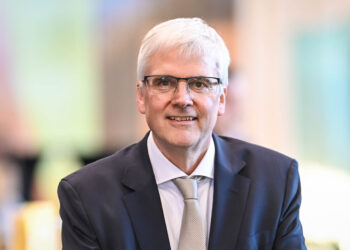
Interview: Leading complexity researcher Prof. Peter Klimek (Photo credit: CSH Eugenie Sophie)

Interview: Leading complexity researcher Prof. Peter Klimek (Photo credit: CSH Eugenie Sophie)

Dieser Beitrag ist auch verfügbar auf: Deutsch

Heat can make you tired, rob you of sleep and throw your circulation out of sync – many people know this from their own experience. In older age or with certain pre-existing conditions, however, “unpleasant” quickly becomes a real health risk: In Austria, up to several hundred heat-related deaths are observed in the summer months. With climate change, heatwaves and tropical nights are on the increase – and heat is therefore becoming a health care issue rather than a weather issue.

The Complexity Science Hub (CSH) is now working with partners from research, emergency services, care homes and hospitals to investigate how care organizations, hospitals and regions can better prepare for periods of heat with a heat early warning system. The aim is to understand the risks so well that proactive action is possible and health consequences are reduced. The project is still ongoing and final results are not yet available. However, Prof. Peter Klimek, who is leading the project at the CSH in Vienna, gives us an initial insight into the results.

Why heat stresses the body

Heat is stressful for the body because it has to keep its core temperature stable: It directs more blood to the skin and sweats, which puts a strain on the heart and circulation – at the same time, fluids and electrolytes are lost. Heat makes summer in cities a constant burden for many people. According to the European Sleep Index 2026 which examined the quality of sleep in 25 major European cities, Vienna is one of the cities with the worst sleep quality in Europe. This is because there is a lack of restful sleep, and in addition to noise and stress, it is also the tropical summer nights that rob the Viennese of sleep.

Header SBC English

Older people are particularly at risk because the body gradually loses its ability to adapt to high temperatures. They release heat more slowly, the cardiovascular system and kidneys are less efficient and the proportion of water in the body is lower. Chronic illnesses and medication can also increase the strain.

The questions the researchers of the “Heat Protect” project are asking are essential in times of ongoing global warming: Who is particularly affected when and where – and what consequences does this have for care and hospital organizations? Real data treasures are being unearthed for the most comprehensive assessment of heat impacts to date: The research team is analyzing more than 10 million hospital stays over 13 years, more than one million ambulance journeys, 10 million weather data points and survey data from paramedics, nursing staff and from hospitals.

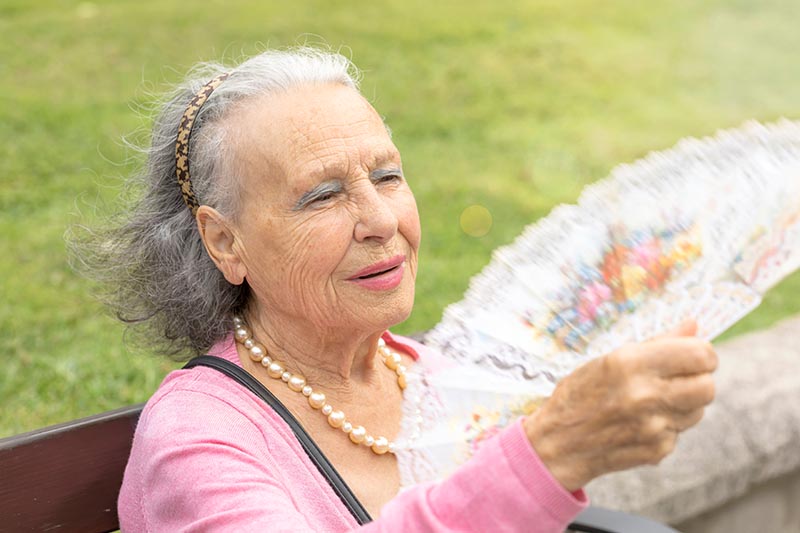
Older people are particularly at risk during heatwaves because the body gradually loses its ability to adapt to high temperatures. Women are more affected by these developments than men. (Photo credit: Shutterstock/StudioNut)

Prof. Klimek from the Complexity Science Hub Vienna (CSH) explains: “The aim is to better understand how heat affects different areas of care. How great is the respective risk depending on the health situation and what countermeasures make sense? We want to understand heat risks so well that we can predict where more health problems are likely to occur. In the final phase of the project, we will break the results down to the microclimate and building planning level.” This data will also be used for site planning in the future.

The information is crucial for elderly people, nursing homes, mobile services or rescue organizations: Who needs to pay particular attention and when? Where do we need additional resources – for example, in which hospitals and which departments do we need to schedule more staff? This is crucial for emergency organizations because they cannot spontaneously increase their capacities. This is precisely why advance warning times are needed that are not just general (“it’s getting hot”), but are really suitable for detailed planning.

The project has three main objectives:

  1. Measure and understand how heat is linked to hospitalizations, rescues and deaths.
  2. Assessing what heat waves mean for an ageing population.
  3. Translating this into practice, i.e. better information for those affected and concrete packages of measures for facilities – from care homes to emergency services.
Not more alarm – but more guidance on specific heat consequences

The challenge: There have long been many tools and warning systems, and with the weather apps on our smartphones, practically all of us have heat alarms. However, a hot day in the weather app often says little about how severe the strain actually is. Heat builds up in a densely built-up street, apartments heat up and the night hardly brings any cooling. A few kilometers further away – with more greenery, more wind and a different building style – it can be much more bearable. Until now, there has been a lack of information on when and where heat really becomes critical in certain service areas. The aim was also to find out at what temperature and for how long heat becomes dangerous.

The analyses show that employees in the care and medical sector generally feel well provided with general information – for example, about the effects of heat on the body, health and psyche. What is rather lacking is knowledge about how heat can affect medication. Do they work better or worse when it is very hot? It is also relevant for first aid if medication is stored in the emergency vehicle – and the vehicle is parked in the sun. Prof. Klimek: “Many specific influences are not immediately apparent. The aim is to process these effects more precisely.”

For the hospital sector, data from 2007 to 2019 was used to evaluate whether hospital admissions or deaths occur more frequently during heatwaves than in comparable summer phases without heatwaves. The number of hospital admissions does not increase dramatically overall, according to Prof. Klimek, because inpatient admissions are often planned for operations, for example. But the situation becomes more critical when heat persists over a longer period of time: “We see a very strong signal in hospital mortality, depending on the intensity and duration of the heatwave. If the maximum daily temperature was above 30 °C on five days in the previous two weeks, the risk increases by around 5 to 10 %. If such a phase lasts for two weeks, the risk increase can be up to 20 %.”

Heat is not the same everywhere – and not equally dangerous for everyone

The picture is heterogeneous depending on the diagnosis: Across all age groups, mortality is increasing for several disease groups. Older and very old people are particularly affected, but there is also an increased risk among younger people – albeit at a much lower level.

Not only cardiovascular and respiratory diseases are affected, but also metabolic diseases, psychological and mental illnesses – such as dementia – can have significant effects in some cases. Prof. Klimek: “We are talking about several hundred deaths across Austria that could occur over the course of a summer. We are currently looking at climate model calculations to see how much the number of cases will increase in the coming years as a result of climate change.”

At the same time, it is clear that a large part of the burden is particularly visible in the acute care system: In rescue operations, in acute care – in situations where people suddenly can no longer cope. Prof. Klimek: “We took a particular look at the situation in Vienna. The more intense a heatwave is, the greater the increase in the number of emergency and ambulance calls – by up to 10% on extremely hot days. If you look at the causes, heatstroke is obviously at the top of the list. However, respiratory diseases such as COPD and asthma also play a major role, followed by cardiovascular diseases.” Accidents and attacks are also on the rise: This suggests that we become more clumsy in the wake of heatwaves, and aggression is also on the rise. Women are more affected by these developments than men.

The task now is to determine the best time before an approaching heatwave based on the health setting of the risk groups: In other words, when it makes sense to issue a warning. It depends on the processes and procedures in the care organizations and healthcare facilities. “The Google Alert on the cell phone is far too unspecific for this,” explains the researcher, “Specific warnings are an important factor for operational planning. Because even if there are only 2 or 4% more cases, this translates into more emergency vehicles that need to be on standby, for example. And the staff behind them must also be available.” For facilities, it’s not about developing high-tech measures to achieve better heat resilience, but about establishing easy-to-implement routines in good time: Drinking more, darkening the room, proper ventilation, raising awareness.

The first heatwave is often the most dangerous

Particularly important for adaptation measures: “We see a much stronger effect in the first major heatwave of a year than in subsequent ones,” says Klimek. Many people are taken by surprise, they are not yet in “heat mode” and routines such as drinking more are not yet adapted. Prof. Klimek was particularly surprised that heat has such an intense after-effect: “There are strong, measurable delayed effects.” After a heatwave, the stress can persist for several days: “Even if the heatwave has already been over for three days, we still find an effect that is just as strong as if the heatwave were still going on.” The reason for this is often the building stock: Buildings store heat and the apartments only cool down slowly.

Prof. Klimek concludes: “Compared to projects in southern European countries such as Spain or Greece, we are still operating on a different scale. But as soon as the duration and intensity of heat come together, the risk increases significantly here too – then heat will also become a relevant issue in Austria. And these risk windows will increase. Our project should help to intervene in a targeted manner and prevent the consequences of heat as far as possible. Because even if it does not yet reach the same proportions as in other countries, we will also have to adapt in Austria.”


Peter Klimek is a leading complexity researcher and Director of the Supply Chain Intelligence Institute Austria (ASCII). The doctor of physics is an associate professor at MedUni Vienna and works at the Complexity Science Hub Vienna. The “Scientist of the Year” 2021 combines network analysis, economics and data science in his research in order to make risks and vulnerabilities in supply chains, supply networks and healthcare systems visible. Click here for the homepage of the Complexity Science Hub.

In addition to the Complexity Science Hub, the following partners are also involved in this study: The Medical University of Vienna, the Austrian Institute of Technology (AIT), the Ludwig Boltzmann Institute for Digital Health and Patient Safety, Caritas Vienna, Johanniter Austria, Gesundheit Österreich GmbH and the weather service UBIMET.

Anja Herberth
Author: Anja Herberth

Chefredakteurin

Previous Post

Go Red for Women 2026: Why women’s heart health needs more visibility

Related Posts

Community nurses are regional (health) caregivers who provide support so that people can remain healthy and independent at home for as long as possible. With the end of EU funding and despite a positive evaluation, the project is being reduced, restructured or discontinued in some federal states.  Credit: Shutterstock
Care & Relatives

Community Nursing: What happens when support and prevention become a source of savings?

20. November 2025
All tablets swallowed whole reached the stomach without any signs of dangerous swallowing. Crushed forms, on the other hand, led to significantly more residue in the throat, which can impair the absorption of the active ingredients and promote complications.  Credit: Shutterstock
Care & Relatives

Taking tablets with swallowing difficulties: Take whole instead of crushed

17. November 2025
Older people need low-threshold support services to help them navigate the complexity of bureaucracy and digitalization. As these services are often not available, they need help.  Credit: Shutterstock
Care & Relatives

Adult representation in Austria and Germany: Between care, freedom and a shortage of skilled workers

19. October 2025
Care on the brink: High demand is met with a shortage of money and skilled workers, as well as an outdated system. Photo credit: ChatGPT
Care & Relatives

Care is economic, location, financial and social policy – in theory. In practice, we are currently driving against the wall.

18. October 2025
Credit: InSiLa Academy
Care & Relatives

“Resilience begins where I can breathe again”

16. October 2025
From left to right: Werner Beutelmeyer, CEO and Managing Director of the Market Institute; Elisabeth Anselm, Managing Director of Hilfswerk Austria; Othmar Karas, President of Hilfswerk Austria, at the presentation of the study. Credit: Hilfswerk Austria
Care & Relatives

Care at home: The study that will (hopefully) turn Austria’s care debate around

30. September 2025

Leave a Reply Cancel reply

Your email address will not be published. Required fields are marked *

  • Deutsch
  • English

.

loader

Newsletter

What tools and concepts are available for senior living, care and support - and where can they be found? Our newsletter provides answers!

I accept the terms and conditions

Recent News

Interview: Leading complexity researcher Prof. Peter Klimek (Photo credit: CSH Eugenie Sophie)

Early warning system for heat waves: How an Austrian research project detects hotspots – and makes protective measures more targeted

29. January 2026
Women's hearts beat differently—and need more attention. (Credit: AHA/American Heart Association)

Go Red for Women 2026: Why women’s heart health needs more visibility

17. January 2026
The pension study clearly shows that Austrians are very worried when they think about their pension - 40 percent rate their own risk of poverty in old age as high. Credit: Alexander Caminada/Ageing without limits

Study on retirement provision 2026: The fear of the future

14. January 2026
The book "The unexpected journey" is a special kind of travel guide: For people who accompany a loved one with dementia. Book cover: Kailash

Emma Heming Willis: “The unexpected journey”

12. January 2026
The Picasso "Tête de Femme" (1941) - a gouache on paper, with an estimated value of around 1 million euros - will be raffled off. Credit: Picasso Estate, Paris, 2025

1 Picasso for 100 euros: A French idea that finances hope

12. January 2026
SmartBuildingsCompass

Made with care. For you.

Our research and interviews on safe and independent living in old age are written by our team with a great deal of energy and passion. We hope you enjoy reading them!

Do you need more information? If so, you are welcome to contact us at redaktion@sbc.co.at.

All rights reserved (2025).

  • Deutsch
  • English

Follow us

Instagram
  • Home
  • Subscribe to our newsletter
  • Glossary
  • About us
  • Contact
  • Marketing: Information for businesses
  • Download your 10 tips for independent, safe living in older age
  • Presentations & workshops for local authorities & nonprofits
  • Contact & Legal Notice
  • FAQs
  • Disclosure Statement
  • Nettiquette
  • Data protection
  • General Terms and Conditions (GTC)

© 2025 by owl lab e.U. Wir navigieren Wandel.

We use cookies on our website. Some of them are essential, while others help us improve this website and your experience.
Cookie SettingsAccept All
Manage consent

Privacy Overview

This website uses cookies to improve your experience while you navigate through the website. Out of these, the cookies that are categorized as necessary are stored on your browser as they are essential for the working of basic functionalities of the website. We also use third-party cookies that help us analyze and understand how you use this website. These cookies will be stored in your browser only with your consent. You also have the option to opt-out of these cookies. But opting out of some of these cookies may affect your browsing experience.
SAVE & ACCEPT
No Result
View All Result
  • Home
  • Home & Living
  • Tech / Tools
  • Topic search
    • Topic: Orientation
    • Topic: Dementia
    • Topic: Building & Renovating
    • Topic: Healthcare
  • Local authorities & Nonprofits
  • Download: 10 Tips
  • Deutsch
  • English

© 2025 by owl lab e.U. Wir navigieren Wandel.

Safe & independent living in old age

27 pages of tips for independent, safe living in old age—download now!

Download our PDF with tipps now!
loader

Email addresse*
I accept the privacy policy and agree that SmartBuildingsCompass.com may contact me beyond this request to send me its regular newsletter. I can unsubscribe at any time.

Sicher & selbstbestimmt Wohnen im Alter!

27 Seiten Tipps für sicheres, selbstbestimmtes Wohnen im Alter - jetzt downloaden!

Jetzt gleich downloaden!
loader

Email addresse*
I accept the privacy policy and agree that SmartBuildingsCompass.com may contact me beyond this request to send me its regular newsletter. I can unsubscribe at any time.