• de Deutsch
  • en English
Smart Buildings Compass
  • Home
  • Living
  • Building & Renovation
  • Everyday aids
  • Care
  • Dementia
  • Health
  • Finance & Planning
No Result
View All Result
  • Home
  • Living
  • Building & Renovation
  • Everyday aids
  • Care
  • Dementia
  • Health
  • Finance & Planning
No Result
View All Result
Smart Buildings Compass
No Result
View All Result
Home Glossary

Lifts & sit-to-stand aids

Lifts & sit-to-stand aids

Getting up is often a big problem for older people. There are tools to help with this – in case no one is around to help. Credit: Shutterstock

This article is also available in: Deutsch

Lifts and sit-to-stand aids are technical aids that help older people or people with limited mobility to move safely and independently from a sitting or lying position to a standing position. These devices are available in various designs, from mechanical lifting aids to electrically operated models.

Advantages for older people:

You might also be interested in

Our interviewee: Dementia expert Raphael Schönborn (Credit: Miriam Eberhard)

How can we protect people with dementia from deception and fraud, Raphael Schönborn?

21. November 2026
Our interviewee: Assistance dog trainer Birgit Monschein (Credit: Birgit Monschein)

How does a therapy dog help people with dementia maintain everyday skills, Birgit Monschein?

20. November 2026
Our interviewee: End-of-life caregiver and emergency chaplain Frank Pape (Credit: Ein Lächeln für Dich e.V.)

How can family members support someone who is dying, Frank Pape?

20. November 2026
Our interviewee: Smart Living pioneer Günther Ohland (Credit: Private)

What low-threshold solutions make life at home easier, Günther Ohland?

5. November 2026
  1. Increased safety: lifts reduce the risk of falls and injuries that can occur when standing up without support.
  2. Promoting independence: Older people can move around independently without being constantly dependent on the help of carers or relatives.
  3. Relief for care staff and relatives: the physical effort involved in lifting and supporting is significantly reduced, which prevents back and joint problems.
  4. Pain relief: Gentle and controlled lifting minimizes pain and strain for people with joint or muscle problems.
  5. Improvement in quality of life: By supporting mobility, social participation and participation in everyday activities are maintained for longer.

Lifts and sit-to-stand aids are an important part of care and give older people more independence and safety in everyday life.

Header SBC English

Image: Shutterstock

Anja Herberth
Author: Anja Herberth

Previous Post

Medication management

Next Post

Access aids

Related Posts

Our interviewee: Dementia expert Raphael Schönborn (Credit: Miriam Eberhard)
Dementia

How can we protect people with dementia from deception and fraud, Raphael Schönborn?

21. November 2026
Our interviewee: Assistance dog trainer Birgit Monschein (Credit: Birgit Monschein)
Dementia

How does a therapy dog help people with dementia maintain everyday skills, Birgit Monschein?

20. November 2026
Our interviewee: End-of-life caregiver and emergency chaplain Frank Pape (Credit: Ein Lächeln für Dich e.V.)
Care & relief

How can family members support someone who is dying, Frank Pape?

20. November 2026
Our interviewee: Smart Living pioneer Günther Ohland (Credit: Private)
everyday aids & technology

What low-threshold solutions make life at home easier, Günther Ohland?

5. November 2026
Our interviewee: Financial Advisor Thomas Stolhofer (Credit: Phoenix Investor)
Finance & Planning

How do I start investing for retirement, Thomas Stolhofer?

5. November 2026
Our interviewee: Philipp Müller, Head of Marketing at Hartl Haus (Credit: Hartl Haus)
Building & Renovation

Senior-friendly Housing: What’s the best approach for a prefab home, Philipp Müller?

5. November 2026
Next Post
Access aids

Access aids

Leave a Reply Cancel reply

Your email address will not be published. Required fields are marked *

  • Deutsch
  • English

.

loader

Newsletter

What tools and concepts are available for senior living, care and support - and where can they be found? Our newsletter provides answers!

I accept the terms and conditions

Smart Buildings Compass

Made with care. For you.

Our research and interviews on safe and independent living in old age are written by our team with a great deal of energy and passion. We hope you enjoy reading them!

Do you need more information? If so, you are welcome to contact us at redaktion@sbc.co.at.

All rights reserved (2026).

  • Deutsch
  • English

Follow us

Instagram
  • Home
  • Subscribe to our newsletter
  • Glossary
  • About us
  • Contact
  • Marketing: Information for businesses
  • Download your 10 tips for independent, safe living in older age
  • Presentations & workshops for local authorities & nonprofits
  • Contact & Legal Notice
  • Disclosure Statement
  • Nettiquette
  • Data protection
  • General Terms and Conditions (GTC)

© 2026 by owl lab e.U. Wir navigieren Wandel.

No Result
View All Result
  • Home
  • Home & Living
  • Everyday Aids & Technology
  • Care & Relief
  • Dementia & Health
  • Download: 10 tips
  • Find a solution
    • Special Feature: Age-friendly Construction & Renovation
    • Dementia
    • Crisis-resilient caregiving household
  • Deutsch
  • English

© 2026 by owl lab e.U. Wir navigieren Wandel.

Safe & independent living in old age

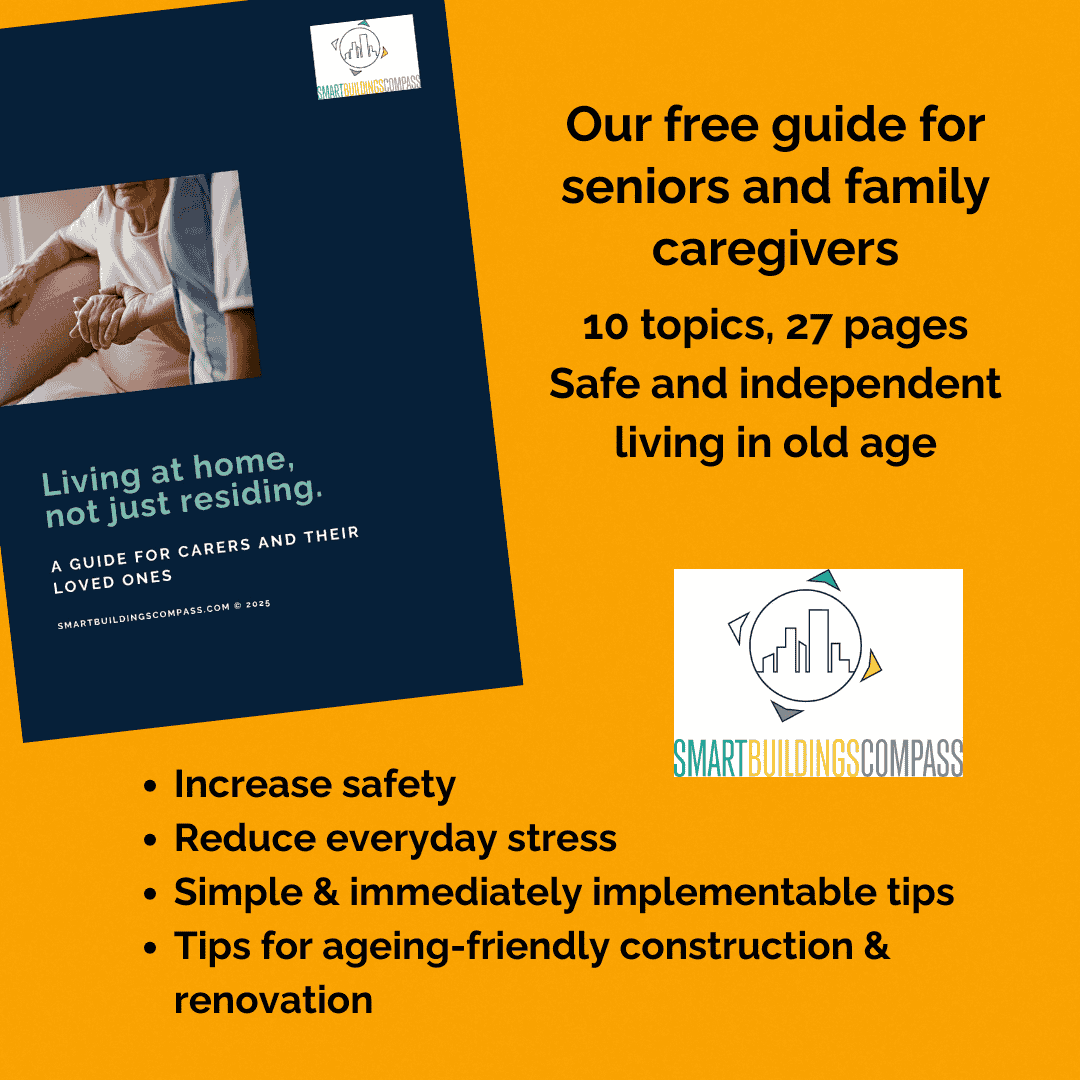
27 pages of tips for independent, safe living in old age—download now!

Download our PDF with tipps now!
loader

Email addresse*
I accept the privacy policy and agree that SmartBuildingsCompass.com may contact me beyond this request to send me its regular newsletter. I can unsubscribe at any time.

WordPress Cookie Plugin by Real Cookie Banner