• de Deutsch
  • en English
Smart Buildings Compass
  • Home
  • Living
  • Building & Renovation
  • Everyday aids
  • Care
  • Dementia
  • Health
  • Finance & Planning
No Result
View All Result
  • Home
  • Living
  • Building & Renovation
  • Everyday aids
  • Care
  • Dementia
  • Health
  • Finance & Planning
No Result
View All Result
Smart Buildings Compass
No Result
View All Result
Home Finance & Planning

How do I start investing for retirement, Thomas Stolhofer?

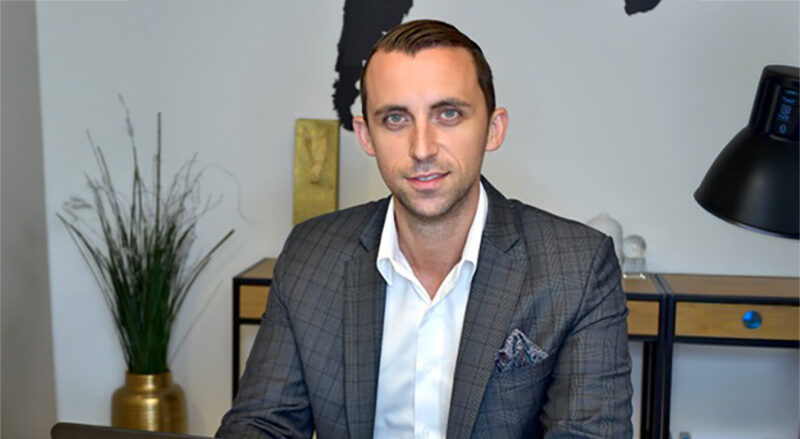
Our interviewee: Financial Advisor Thomas Stolhofer (Credit: Phoenix Investor)

Our interviewee: Financial Advisor Thomas Stolhofer (Credit: Phoenix Investor)

This article is also available in: Deutsch

Many people don’t realize until shortly before retirement that the savings in their bank account, home savings plan, or life insurance policy are worth significantly less than they had expected over the decades. At the same time, this phase of life brings expenses that are difficult to plan for—such as renovating their home, making age-appropriate modifications, or paying for support and care at home.

An internal survey of our readers has shown that many of you feel you are not adequately prepared financially for retirement. That’s why we’re expanding our series of interviews on retirement planning to include the question of how to build up your own savings for those years.

You might also be interested in

Our interviewee: Independent insurance broker Helmut Höbart (Credit: Theresia Kaufmann)

Planning Ahead for Care: What Should I Look for in Long-Term Care Insurance, Helmut Höbart?

10. October 2026
Our interviewee: Stefani Gromes, an attorney from Darmstadt who specializes in the intersection of family and social law. Credit: Gromes Law Firm

Costs for care homes: How can families prepare in advance, Ms Gromes?

27. August 2026
Let yourself be a little nuts - and don't feel guilty about it! Credit: Shutterstock

International Women’s Day: Who bears the burden of care – and for how long?

7. March 2026
Our interview partner: Health Economist & Dean of the Faculty of Social Sciences, Economics and Business Administration at the JKU Linz, Prof. Dr. Prof. Gerald J. Pruckner (Credit: Andreas Röbl)

Healthcare system under pressure: What needs to be clarified now

6. March 2026

Thomas Stolhofer is an independent financial advisor in Vienna who helps private clients build long-term investment portfolios. In this interview, he explains why traditional savings products often fall short, how you can get started with manageable monthly contributions, and what questions you should ask any financial advisor.

Header SBC English

Note: The information in this interview pertains to Austria. It does not constitute investment advice and is not a substitute for a personal consultation. Any investment in securities involves risks, and past performance is not a reliable indicator of future returns.

What to Expect in This Interview:

  • Why home savings plans, life insurance, and savings accounts often don’t provide enough for retirement planning,
  • how a broadly diversified investment portfolio through investment funds is structured and what distinguishes open-end funds,
  • what “segregated fund assets” means and how it protects your money,
  • how to identify costs, dependencies, and quality advice.
SBC: You specialize in financial planning. Based on your experience, what do your clients need freely available funds for during retirement?

Stolhofer: Most people in Austria want to own a home and pay it off as quickly as possible, which is generally a good thing. By the time they retire, they find themselves with a paid-off home that needs to be renovated, because a house simply doesn’t last a hundred years. So, at the start of retirement, their savings often go back into the property.

When people retire, many may have between 50,000 and 100,000 euros in liquid assets, if that. When long-term care is added to the mix, things get tight, because realistically, you have to budget 5,000 to 6,000 euros a month for in-home care, including all housing and utility costs. In addition to rent, utility bills, and living expenses, there are, for example, 2,500 to 3,500 euros for 24-hour care, or the costs for home-based care and mobile wound care services.

I know this from my own family: Thanks to a good pension, my grandfather was able to afford care at home. My grandmother, on the other hand, had to move into a nursing home because there was no other way to afford it. No one likes to save for this eventuality, but those who have set some money aside have much more freedom to make their own decisions and are less of a burden on their own children.

SBC: An internal survey of our readers has shown that they’ve been saving regularly for retirement for years and yet still don’t feel prepared for retirement. In your experience, why is that?

Stolhofer: In Austria, a great many people invest their money in traditional savings products—that is, home savings plans, life insurance policies, or products marketed as retirement savings plans. Unfortunately, I haven’t yet seen a single contract that ultimately delivered what people had expected from it—not even in cases where people saved consistently until retirement.

Many people don’t take a closer look until 20 or 30 years later, only to discover that they’ve paid in 40,000 euros and the policy is now worth only 35,000 euros. This is due to the underlying cost structure, which hardly anyone is told about when they sign the contract. That’s because the product is what’s being sold—not what’s behind it.

SBC: That raises the question: Why don’t these investment vehicles generate a profit?

Stolhofer: Because the bank makes the least profit on it. With a home savings plan, the bank pays almost no interest and can use the customers’ money for six years. When it comes to investment funds, banks usually offer their own products because that way they keep all the fees, whereas if they worked with an international fund company, they’d have to give up a portion of them.

The home savings plan originally made good sense because it entitled the customer to a home savings loan. That was cheaper than a regular loan, but for most people today, that advantage no longer matters much.

When my daughter was born two and a half years ago, my bank sent me a congratulatory message in the app three days later and offered me a home savings plan for the child as a “great investment opportunity.” I wonder how many young parents, in a moment like that, just tap “Confirm”—even though they could just as easily invest 50 or 100 euros a month in a mutual fund. There are major gaps in financial advice on the market. Just recently, a 58-year-old client came to see me—an insurance company had sold him a 35-year pension plan, which simply isn’t suitable for someone his age. He wouldn’t be able to access the money until he was 93.

SBC: That sounds like a pure product sale, but not like needs-based, independent advice. How can I tell the difference?

Stolhofer: Anyone who works for a bank or as an insurance agent learns how to sell a specific product, but not necessarily how to provide advice. We’ve made a conscious decision not to be paid through a commission on the product, but rather to charge a one-time consulting fee. This works similarly to how a tax advisor or lawyer operates. Depending on the scope of the consultation, the fee ranges from 1,000 to 4,000 euros; we don’t earn anything additional on an ongoing basis. We also don’t receive a share of any investment gains.

This means it doesn’t matter to us which product is ultimately chosen, and we can tailor our approach to individual needs—which are completely different for a 20-year-old than for a 50-year-old.

SBC: When deciding to invest in funds, which products are even suitable for such an investment?

Stolhofer: We work exclusively with investment funds and, as a supplement, with gold—which, however, is a commodity and not a financial product. When it comes to funds, we focus solely on so-called open-end funds, because as an individual investor, you can see every day what’s in the fund and what your money is worth. The fund company is also required to redeem shares. So, unlike with an individual stock, you don’t need a buyer on the other side. If you want to sell, the shares will be sold no later than the next trading day, and the money will be in your account within three to five business days.

In addition, a fund spreads the risk across many companies, whereas a single stock can lose a significant amount of value in the worst-case scenario. However, it’s important to acknowledge that there are both good and less-than-ideal options when it comes to funds, so the choice you make matters.

Checklist: How to Take the First Step
  1. Take stock: Make a list of all your savings accounts, home savings plans, and insurance policies, and note how much you’ve contributed and what each policy is worth today.
  2. Determine Your Needs & Develop a Strategy: Think about what you’ll need readily available funds for during retirement—such as home renovations, age-appropriate modifications, or care—and when you expect to need them.
  3. Check costs: Ask for the Key Information Document for each product offered, and compare the ongoing costs with the expected return.
  4. Inquire about commitment terms: Ask about the term, cancellation periods, and how quickly you can access your money in an emergency.
  5. Ask for a disclosure of compensation: Find out whether your advisor is paid a fee, a commission, or a share of the returns.
  6. Start small and stick with it: Begin with an amount you can afford even during difficult months, and review your investment every two to three years.
SBC: How do you build a mutual fund portfolio that can weather a crisis?

Stolhofer: People who invest on their own today through online brokers and YouTube channels often have a portfolio that’s 80 to 90 percent focused on the U.S. If something happens there, you feel the impact across your entire portfolio. That’s why we use what’s known as a core-satellite strategy—a strong, globally diversified core around which we add individual components, such as Asia, Africa, technology, infrastructure, or water. Gold serves as a counterbalance because it often performs differently than stocks during crises.

We discuss the worst-case scenario—such as an economic crisis or the collapse of an entire market—with every client. It must be clear that part of the portfolio will be affected, but not all of it. The individual components also never perform identically. After two or three years, one portfolio might be up 25 percent, another up 10 percent, and a third in the red. What matters is the overall result. Personal preferences can be taken into account—for example, if someone doesn’t want certain regions included in their portfolio.

SBC: And what if you’re more cautious and can’t sleep well when there are sharp fluctuations?

Stolhofer: Then you’d opt for a different portfolio mix—for example, bond funds or funds that are even more broadly diversified. In that case, I wouldn’t invest in individual bonds. That’s because the money is then tied up until maturity, whereas you can exit a bond fund at any time, and the fund managers continuously adjust the portfolio’s composition.

We deliberately leave the task of monitoring the markets to the major fund management firms, because they have entire teams dedicated solely to that. Those who have only ever used savings accounts and home savings plan don’t need to pursue maximum returns with high risk. Instead, they need a starting point that makes them feel comfortable. For some people, a long-term return of four to five percent per year is perfectly sufficient.

SBC: What’s the minimum amount you can start with, and how flexible are your options?

Stolhofer: Most people start with 200 to 250 euros a month, which is perfectly fine, because with just 100 euros, it’s hard to diversify a portfolio across many markets in a meaningful way. We don’t require any long-term commitment—the money is yours at all times, not a bank’s or an insurance company’s. You can take everything you do with us and continue it elsewhere.

Every two to three years, we make it a point to sit down with our customers and see if anything has changed in their lives. That way, we can reallocate, increase, or reduce their contributions as needed. If someone becomes unemployed or has a child, we simply suspend contributions for a certain period of time.

In my experience, there are really only two reasons why someone would liquidate their entire investment portfolio: when they need funds to buy an apartment or a house, or when they or someone in their family is in poor health. However, this kind of investment strategy can only truly be effective if you stick with it for many years—just as consistently as you would when paying off a loan, only in the opposite direction.

SBC: How do you get access to the money again in old age?

Stolhofer: Starting at a time you choose yourself, you can have a regular amount paid out from your securities account, which acts like a supplemental monthly pension. You leave the rest invested in the background—though in a more conservative manner—so that the money continues to grow while you make regular withdrawals.

I can say from experience that it changes people’s lives when they actually follow through with this.

SBC: The concern we hear most often is: What happens to my money if the advisor or the fund company suddenly goes out of business?

Stolhofer: That’s also the number one question I get in my conversations. To put it simply: I never handle client funds—and I’m not even allowed to—but instead I connect the client with a custodian bank where they have their own account in their name.

The most important term in this context is “segregated fund assets”: This is because the money in an investment fund is held separately from the fund company’s assets and, in the event of insolvency, is not included in the bankruptcy estate. Typically, another company then takes over the management of the fund, and the shares continue to belong to the investors.

With a savings account or checking account, on the other hand, you are a creditor of the bank. That is why there is a deposit guarantee scheme, which protects balances up to 100,000 euros per person per bank. However, investment funds do not protect against losses in value.

SBC: What costs are associated with investment funds, and how can you tell if fees are excessive?

Stolhofer: Actively managed funds have an ongoing management fee that pays the fund company, and this fee is deducted directly from the fund’s assets. So if a fund in your portfolio shows a gain of eight percent and the fees amounted to two percent, it has actually generated a return of ten percent. These ongoing costs are disclosed in the Key Information Document, which you should review before making any investment decisions.

In my experience, fees at large international fund management firms typically range between 1.5 and 3 percent, with the higher figure applying only to more complex fund-of-funds structures. I’d be cautious about products that charge a 5 percent ongoing fee plus a 20 percent performance fee and ultimately yield only 3.5 percent for clients. Costs should always be viewed in relation to returns, but if the majority of the returns are lost before they reach the client, something isn’t right.

SBC: Based on your practical experience, at what age should people start saving? Does interest in this topic change with age?

Stolhofer: The phrase I hear most often in initial consultations is: “I’ve always wanted to do something, but I didn’t know how or where.” We’ve noticed that many people between the ages of 30 and 35 are now taking an active interest in their finances. The willingness to do so is significantly greater than it was seven or eight years ago, when many ultimately chose to stay with a bank or insurance company.

Those who are about to retire can no longer make up for lost time in saving. But even for them, it’s worth taking a close look at their existing contracts and savings accounts. Often, you don’t need to spend any more money at all; instead, you can redirect the amount currently going into an old contract to an investment that will yield a better return in the future. That’s why, when people ask me what the best investment is, I always answer that it’s the one you actually have. Because looking back at charts and saying, “I should have saved more back then,” doesn’t do anyone any good.

SBC: Thank you for the interview!

About Thomas Stolhofer: Thomas Stolhofer is a partner at Phoenix Investor AT GmbH and assists private clients with long-term wealth accumulation and financial planning for retirement. He works on a fee-based basis with international investment funds and focuses on broadly diversified investment strategies without contractual obligations. Learn more at phoenix-investor.at

Legal Notice: This article is intended solely for general informational purposes and does not constitute investment advice or a recommendation to buy or sell financial products. The statements made by the interviewee reflect his personal assessment and experience. Investments in securities may lose value, and past performance is not indicative of future results.


Is a home savings plan a good option for retirement planning?

For long-term wealth accumulation, a home savings plan typically yields little return today because interest rates are low. Its original advantage used to lie in the right to a low-interest home savings loan. Anyone looking to save for retirement should consider whether the monthly amount could yield better results in a broadly diversified investment portfolio.

How much money can you invest in investment funds for retirement?

Many people start with a savings plan of 200 to 250 euros per month. Smaller amounts are possible, but they’re harder to spread across many markets. More important than the amount is sticking with it for many years.

What does “segregated fund assets” mean in the context of investment funds?

The money in an investment fund is held separately from the fund company’s assets and is not included in the bankruptcy estate if the fund company becomes insolvent. The fund shares continue to belong to the investors. However, the fund does not protect against market price declines.

What is the difference between open-end and closed-end funds?

With open-end funds, you can see on a daily basis what the fund holds and what your shares are worth. The fund company must redeem any shares you wish to sell, so the money is usually deposited into your account within a few business days. Closed-end funds, on the other hand, typically tie up your capital for a fixed term.

What are the costs associated with investment funds?

Actively managed funds charge an ongoing management fee, which is deducted directly from the fund’s assets. The exact ongoing costs are listed in the fund’s Key Information Document. In addition, there may be a fee for advisory services, either in the form of a fee or a commission.

How can I tell if financial advice is independent?

An independent advisor discloses how they are compensated and does not earn more if you choose a specific product. They ask about your age, your goals, and your risk tolerance before making any recommendations. A term that doesn’t match your age, or products that aren’t tailored to your needs, are clear warning signs of poor advice.

Anja Herberth
Author: Anja Herberth

Tags: Care & the system
Previous Post

Senior-friendly Housing: What’s the best approach for a prefab home, Philipp Müller?

Related Posts

Our interviewee: Independent insurance broker Helmut Höbart (Credit: Theresia Kaufmann)
Finance & Planning

Planning Ahead for Care: What Should I Look for in Long-Term Care Insurance, Helmut Höbart?

10. October 2026
Our interviewee: Stefani Gromes, an attorney from Darmstadt who specializes in the intersection of family and social law. Credit: Gromes Law Firm
Finance & Planning

Costs for care homes: How can families prepare in advance, Ms Gromes?

27. August 2026
Let yourself be a little nuts - and don't feel guilty about it! Credit: Shutterstock
Care & relief

International Women’s Day: Who bears the burden of care – and for how long?

7. March 2026
Our interview partner: Health Economist & Dean of the Faculty of Social Sciences, Economics and Business Administration at the JKU Linz, Prof. Dr. Prof. Gerald J. Pruckner (Credit: Andreas Röbl)
Health & Prevention

Healthcare system under pressure: What needs to be clarified now

6. March 2026
Protest day on March 23. Pharmacies are fighting for better economic conditions - 20% of pharmacies have already given up.  Credit: Shutterstock
Care & relief

Pharmacies in Germany: Why they will remain closed on March 23

3. March 2026
Our interview partner Nicolas Tobaben is Head of Disaster Management at the German Johanniter Regional Association North (Credit: Johanniter)
Care & relief

Crisis requires community: “Only when a few people consciously consider others can it truly be sustainable.”

23. February 2026

Leave a Reply Cancel reply

Your email address will not be published. Required fields are marked *

  • Deutsch
  • English

.

loader

Newsletter

What tools and concepts are available for senior living, care and support - and where can they be found? Our newsletter provides answers!

I accept the terms and conditions

Smart Buildings Compass

Made with care. For you.

Our research and interviews on safe and independent living in old age are written by our team with a great deal of energy and passion. We hope you enjoy reading them!

Do you need more information? If so, you are welcome to contact us at redaktion@sbc.co.at.

All rights reserved (2026).

  • Deutsch
  • English

Follow us

Instagram
  • Home
  • Subscribe to our newsletter
  • Glossary
  • About us
  • Contact
  • Marketing: Information for businesses
  • Download your 10 tips for independent, safe living in older age
  • Presentations & workshops for local authorities & nonprofits
  • Contact & Legal Notice
  • Disclosure Statement
  • Nettiquette
  • Data protection
  • General Terms and Conditions (GTC)

© 2026 by owl lab e.U. Wir navigieren Wandel.

We use cookies on our website. Some of them are essential, while others help us improve this website and your experience.
Cookie SettingsAccept All
Manage consent

Privacy Overview

This website uses cookies to improve your experience while you navigate through the website. Out of these, the cookies that are categorized as necessary are stored on your browser as they are essential for the working of basic functionalities of the website. We also use third-party cookies that help us analyze and understand how you use this website. These cookies will be stored in your browser only with your consent. You also have the option to opt-out of these cookies. But opting out of some of these cookies may affect your browsing experience.
SAVE & ACCEPT
No Result
View All Result
  • Home
  • Home & Living
  • Everyday Aids & Technology
  • Care & Relief
  • Dementia & Health
  • Download: 10 tips
  • Find a solution
    • Special Feature: Age-friendly Construction & Renovation
    • Dementia
    • Crisis-resilient caregiving household
  • Deutsch
  • English

© 2026 by owl lab e.U. Wir navigieren Wandel.

Safe & independent living in old age

27 pages of tips for independent, safe living in old age—download now!

Download our PDF with tipps now!
loader

Email addresse*
I accept the privacy policy and agree that SmartBuildingsCompass.com may contact me beyond this request to send me its regular newsletter. I can unsubscribe at any time.