Living life on your own terms
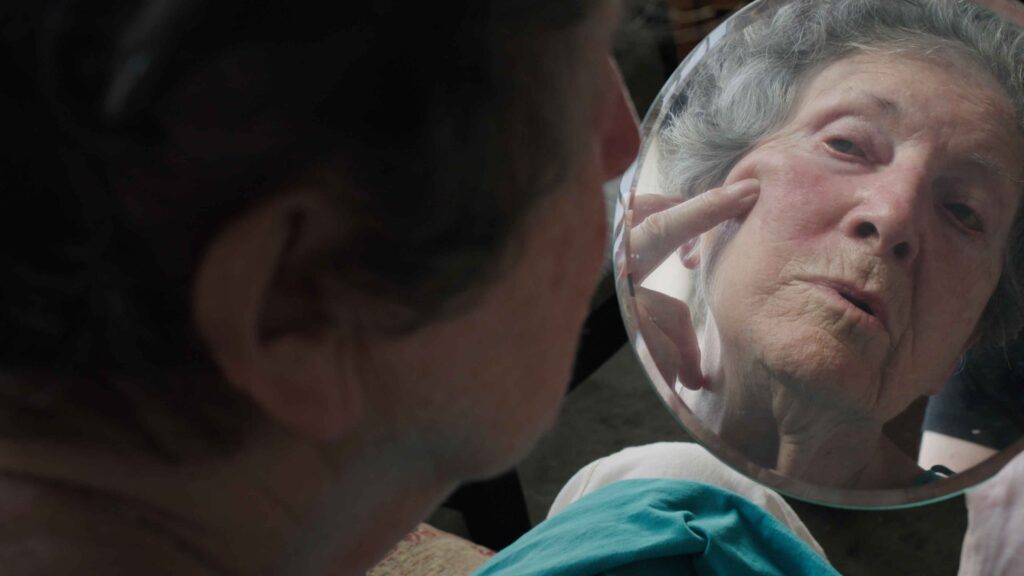
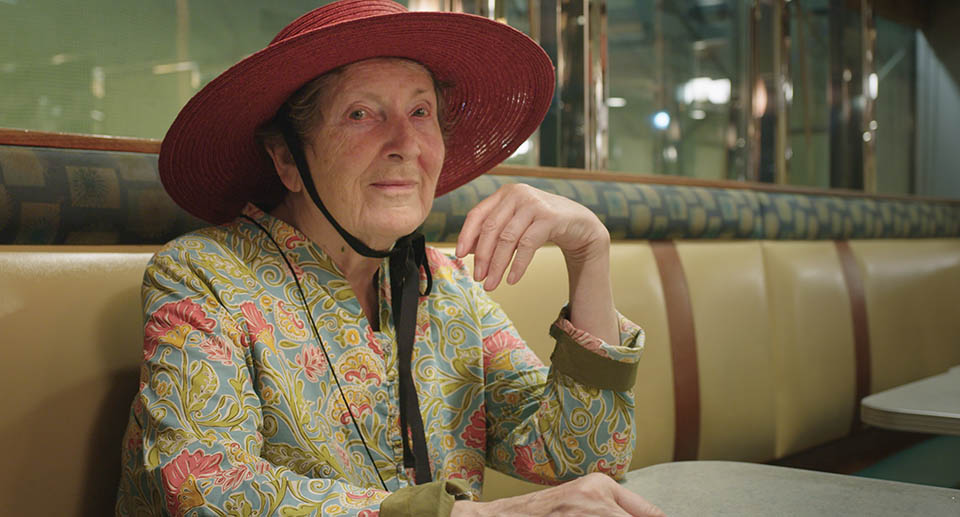
Eleanor lived with an energy and presence that was infectious. Stasny: “Cognitively, she was incredibly present, often more present than many others. And she remained active right to the end. You can feel that very clearly in the film: Eleanor was always fit, at any time of day.” At the same time, life forced her to reach a limit at some point. When energy drops in people who define themselves so much by strength, movement and self-determination, it feels like a break. What’s more, Eleanor was increasingly losing her sight due to macular degeneration. Her most important tool – her sight – had become fragile. The film shows this vulnerability not as a fall, but as a turning point: A woman who is used to repairing and beautifying has to accept that there are structures that even she cannot restore.
Und dennoch nimmt sie sich Dinge heraus, die viele in ihrem Alter längst aufgegeben hätten – oder die gesellschaftlich als Tabu gelten. Eleanor verliebt sich in einen 70 Jahre jüngeren Mann. This means that her personal story—even at over 90 years of age—remains a source of friction: Who is allowed to love in old age, how openly, and under what conditions?
“Eleanor savored the fact that she did it anyway. At the same time, of course, it was difficult for her because she was afraid: How will people talk about her?” recalls Stasny. “But her personality was so strong that she did what she wanted to do anyway. That was an important part of her: She wanted people to talk openly about her fears and taboos so that they would lose their impact. It was important to her that you can also defend yourself against them – against society’s intentions and expectations.”
Moving the boundaries through morals and expectations
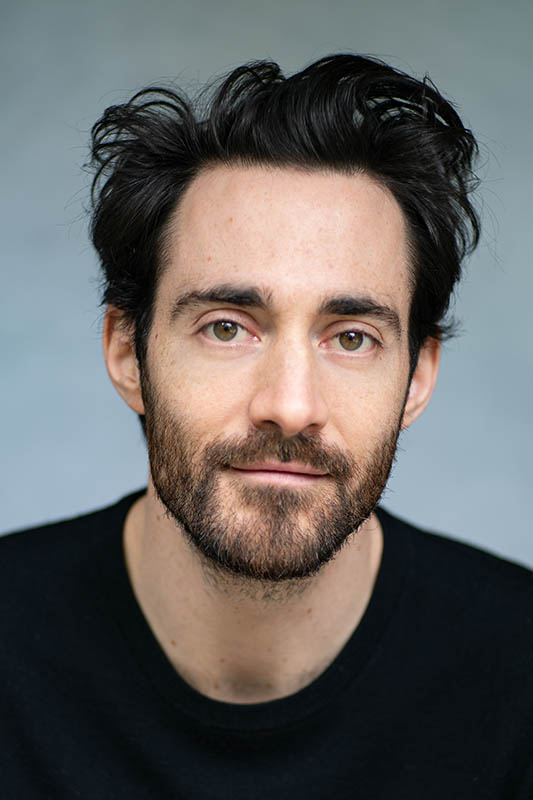
For Axel Stasny, two messages are at the heart of his film. The first is directed against the double standards with which women in particular are judged: “I believe that morals and expectations of a woman are extremely high. If a man has a girlfriend who is 70 years younger, it’s normal. Conversely, it is still a taboo: A woman with a much younger man.” For him, this standard does not end in his private life, but continues in his professional life: “A woman has to show much more strength in order to be successful. I see this in all aspects, including in the film sector. Female cinematographers and directors face huge hurdles to enter the market.”
The second message concerns our approach to age in general. Stasny criticizes a culture that links value almost exclusively to performance and youth: “We live in a meritocracy where you have to look young and athletic to be accepted. This is toxic behavior – and it leads to older people being excluded: In everyday life, but also in the movies.” As soon as people reach a certain age, they become `invisible’ or `annoying’, as if they have lost their social value. “That is a very short-sighted attitude, because we are all getting older and older. I would like to initiate a discussion so that we treat older people differently and also ourselves.”
Why we recommend this movie to you
For us, A Life in Color is so interesting because the film poses a question that is becoming increasingly urgent in an ageing Europe: How do we want to grow old – and who decides that? And what does this mean for us younger people, for us relatives, who support, think, carry – and sometimes also fight?
Eleanor Ambos is the right person to initiate this discussion. Because she is not a character who ages gracefully. She dances, flirts, keeps moving, wears color, thinks big – and she takes what she still wants from life. The film shows this without kitsch or voyeurism. It looks, but does not expose. It makes visible what often remains invisible: Desires, ambivalences, needs, stubbornness. This is precisely where his strength lies: Eleanor is allowed to be complicated – full of zest for life, plans and ideas. At the same time vulnerable, sometimes lonely and with scars that don’t simply disappear. The film shows the nuances of an older personality that all too often ends up in a single pigeonhole in our society: “65+”.
Eleanor is different because she makes her own decisions. Not perfect, not always comfortable – but radically alive and analytically merciless. And this is precisely where the liberating power of this movie lies: It makes you want to live your own life instead of managing it.
Director Axel Stasny approaches Eleanor with palpable affection and respect. He tells the story of ageing in a multi-layered way and without the usual abbreviations. You can sense the trust between the camera and the protagonist – and you realize that he is concerned with something fundamental: Adjusting the images of old age. Not as the end of the line, not as desexualization, not as harmlessly quirky, but as a phase of life in which love, desire, longing and self-assertion are just as real as in any other.
We are telling this story in the past because Eleanor Ambos has since died. But the movie captures something about her that remains: An admirable attitude, characterized by strength and a love of life. And perhaps that is its greatest gift – that it encourages us not to save energy until it suits us, but to invest it in the life we really want to live now.
You can watch the film in the presence of director Axel Stasny:
March 4, 2026: Votivkino Vienna, 7.30 pm
March 5, 2026: Moviemento Linz, 6 pm
March 8, 2026, Cinema Paradiso St. Pölten, 11:30 a.m.
March 8, 2026, Leokino Innsbruck, 7:30 p.m.
March 10, 2026, Freistadt Cinema, 8 p.m.
March 12, 2026, KIZ Royal Graz, 6:30 p.m.
March 14, 2026, Programmkino Wels, 8 pm
March 17, 2026, Das Kino Salzburg, 6 p.m.
The film will also be shown in the following cinemas:
Breitenseer-Lichtspiele Vienna, Stadtkino Grein, Volkskino Klagenfurt, Kino im Turm Radstadt
Documentary / 71min, AT 2025, Stasny Film
Award: CROSSING EUROPA Award, Local Artist, 2025
Writer, director & cinematographer: Axel Stasny
Music mixing: Andreas Lettner
Sound Design & Sound Mixing: Alex Winkler
Additional camera: Colin Sonner


 Deutsch