Friday, March 6, 2026
  • en English
  • de Deutsch
SmartBuildingsCompass
Header SBC English
  • Home
  • Home & Living
  • Tech / Tools
  • Healthcare & Dementia
  • Care & Relatives
  • Download: 10 tips
  • Why we care
No Result
View All Result
  • Home
  • Home & Living
  • Tech / Tools
  • Healthcare & Dementia
  • Care & Relatives
  • Download: 10 tips
  • Why we care
No Result
View All Result
SmartBuildingsCompass
No Result
View All Result
Home Healthcare & Dementia

Healthcare system under pressure: What needs to be clarified now

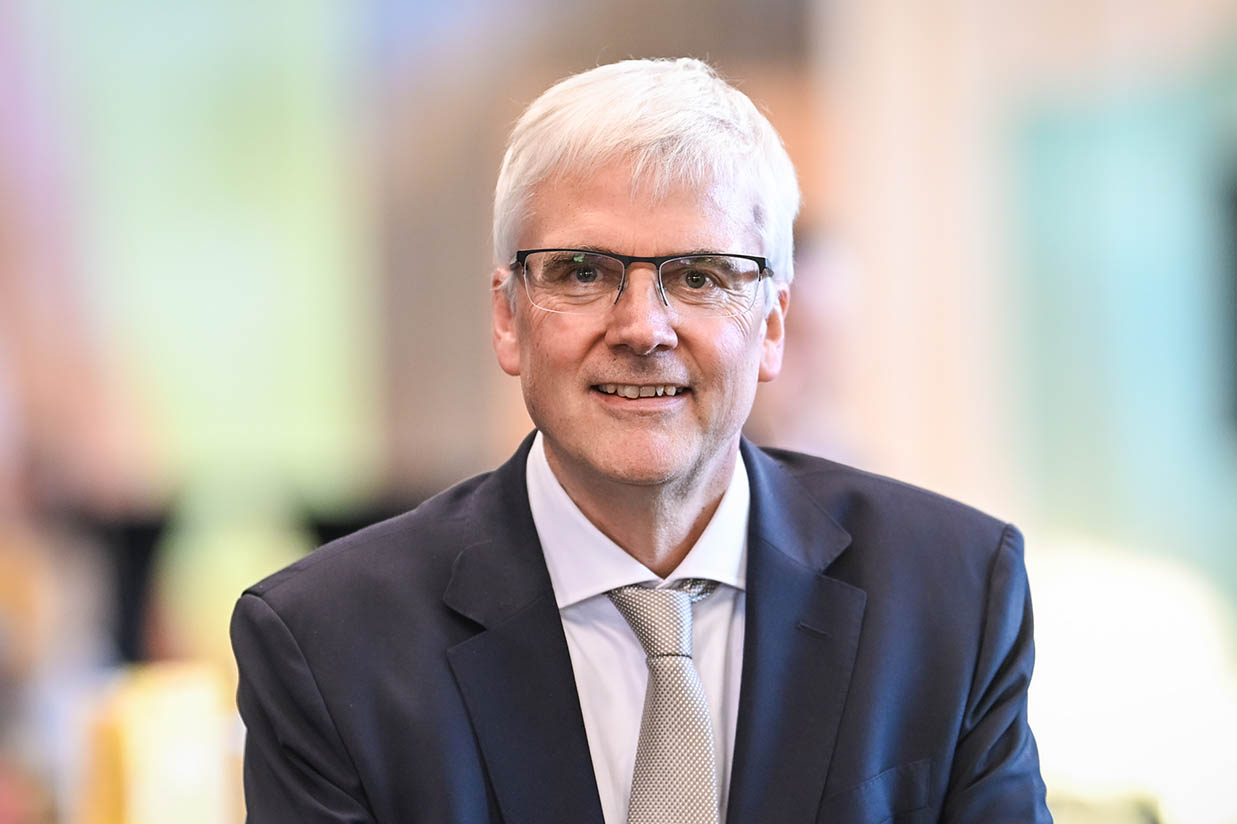
Our interview partner: Health Economist & Dean of the Faculty of Social Sciences, Economics and Business Administration at the JKU Linz, Prof. Dr. Prof. Gerald J. Pruckner (Credit: Andreas Röbl)

Our interview partner: Health Economist & Dean of the Faculty of Social Sciences, Economics and Business Administration at the JKU Linz, Prof. Dr. Prof. Gerald J. Pruckner (Credit: Andreas Röbl)

Dieser Beitrag ist auch verfügbar auf: Deutsch

Anyone who tries to get an appointment with a specialist or for surgery these days knows the feeling: Long waiting times—often even when symptoms are already severely limiting. The healthcare system in Austria is under pressure, and the challenges can no longer be denied. According to the OECD report from 2025, satisfaction with the quality of healthcare in Austria has fallen significantly over the past ten years, from 89% (2014) to 79%.

In conversation with health economist Prof. Gerald Pruckner (JKU Linz), it quickly becomes clear that the pressures are coming from several directions at the same time. Demographics, cost trends, a shortage of skilled workers and technological progress are changing the system faster than structures can be adjusted. The central question is: How it can be kept stable at the current level.

Furthermore, Johannes Kepler University investigate whether there are inequalities in the Upper Austrian healthcare system. First of all, it should be noted that the results of the study for Upper Austria can be easily applied to Austria as a whole. According to Pruckner, Upper Austria ranks “in the middle for almost all indicators”—in terms of life expectancy, expenditure, and other key figures. The differences compared to other federal states are “not dramatic.”

Header SBC English

An honest interview with Prof. Pruckner about the demands, reality and reasonableness of the Austrian healthcare system.

Why we are addressing this issue: The population is ageing and there is a lack of specialist staff and money in the care sector. In addition, the pressure to save money means that there is less money available for regional associations and activities. This raises the question: How do I deal with these challenges as an affected person? How do I navigate a system that is obviously under severe pressure?

Better prevention and health literacy would save us a lot in old age: Health literacy enables people to take better care of themselves and their health, recognize warning signs early on, classify information and take the appropriate steps at the right moment. Instead of only reacting when the situation has already escalated. Particularly when it comes to complex issues such as medication, preventive care, organizing care or navigating between services, health literacy is crucial to ensuring that support arrives in time and that self-determination in everyday life is maintained for as long as possible. This is precisely where we come in as a specialist medium.

Why the pressure in the healthcare system is currently increasing

There is no denying that the pressure on the system is growing: Doctors’ offices and outpatient clinics are bursting at the seams, and there are long waiting times for specialist appointments and operations. Why is the situation in the healthcare system coming to a head right now? Prof. Pruckner explains it very matter-of-factly: “Because we didn’t have this economic pressure in the past.” Patients were able to navigate the system relatively freely, seek multiple opinions, and change doctors—something that, according to the expert, our healthcare system has “long since given up.”

To explain the financial dimension, here are a few figures: In 2024, around 57 billion euros were spent on healthcare in Austria by the public and private sectors – 4.25 billion euros more than in the previous year. The share of healthcare expenditure in GDP rose from 11.2% (2023) to 11.8% (2024). Pruckner: “This puts us among the leaders internationally. We spend 6,300 euros per person per year on healthcare in our country.” According to Pruckner, the pressure is increasing because we no longer spend this amount so easily in times of economic challenges: “In the past, it was easier for us to find this amount and we also questioned it less.”

The main reasons for the current imbalance in the healthcare system: The almost explosive demographic change, the enormous technical and medical progress in combination with the shortage of skilled workers and a difficult overall economic situation. Pruckner explains the situation with an example: “The number of people 65+ in Upper Austria has risen by 43% in the last 20 years. And the new technologies are creating fantastic benefits, but they are also very expensive.” The challenging economic situation is putting massive pressure on public budgets to make savings, which is also affecting healthcare. Another challenge – in nursing care, for example – is the shortage of specialist staff: “We no longer have an unlimited supply of staff.”

The system, which has not been questioned for a long time, is no longer financially viable. “Expenditure is rising so sharply that we are no longer able to offer these services as we did in the past,” explains the health economist.

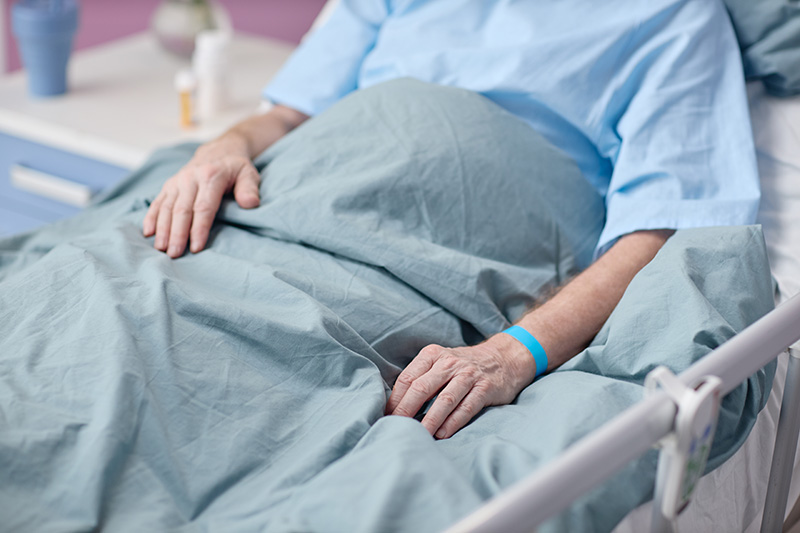
Currently, many patients end up in the wrong places in the healthcare system because people often simply don't know where they are in good hands with their problems. The right navigation could help people - and save money at the same time.  Credit: Shutterstock
Currently, many patients end up in the wrong places in the healthcare system because people often simply don't know where they are in good hands with their problems. The right navigation could help people - and save money at the same time. Credit: Shutterstock
What is needed now: Honest communication and better management

Health economist Pruckner is now calling for something that rarely happens in political discussions: Honest communication. The message: The healthcare system can no longer be organized and financed in this form. Prof. Pruckner: “The political leaders know exactly what has led to this situation. We economists have been telling them for years where the problems lie, and the demographics have been predicted for 20 years. Society is ageing and it is logical that more services are needed in old age. As a result, expenditure is rising, and that doesn’t even include technological progress. What is needed now is honest communication: expectations can no longer be met.”

The consequence of this development will probably be: “There are already moderate co-payments in a number of areas, and this will probably be the case to a greater extent in the future.” Now the question arises as to what additional costs would be incurred by whom. In times of a lack of money – as in many other areas – it leads to a question of distribution.

What needs to be done to get the cost explosion in the healthcare system under control? According to Pruckner, there is no simple solution, but there are clear proposals from the scientific community. One of them: Better navigation of the healthcare system by GPs. Pruckner: “Today, people are not being treated where they benefit most. This is really expensive, doesn’t help much medically and is sometimes even counterproductive for patients.” In other words, better navigation would improve patient treatment and save money at the same time.

Another important step: Better treatment at the interfaces. This refers to the interfaces between the responsibilities of the federal and state governments. The private practice sector (general practitioners and specialists) is managed and financed separately from the inpatient sector. Pruckner explains this using an example: “On Friday afternoons, the private practice sector is often unavailable, so the only option is the hospital – and this also changes responsibility. And we need to improve this treatment at the interfaces.”

According to Pruckner, this requires funding “from a single source” – and cash flows that consistently follow the objectives. This is particularly necessary when it comes to outpatient care: “If everyone wants fewer people to be treated in hospital, then the euros must also follow this goal: In other words, more investment in the outpatient sector. However, this is exactly what is often not happening today.”

“Funding from a single source” does not mean that in future either the federal government, the federal states or the social insurance system will be the sole controllers. Rather, it is realistic that all parties involved remain on board – but steer together. The decisive advantage: Responsibility could then no longer simply be shifted to another pot.

Why navigation in the system is becoming a key issue

What does “better patient navigation” mean in detail? The two biggest levers lie in behavior: In the use of medical services and in better health literacy. “The question is how to give people the knowledge to help them enter old age in a healthier way. What content is needed to make people aware of the necessity of a service, such as a preventive check-up,” explains the health economist. He sees the general practitioner in the role of first point of contact: “We need to give patients much better support.”

GPs know their patients and their health history, and they know the medical services on the market. Pruckner: “Although we observe that many patients end up in the wrong places, we don’t go into enough detail why this is the case. People often simply don’t know where they are in good hands with their problems. We are often too quick to assume that people go to outpatient clinics because it doesn’t cost them anything. It is often the case that they simply don’t know any better than to turn to outpatient clinics. GPs can provide support and the necessary guidance in the healthcare system.” This is the disadvantage of an open medical system: without orientation, the end consumer is lost.

According to Pruckner, the social insurance institutions are currently running their first pilot projects to help chronically ill people who have been on sick leave for a long time: “The social insurance institutions are now starting to talk to people. They ask what they need,” says Pruckner. This gives patients better advice on what further steps are possible.

Health literacy & access to care

Let’s move on to the study on inequalities in the Upper Austrian healthcare system – which can also be applied very well to whole Austria. According to Gerald Pruckner, access to medical services is not “dramatically unequal” thanks to the nationwide health insurance system. This is because: “We have an insurance level of 99% and a fundamentally open healthcare system with free access to services,” says Pruckner. However, this does not mean that access to medical services is the same for everyone. The central question of the study was therefore: What is inequality and why does it exist?

What we already know is that inequality is partly caused by socio-economic factors. Life expectancy and health differ according to gender, education, income, occupation and other socio-economic factors. “Inequality is partly due to the fact that people with different characteristics behave differently,” explains Pruckner. People use services differently and manage their health differently. For example, women live on average four years longer than men, people with a higher level of education live longer and are in better health than people with a lower level of education. This is because they know the risks better, are more likely to take preventive care, eat healthier and take action earlier.

Women with a lower level of education make less use of preventive medical check-ups. Unsurprisingly, older people spend more on healthcare than younger people, but here too, the use of medical services varies according to income, education and age – as well as place of residence and region.

Apart from these socioeconomic reasons, there is also unequal access to medical facilities, for example when medical services are unevenly distributed across regions. Pruckner: “Austria is losing doctors” – and thus addresses a supply-side problem. There is no inequality here; the decline in the number of general practitioners, for example, affects everyone equally. “Access is deteriorating for everyone, and positions in general medicine are no longer so easy to fill. We are already seeing this inequality to some extent among specialists. We address this issue in our study using the example of gynecologists: The availability of services varies from region to region, and there are more practices available in areas where wealthier people live than in areas where workers and people with lower levels of education and income live. This is particularly true in rural areas. Distances are simply greater in peripheral areas, while in urban areas—i.e., in cities—access is unsurprisingly easier,” explains Pruckner.

Pruckner’s opinion: Yes, the study shows differences in access to benefits. However, these are not as great as some would expect. Overall, according to Pruckner, inequality is a mixture of the two phenomena of health literacy and access. The question arises as to the right adjustments: “If women with poorer education do not undergo certain examinations, what should be the response of the healthcare system?” The answer to this question is not necessarily “another practice” – the causes lie deeper. Rather, we need other ways to reach these people – in terms of addressing them and making them suitable for everyday life.

Conclusion: More communication & orientation, clear funding streams are needed

The issue of inequalities in access to healthcare is important – but it is not the dominant problem. Disparities arise primarily where there is a lack of health literacy and people are not well enough oriented in the system. It is therefore crucial not only to open more practices – as is often suggested politically – but to build a system that reliably guides patients again: With strong regional primary care as the first point of contact, clear responsibilities at the interfaces and funding that is consistently geared towards the agreed objectives.

Gerald Pruckner warns of the political side effects if we do not tackle these reforms: “If people get the impression that they have paid in for a long time and are now being left alone, dissatisfaction will grow – and at some point this can no longer be moderated away.”

Click here for the study “Inequality in the Upper Austrian healthcare system”

Anja Herberth
Author: Anja Herberth

Chefredakteurin

Previous Post

“A Life in Color”: Cheers to the crazy life

Related Posts

Eleanor Ambos in "A Life in Color" - Credit: SixPackFilm
Healthcare & Dementia

“A Life in Color”: Cheers to the crazy life

4. March 2026
Women's hearts beat differently—and need more attention. (Credit: AHA/American Heart Association)
Healthcare & Dementia

Go Red for Women 2026: Why women’s heart health needs more visibility

17. January 2026
The book "The unexpected journey" is a special kind of travel guide: For people who accompany a loved one with dementia. Book cover: Kailash
Dementia

Emma Heming Willis: “The unexpected journey”

12. January 2026
The Picasso "Tête de Femme" (1941) - a gouache on paper, with an estimated value of around 1 million euros - will be raffled off. Credit: Picasso Estate, Paris, 2025
Dementia

1 Picasso for 100 euros: A French idea that finances hope

12. January 2026
Sophie Rosentreter (right) with her mother Katrin and grandmother Ilse: "Grandma Ilse's" dementia is overwhelming the family. Today, Sophie Rosentreter is developing solutions for caring for and dealing with dementia. Credit: Katrin Schöning/Sophie Rosentreter
Healthcare & Dementia

Care & dementia expert Sophie Rosentreter: “The heart does not become demented”

18. November 2025
The topic of dementia is more complex than is portrayed in the media. In conversation with Raphael Schönborn, we analyze levels that are often completely missing: The people affected themselves, and that we could turn dementia into an impairment that can be shaped and also influenced. If only we wanted to. Credit: PROMENZ/Dragan_dok
Dementia

Rethinking dementia: breaking down barriers and strengthening self-help

11. November 2025

Leave a Reply Cancel reply

Your email address will not be published. Required fields are marked *

  • Deutsch
  • English

.

loader

Newsletter

What tools and concepts are available for senior living, care and support - and where can they be found? Our newsletter provides answers!

I accept the terms and conditions

Recent News

Our interview partner: Health Economist & Dean of the Faculty of Social Sciences, Economics and Business Administration at the JKU Linz, Prof. Dr. Prof. Gerald J. Pruckner (Credit: Andreas Röbl)

Healthcare system under pressure: What needs to be clarified now

6. March 2026
Eleanor Ambos in "A Life in Color" - Credit: SixPackFilm

“A Life in Color”: Cheers to the crazy life

4. March 2026
Protest day on March 23. Pharmacies are fighting for better economic conditions - 20% of pharmacies have already given up.  Credit: Shutterstock

Pharmacies in Germany: Why they will remain closed on March 23

3. March 2026
Our interview partner Nicolas Tobaben is Head of Disaster Management at the German Johanniter Regional Association North (Credit: Johanniter)

Crisis requires community: “Only when a few people consciously consider others can it truly be sustainable.”

23. February 2026
It's not always the big disasters that disrupt our everyday lives - small crises happen every day. The distribution box around the corner has a problem, regional storm damage or snow pressure: it is precisely these small events that we need to be prepared for.  Credit: Shutterstock

Crisis-proof in caregiving households

23. February 2026
SmartBuildingsCompass

Made with care. For you.

Our research and interviews on safe and independent living in old age are written by our team with a great deal of energy and passion. We hope you enjoy reading them!

Do you need more information? If so, you are welcome to contact us at redaktion@sbc.co.at.

All rights reserved (2025).

  • Deutsch
  • English

Follow us

Instagram
  • Home
  • Subscribe to our newsletter
  • Glossary
  • About us
  • Contact
  • Marketing: Information for businesses
  • Download your 10 tips for independent, safe living in older age
  • Presentations & workshops for local authorities & nonprofits
  • Contact & Legal Notice
  • FAQs
  • Disclosure Statement
  • Nettiquette
  • Data protection
  • General Terms and Conditions (GTC)

© 2025 by owl lab e.U. Wir navigieren Wandel.

We use cookies on our website. Some of them are essential, while others help us improve this website and your experience.
Cookie SettingsAccept All
Manage consent

Privacy Overview

This website uses cookies to improve your experience while you navigate through the website. Out of these, the cookies that are categorized as necessary are stored on your browser as they are essential for the working of basic functionalities of the website. We also use third-party cookies that help us analyze and understand how you use this website. These cookies will be stored in your browser only with your consent. You also have the option to opt-out of these cookies. But opting out of some of these cookies may affect your browsing experience.
SAVE & ACCEPT
No Result
View All Result
  • Home
  • Home & Living
  • Tech / Tools
  • Topic search
    • Topic: Orientation
    • Topic: Dementia
    • Topic: Building & Renovating
    • Topic: Healthcare
  • Local authorities & Nonprofits
  • Download: 10 Tips
  • Deutsch
  • English

© 2025 by owl lab e.U. Wir navigieren Wandel.

Safe & independent living in old age

27 pages of tips for independent, safe living in old age—download now!

Download our PDF with tipps now!
loader

Email addresse*
I accept the privacy policy and agree that SmartBuildingsCompass.com may contact me beyond this request to send me its regular newsletter. I can unsubscribe at any time.

Sicher & selbstbestimmt Wohnen im Alter!

27 Seiten Tipps für sicheres, selbstbestimmtes Wohnen im Alter - jetzt downloaden!

Jetzt gleich downloaden!
loader

Email addresse*
I accept the privacy policy and agree that SmartBuildingsCompass.com may contact me beyond this request to send me its regular newsletter. I can unsubscribe at any time.