This article is also available in:
Deutsch
Those who support parents over the course of months or years often sense that the time they have together is limited. Yet death still catches many families off guard. Within a matter of hours, questions arise that no one ever asked while the person was alive: Who should be notified? Where are the most important papers and documents? And did the deceased have any funeral wishes, such as a religious or secular service, a forest or a cemetery, a burial or cremation?
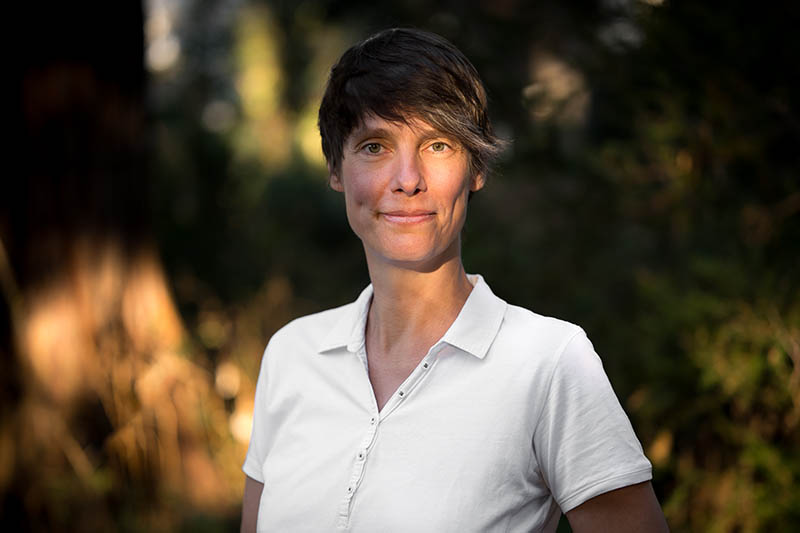
Barbara Rolf is a funeral director and theologian in Baden-Württemberg. In her book Was ist der Tod für dich? (What Does Death Mean to You?, published in German by Verlag Herder), she writes about her experiences from many years of supporting bereaved families through a very difficult time.
You might also be interested in
In the interview, she explains what questions family members often ask after a death, how to broach the topic of funeral wishes, and what arrangements are often missing in many families.
What to Expect in This Interview
- what uncertainties family members face immediately after a death and how to prepare for them,
- how to start a conversation with your parents about their end-of-life wishes,
- where end-of-life documents should be kept and why a will is the wrong place for funeral wishes,
- how you can plan the farewell yourself, and
- what questions families should ask while a loved one is still alive.
SBC: Ms. Rolf, you’ve been helping people say goodbye for many years. What questions do you hear most often from family members?
Rolf: I’m always surprised by how many of these questions are actually requests for permission. May I lay my deceased loved one out at home? May I touch her? May I give her one last kiss? May I carry the urn myself? There’s a lot of uncertainty behind this, because we know so little about these things, even though we’re naturally capable of experiencing and coping with even the most difficult situations.
In my view, the most important emotional experience in such a situation is feeling a sense of self-efficacy. Supporting someone during this difficult time, therefore, does not mean taking everything off their hands without asking. That may be well-intentioned, but it can leave them feeling powerless.
On the other hand, if you explain things clearly, offer clear options, and ask how the family would like things to be handled, people come to realize that, although they’ve gone through a terrible experience, they are still able to take control and make decisions.
SBC: What particularly unsettles family members in the first few hours?
Rolf: Many people feel under enormous time pressure and believe they have to immediately arrange for a funeral home, the pastor, and a funeral date. When no one is prepared, questions also start piling up: What would the person have wanted? What was important to them? Should the service be religious or secular, cremation or burial, a forest or a cemetery? It can feel overwhelming, and it helps a lot to break everything down into smaller steps and tackle them one by one.
A death is stressful enough on its own. That makes it all the more helpful to have a guide, to know the person’s wishes, and to have certain matters already taken care of.
>> You can take a moment to breathe deeply, take in what has happened, and linger at the deathbed. <<
SBC: You emphasize that family members face less time pressure after a death than they realize. What does that mean, specifically?
Rolf: Even though it may feel as though everything has to be taken care of and decided immediately, that’s generally not the case. You can take a moment to breathe, process what has happened, and spend time at the deathbed. The deceased can remain at home longer than many people think. In Germany, the rules vary by state: In Bavaria, there’s no time limit at all for transporting the body; in many other states, including here in Baden-Württemberg, the limit is 36 hours.
More and more nursing homes and hospices are allowing time for a farewell and for the body to be laid out. This means you can take your time to find a funeral home that’s right for you, and of course, it’s best if you’ve done a little research beforehand. If you don’t like the way they speak to you, if your questions aren’t answered clearly, or if your wishes aren’t being heard, feel free to keep looking.
Most of us have more questions about death than we dare to voice. How can I prepare for a death? What really helps during the grieving process? And: What does a dead body feel like?
Funeral director and grief counselor Barbara Rolf is confronted with questions like these every day. She knows that death is beyond our control. And yet it is not the enemy of life. It makes life precious, raises questions about meaning and values, and shifts our perspective to what truly matters.
In her book, Barbara Rolf answers 100 questions and shares her experiences with the deceased and their bereaved families, as well as how her daily encounters with death have changed her own life.
Published in Germany by Herder Publishing.
SBC: Anyone who has cared for their own parents for a long time often knows that their time together is coming to an end. Yet very few people are prepared for it. Why do conversations about death and end-of-life wishes happen so rarely?
Rolf: Often, family members are afraid to bring up the topic, and sometimes those affected also fear burdening their family with it. I understand very well that a conversation like this takes courage. But there are simple ways to broach the subject, for example by saying: “It’s important for me to know this, because then I’ll feel like I’m doing it right and in a way that honors your wishes.”
People are usually happy to respond to this request. I once had a man who told me he didn’t care about any of it. He said the family should do whatever was best for them. I replied that that was wonderful, but that he needed to say exactly those words to his family. “I want you to do whatever you think is best” is an incredibly important phrase for family members.
SBC: How can a conversation like this begin within a family without anyone feeling pressured?
Rolf: I keep hearing that this difficult topic led to surprisingly entertaining and pleasant conversations. An elderly woman said to her family that she had been thinking about an anonymous burial so that the others wouldn’t have so much work to do. The others were horrified and told her that they didn’t like that idea at all. And in the end, she was flattered that her family didn’t want that.
A conversation like this can even be funny at times, and, most importantly, it allows everyone to share their perspective. If someone wishes for something unusual, such as a burial at sea, it helps the family greatly to know the reasons behind it. That way, they can better understand and support that wish.
If you’d rather not have this conversation, you can also write down your wishes for yourself first, for example in a funeral planning booklet. Almost every funeral home and many palliative care and end-of-life support services offer such forms, which remind you of the essential questions. It is then important to let your family and loved ones know that these documents exist and where they are kept.
SBC: Where should important documents and end-of-life wishes be kept?
Rolf: They should be kept in a place where they can be found quickly in an emergency. Please do not include your wishes in your will, because it is often not opened until weeks after death, when the person has long since been buried.
A folder that the family knows contains everything they need in case of an emergency has proven to be a good solution: from a living will to funeral wishes. Some people put their wishes in the family record book (Familienstammbuch). Often, however, relatives don’t even know where the record book is, and the note remains undiscovered. I’ve also had cases where the wishes were kept in a safe. But not everyone goes straight to the safe after a death.
Even if you’ve already made all the necessary arrangements with a funeral home while you’re still alive, it’s essential that you tell your family. Unfortunately, it sometimes happens that family members aren’t aware of this and end up hiring a different funeral home. It’s especially important to communicate where the essential documents are. That way, when the time comes, it won’t turn into a treasure hunt that causes enormous stress on top of the loss.
SBC: In your book, you emphasize that family members can organize the farewell ceremony according to their own needs. Can you outline the options for us?
Rolf: At the beginning, it’s worth thinking about who should be informed and involved right from the start. When my brother died, we were at a loss. Not only because of the traumatic circumstances, but also because we weren’t prepared and had no idea how to proceed. We forgot to tell an uncle, and he read in the newspaper that my brother had died. So you need the time and space to think together about who you want to tell right away and who you should ask what’s important to them right now.
It’s perfectly legitimate to let a funeral home take a lot of the work off your hands. But you can also be involved in everything and do things yourself. Some people want to be actively involved in caring for the deceased, washing and dressing them and placing them in the casket. Others feel more at ease when they get creative, choosing flowers or designing the memorial card. Still others prefer to take charge of the logistics, notifying people, canceling contracts and registrations, or finalizing the contract with the cemetery office. Some want to see the deceased one last time, others do not.
It’s important to respect these different needs. No one has to make decisions for everyone else, because each person can do that for themselves.
SBC: What happens if there’s no one to arrange the funeral?
Rolf: If there are no next of kin responsible for the funeral, the public order office in Germany takes over, specifically the one in the place where the person died. So, if someone dies in another city following an accident or while in a nursing home, they are usually cremated there and buried anonymously.
Almost no one wants to be buried in the impersonal way that official burials are conducted. However, the authorities have neither the capacity nor the insight to do anything differently, because they cannot guess what a person might have wanted.
This can be avoided by making advance arrangements, for example with a funeral home, which is then given the right to make all decisions about the funeral and can commission all services itself. You can also transfer this right, known in Germany as Totenfürsorge, to a person close to you. A single sentence on a piece of paper may be enough, but that one sentence is required. That person is then authorized to handle everything related to the body without taking on any further obligations, such as clearing out the home or canceling registrations.
I find it distressing how often such arrangements are missing. Many people assume that everything will be handled properly, for example, because they are wealthy. But that has nothing to do with it.
SBC: Are there any questions that are surprisingly rarely asked, even though you consider them important based on your experience?
Rolf: Far too little is said about how one would like one’s life to end and where one’s limits of tolerance would be crossed. Family members are then often faced with the difficult question of what the person in question would have wanted in this situation and which medical measures would be in accordance with their wishes. Knowing this in advance is a great relief for them. The decision between cremation and burial is no trivial matter either, and it’s a shame when you have to guess it for someone else.
My mother recently told me that she’d like to move into a nursing home if she can no longer manage at home. She definitely doesn’t want her children to take care of her. That surprised me, but I was grateful for it, because I feel the same way: I want professionals to care for me and for my daughter to come visit me without being completely exhausted.
There is also little discussion of assisted suicide, which is now legal in Germany, or of organ donation. Many people have an opinion on these matters, but by no means all of them have documented their wishes or shared them with their loved ones. After my brother’s death, we were asked about organ donation, and that’s a difficult question because you’re making a decision about another person’s body.
And finally, people talk far too rarely about inheritance. Even when statutory succession applies, it helps a great deal with a large or complex estate if the parents have made their wishes known. Or if they’ve asked their children whether they feel confident handling the division themselves. The future heirs shy away from this conversation because it sounds greedy, and people don’t talk about money. I consider this a very German problem, one that unfortunately causes many relationships to break down.
SBC: How has your daily encounter with death and grief changed your outlook on life?
Rolf: For me, the moment itself has become especially important. I hardly ever think about what I’ll do one day when I’m retired or in my old age, because I don’t have a list for later. I ask myself how important something is to me, and if it’s important enough, I make plans for it right away.
Many things that used to upset me have become less important to me. In other areas, I’ve become more sensitive again. My view of society is certainly more critical, because I’ve learned that things we consider normal, such as poverty, loneliness or exclusion, can be life-threatening. The awareness that I will die helps me decide what to do and what to leave undone. Sometimes the thought of death even comforts me, because this constant struggle with issues, with the world and with oneself doesn’t last forever.
Overall, I’ve benefited greatly from grappling with death, because it has given my life greater depth. And I’ve become much more reserved and less judgmental toward others, because through the many times I’ve accompanied people, I’ve realized how little we actually see of other people. Every life is a vast story, and my profession has given me a glimpse behind many doors, into many families and life stories.
SBC: What are your hopes for how we deal with dying, death, and grief, both in our personal relationships and as a society?
Rolf: On a practical level, I hope that we can give people the tools, guidance and knowledge they need to empower them to do and prepare things on their own again. In the past, much of this was naturally handled by family and neighbors; later, religious communities and also my own industry, the funeral industry, often took over.
However, these important moments in life belong in the hands of competent people who can make confident decisions. This requires transparency and honesty rather than vague promises like “We won’t leave you alone.” The fact is, we do indeed leave people alone if they don’t receive the information they need and no one gives them confidence in their own abilities.
On an inner level, I would like us to develop a greater awareness of our own finitude. In our Western society, and in the business world as well, we act as if everything were infinitely available: resources, water, our lives and our strength. When we try, even as we grow older, not to grow old, we’re fighting a battle we’ve lost from the start, and an exhausting one at that.
I believe that most people are spiritual in the broadest sense and feel that they belong to something and that their lives are part of a larger whole. It would be good if we could rely on that more again, rather than just on our bank balances, life insurance, our homes, and our property. In my view, a society that feels secure in a broader sense would be well-equipped to face the challenges ahead.
Thank you very much for the interview!
Barbara Rolf is a funeral director and theologian in Baden-Württemberg and has been helping people say goodbye for many years. She has documented her experiences in her book Was ist der Tod für dich?, published in German by Verlag Herder. For more information, visit www.frautod.de
The regulations mentioned in the interview regarding the public order office, the right of disposition, time limits for transferring the deceased, statutory succession and assisted suicide apply to Germany. Specific practices vary by state law and regional procedures, and rules differ in Austria, Switzerland and other countries.
How long can a deceased person remain at home?
In Germany, this is determined by the federal states. According to Barbara Rolf, Baden-Württemberg, like many other federal states, allows 36 hours, while Bavaria has no deadline for transferring the body. In Austria, each federal state has its own regulations.
What does "right of disposition" mean (Totenfürsorge)?
It is the right to make decisions about the body and the funeral. It can be transferred to a funeral home or to a person close to you, who does not take on any further obligations as a result, such as clearing out the home.
What happens if no one arranges the funeral?
In Germany, the public order office in the place of death then takes over, usually with a cremation followed by an anonymous burial. Anyone who wants to avoid this can make advance arrangements with a funeral home or transfer the right of disposition to a trusted person.
Should funeral wishes be included in a will?
No, because a will is often not opened until weeks after the death, when the funeral has long since taken place. Funeral wishes should be kept in a place the family knows and can find immediately, for example in a planning folder together with the living will.
How do I talk to my parents about their funeral wishes?
A good place to start is to explain why it matters to you, for example that you want to do everything the way your parents would want it when the time comes. Some people find it easier to share their own wishes during a family meal and open the conversation that way. Planning booklets from funeral homes or palliative care services can also help you think through the key questions.
Do you have to hire a funeral home immediately after a death?
No, there is usually time to find a funeral home that suits you. If the way they speak to you or their answers are not convincing, family members are free to keep looking.