SBC: Caring for family members is therefore also a gender equality issue.
Gruber: Yes, it is a gender equality issue. We’re putting women at a disadvantage — unintentionally, but to a massive extent. First, we let care work for children be done cheaply or for free; then the same happens with family members; and in the end, we have to make additional pension contributions because so little of the pension remains. This leads straight to poverty in old age.
We just observed Equal Pension Day: There’s a difference of about 1,000 euros in the average pension between women and men. Two-thirds of all people in need of long-term care are women, and 60 percent of all single seniors are women. This means that women end up in poverty in old age, live there for longer and longer periods, and then become in need of long-term care themselves. I consider this systemic nonsense.
That is precisely why our mission is to help raise awareness. I know I can’t change the system. But if we can explain to people how illogical this is, then we can make a difference.
SBC: Let’s go over the remaining two groups of loser parties — who are they?
Gruber: The third group of losers is employers. Working caregivers take sick leave more often, work part-time more frequently, retire earlier on average, and ultimately face a wider gender pension gap. At the same time, companies are struggling to attract skilled workers, increase full-time employment, and boost productivity. And now comes the crucial point: family caregiving in Austria is a woman’s job. So we’re losing our best-educated, longest-serving, and most dedicated female employees. Often, right after they return from caregiving for their children, they move on to caregiving for their relatives.
Finally, the fourth loser is the system as a whole — that is, all of us: When those in need of care require more care, women have lower lifetime earnings and need to pay more out-of-pocket, and companies pay less in taxes, the entire system loses out.
SBC: Let’s move on to your solution: What exactly do companies gain by working with you?
Gruber: Companies now come to us for a wide variety of reasons. We’re now in our third year, and we have just under 200,000 authorized users in our solution. Almost always, about ten percent of employees use our solution—and it’s not always the same ten percent; ideally, usage rotates throughout the entire workforce.
Many employers may have suspected this figure beforehand, but had no concrete evidence to back it up. About five to seven percent are facing an immediate issue — that is, they are currently dealing with caregiving responsibilities themselves. In addition, we place a clear emphasis on prevention from the very beginning: raising awareness early on so that people can grapple with the topic of aging long before anything happens.
Today, it’s about offering employees more than just a fruit basket or free coffee. We always say: Our benefit is an emotional one. No one wants to need it — but those who do need it appreciate it immensely.
SBC: Can you illustrate that with an example?
Gruber: An employee who had been with the company for 23 years once told me that her supervisor personally stepped in to help her find support and a nursing home quickly when her mother-in-law suddenly needed care. She told me, word for word: “I’ll never forget that.” No matter what happens, I’m staying here.
It’s just like with kids: If I get a call at 10 a.m. telling me I need to pick up my child, and my manager reacts the wrong way in that very moment, then I’ve lost that employee. The same goes if the call comes from the hospital. No matter how many benefits the company offers—commuter passes, bike subsidies, gym memberships—if this emotional aspect goes wrong, the employee is lost. And we know what it costs to replace employees. Ultimately, this is a matter of business performance, and you can calculate it down to the last detail.
SBC: From an employer’s perspective, what other reasons are there for better preparing for employees’ caregiving responsibilities?
Gruber: I remember a call from a medium-sized company. The HR manager said to me, “Mr. Gruber, I have an employee in her early 50s who keeps the whole department running. She’s the best employee I’ve ever had. Within three weeks, both of her parents became in need of extensive care. Now she’s at risk of having to take time off and doesn’t know how she’s supposed to manage it all. Can you help?”
This case illustrates the problem very clearly: a private caregiving situation suddenly becomes a business risk. A key employee, on whose knowledge and performance an entire department depends, may be absent for an indefinite period. This isn’t a week of vacation after which someone returns refreshed. She may be away for a month—and when she returns, the responsibility for caregiving is still there.
Many companies only begin to take action at this point. Yet a surprising number of executives are familiar with the situation from their own families. However, personal experience rarely leads to action within the company: If this could happen to me, it can also happen to employees—at any time and at any level of the hierarchy. Caring for family members is still largely seen as an individual’s personal fate—not as something that affects a million people in Austria.
SBC: What exactly does “Because we Care” provide for employees?
Gruber: At its core, it’s a knowledge database that maps Austria’s entire system in a process-oriented and practical way—enriched by my practical experience from hundreds of conversations with family caregivers, along with checklists and templates based on real-life situations. You won’t find this anywhere else: On pflege.gv.at, you won’t find a single testimonial accompanied by a checklist derived from the experiences of ten people in similar situations. Whenever a family caregiver has told me, “If only I’d known that sooner,” we’ve turned it into a checklist. Because that’s exactly where people fall short.
Here’s an example: Yesterday I was sitting with a woman who had been struggling desperately until she finally understood how her mother’s walker would be covered. I explained it to her in a minute: There are four steps. Go to the family doctor, get a prescription, go to the medical supply store, pay the copay—done. She thought she’d have to buy the walker herself. This whole process could be wrapped up in a minute and a half. Sometimes it takes people two and a half days—and that’s during work hours.
SBC: Care doesn’t follow a work schedule and can’t be put off.
Gruber: Exactly. Many companies have heard the term “presenteeism” at some conference or another, but have never really considered what it means when employees are physically present but mentally somewhere else entirely—unproductive, distracted. And anything involving my family is more important than work. If my mother has just been taken to the hospital by ambulance, I’m not sitting in a meeting crunching numbers in Excel spreadsheets. That’s a key factor, and it can be measured and quantified. But there are still too few metrics for it.
I’d like to explain it using an analogy: When we’re faced with an unclear task, we instinctively reach for our cell phones and Google it. But when it comes to caregiving, that can drive you crazy. You find a lot of information, but it’s completely disorganized. What we’ve done is clear a path through this jungle and provide very practical guidance: First, do this; then do that; then go there; and take this template with you.
Filling out a long-term care allowance application takes 20 minutes. If you forget to do it, it costs you money every day—and without a valid application, you can’t access the social security system. To put it simply: Our solution is the better, process-oriented, practical “Google” for long-term care. We also help family caregivers ask themselves the right questions: Do I want to, can I, and do I have to provide care? And if not—who should do it, and what do I need to make that happen?
SBC: Among other partners, you work with the Upper Austrian Health Holding, one of the state’s largest hospital operators. How did an employer in the care sector come to use your solution?
Gruber: This is a collaboration that is particularly meaningful to us. The Upper Austrian Health Holding has just under 17,000 employees, about half of whom are nursing professionals. They use “because we care” for preliminary guidance on nursing issues because they simply don’t have enough internal resources to advise all of their own employees—especially given how decentralized their operations are across an entire federal state. It simply makes sense to provide employees with an accessible and anonymous tool right where they work and live.
The great thing about it is that the experts there are very critical of our content because they have enough expertise to check whether we’re putting out nonsense. We regularly receive feedback on how helpful the program is. Within the company as well, they’re very satisfied with our initiative as part of the life-stage-oriented work model.
SBC: Why do you think a fundamental reform of the long-term care system has not yet been implemented, even though the system is difficult for those affected to understand and is placing an increasing burden on families and companies?
Gruber: My work has been very political for many years, and I’ve come to understand that decision-makers at both the federal and state levels cannot—and will not—change the current system, because the criteria they use to make decisions differ from those of the people directly affected. Waiting for the federal government to implement a major long-term care reform is a waste of time. If you wait for that, you’re doomed.
The fundamental problem: Our system, which places a heavy burden on families and women, is already in place and operational, and the actual costs won’t hit us for another 20 years. For a female policymaker, things could hardly go better—she can put it off indefinitely.
The fundamental problem: Our system, which places a heavy burden on families and women, is already in place and operational, and the actual costs won’t hit us for another 20 years. For a female policymaker, things could hardly go better—you can put it off indefinitely. It’s also worth considering that every euro invested in the long-term care system today will multiply many times over in the coming decades.
Yet care is one of the cornerstones of our welfare state and an essential part of the intergenerational contract. I often say: Things will never be as good as they are today—and already, the system is crumbling everywhere. That’s why real change can only come from the bottom up: raising awareness, preparing people, and hoping that care—which is already one of the top issues in almost every election—will eventually be given enough weight to bring about real change.
SBC: What are your hopes for the future?
Gruber: First, I’d like to see the professional care sector grow stronger. This profession has an incredible amount to offer that, for a variety of reasons, has been undervalued until now. If everything in our lives becomes more digital and, eventually, driven by artificial intelligence—what will remain of us as human beings? I believe that care—the human connection—has a tremendous opportunity to become one of the most meaningful fields of work in the coming decades.
Second, I hope—and not just because I have two daughters—that women will be “freed” from this system, which has been built on conservative principles over the centuries. I don’t want my children to have to take care of me. I don’t want them to have to work part-time just because there’s no other option. I’m all for freedom of choice. If they freely choose to do so and can afford it, that’s fine. But I don’t want them to have to do it just because there’s no other way.
And third, I hope that, as a society, we can take the fear out of aging and see this stage of life for what it can be: the most independent and fulfilling—if you’ve prepared for it reasonably well. That we find better ways to support older employees before they retire—providing meaningful work and a smooth transition. And that we answer the question: Who am I when I’m no longer working?
Thank you very much for the interview!
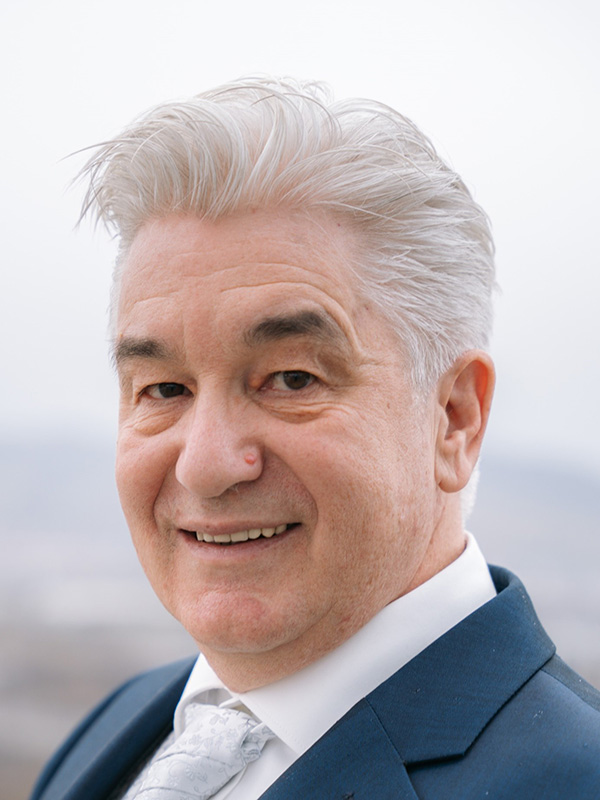
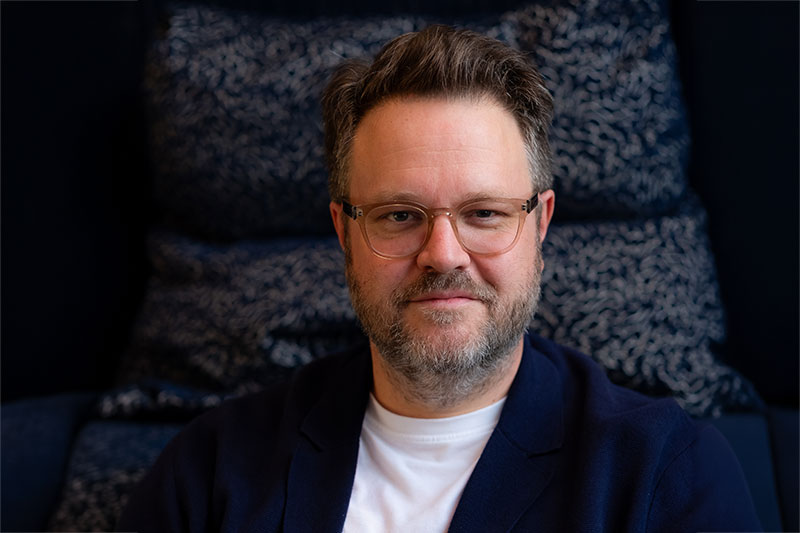
Andreas Gruber grew up in a nursing home—due to his parents’ jobs—and ran a nursing home for eleven years. Through the “because we care” platform, he helps companies ease the burden on caregiving employees and maintain their ability to work. For more information, visit https://www.because-we.care


 Deutsch