Dieser Beitrag ist auch verfügbar auf:
Deutsch
The current 65+ generation is considered to be the wealthiest generation of pensioners ever. The annual inheritance volume in Austria was 21.5 billion euros in 2025 and will almost double by 2050. In Germany, 113 billion euros were bequeathed or given away in 2024 – and the trend is rising here too: the baby boomer generation owns around 57% of private real estate assets in Germany.
These assets will be spent on care and inherited in the coming years. Many people do not yet have a plan for this – and it is urgently needed. We are living longer than ever before, but we often don’t live out our final years in good health – as recent studies show.
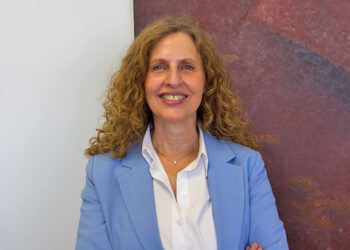
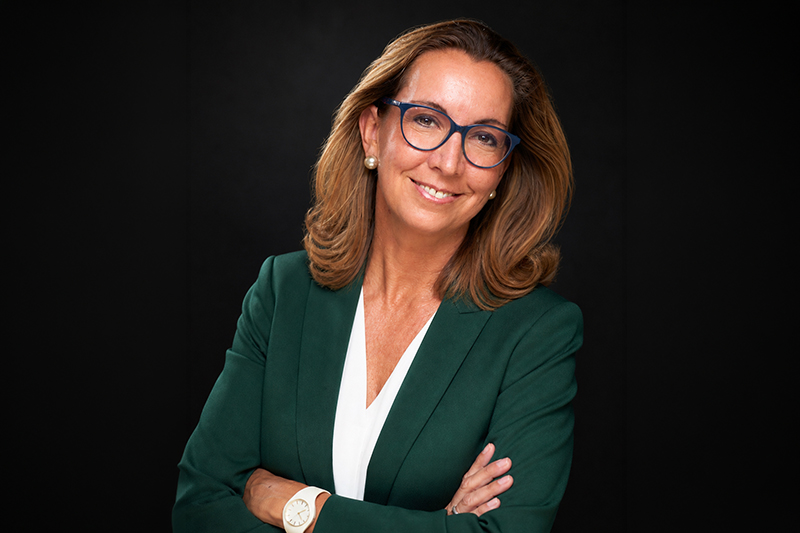
We therefore asked how we can prepare ourselves well for this time. Our interview partner: Silvia Merschitsch has 32 years of banking experience and is an independent mediator for asset distribution and inheritance law issues. She received the a.g.e. Award 2023 for Society for her thesis on “Financial transactions of the 70+ generation”. In her book “Regulated finances in old age”, she addresses the big questions: What financial and organizational risks arise in old age, and how can we best manage our financial affairs in good time? And why the biggest destruction of money doesn’t happen on the stock market, but in inheritance disputes.
Note: This interview relates to the legal framework in Austria. Many of these aspects are also valid in other countries, but are handled differently in legal terms. Therefore, please consult your trusted lawyer or notary.
SBC: Ms. Merschitsch, you dedicate your book to your parents and all bank customers. That sounds like a lot of personal experience.
Merschitsch: I know these situations very well from my immediate family. Two very independent, energetic people who were role models and achieved great things in their lives suddenly became people who needed a lot of support. In my mother’s case, it started with forgetfulness, which I couldn’t classify at first. After a fall in the garden, a fractured neck of femur triggered a bout of dementia, from which she never recovered. From one day to the next, I had to organize care.
Some time before that, I had already set up an account authorization with my parents and had a power of attorney drawn up. At the time, I didn’t know how far this instrument would go. I didn’t realize what was involved: I couldn’t deregister my car, cancel my insurance or cancel automobile club membership without a power of attorney. 24-hour care had to be organized, contracts had to be signed – none of this would have been possible without power of attorney. And my mother, whose perception of reality was severely impaired by dementia, would not have been able to manage all of this herself.
Später ging es auch mein Vater gesundheitlich schlechter. Ich musste die Vollmacht für ihn ebenfalls aktivieren, Pflegestufen beantragen – und Einspruch erheben, als diese abgelehnt wurden. Ich habe in dieser Zeit sehr viel gelernt. Und weil ich gemerkt habe, wieviel in so einer Situation auf einen zukommt – Behördenwege, Versorgung, Finanzen, Familie, Beruf – ist es zu einer Leidenschaft geworden, dieses Wissen niederzuschreiben und weiterzugeben. Das Buch war der logische nächste Schritt.
SBC: Today’s senior citizens are considered to be the wealthiest of all time – and at the same time you talk about a massively underestimated problem in your book. How well prepared are older people for financial regulation in old age and inheritance?
Merschitsch: I know from practical experience that we are far too little prepared. Let’s take a look at the reality: At the moment, one in five people in Austria is over 65, by 2050 it will be 28 percent, and by 2060 it will be one in three. With a population of 9.2 million, 1.9 million people are already over 65 today. And the key question is: who will look after this generation?
The trend is clear: people are getting older and living longer – but also with increasing restrictions. At the same time, family structures are becoming smaller – fewer children, more single people. Caring for older people is therefore no longer just an emotional challenge, but also an organizational and financial one – for those affected themselves, but above all for their relatives.
What many people don’t know: In Austria, between 21 and 22 billion euros are currently bequeathed every year – more than is created through hard work. By 2050, this volume will increase to between 40 and 41 billion euros. In the next ten years alone, 230 to 270 billion euros will change hands. This wealth is currently parked in savings and account products, securities, gold, real estate and much more – and the people who hold it are slowly beginning to reach their health limits.
To make matters worse: The physical challenges – seeing worse, walking worse, writing worse – often go hand in hand with cognitive deterioration. People no longer remember things as well, overlook important things and are more susceptible to fraud. On the one hand, there is the well-known nephew trick that older people in particular fall for and transfer money to fraudsters – text messages and emails that feign urgency and tempt them to click on dangerous links. People who have only just dared to open emails are particularly at risk. This means that with increasing age or after unexpected events, it can become more difficult to handle financial matters independently and recognize fraud traps in good time. This is precisely where a gap arises that needs to be closed in good time.

The book “Geregelte Finanzen im Alter” by Silvia Merschitsch is aimed at anyone who wants to get their financial and organizational affairs in order in good time – before the need becomes acute.
The author, a qualified banker with 32 years of professional experience and independent mediator for asset distribution and inheritance law issues, explains in an understandable way and without jargon which instruments are really important: from the power of attorney to account authorization to the digital estate. And she shows why the greatest destruction of assets does not happen on the stock market, but in inheritance disputes.
You can find more information here: store.lindeverlag.at
SBC: Banks are closing branches, everything is going digital. What does this mean in concrete terms for older people and their support environment?
Merschitsch: Digitalization is a huge challenge for older generations. Cell phones are small and the writing is difficult to read. On the other hand, as I said, there is also cognitive deterioration. Older people need targeted support that they can trust.
Digital estates are also completely underestimated. Many people have online accounts, some even have crypto assets – all password-protected, all invisible to the family. If the person is suddenly incapacitated or passes away, relatives are faced with a huge problem. This also needs to be regulated and written down, in a place that a trusted person knows.
A first step for those affected or their families would be to speak to their bank advisor. There is often a relationship of trust and issues relating to account authorization and the transfer of assets can be discussed before these are then legally formulated with a lawyer/notary.
My experience is that people react very gratefully when you address sensitive issues in a mindful way. I have never once experienced someone being angry. Much more often I hear: ‘Thank you for bringing this up – no one has ever spoken to me about this before.
SBC: What specific solutions do you recommend to those affected and their relatives?
Merschitsch: There are three levels on which action should be taken – and in good time, i.e. before the need becomes acute. Firstly, access to the account. The easiest and quickest step is to set up signature authorization for a trusted person. This person can then make transfers and withdrawals – without the need to involve lawyers/notaries or courts.
Secondly, the power of attorney. This is the most important instrument of all. It is set up as a precautionary measure while you still have full legal capacity and only comes into force when a medical opinion confirms that you no longer have legal capacity. It regulates who may act on your behalf – in banking transactions, dealings with the authorities, care decisions and housing matters.
Thirdly, if the power of attorney has not been established in time, there is the option of applying for adult representation. An attempt is first made to have a family member act as the adult representative. If this is not possible, a court-appointed adult representative is appointed by the court. The aim here is to prevent abuse. Therefore, in addition to rights, there are also duties for the adult representative, such as drawing up a report on assets or the living situation.
My clear recommendation: contact an adult protection association or the representation network for advice. The staff at these associations are trained, know the subject matter and take the time to provide advice and information. They are there for precisely these situations.
Healthcare proxy vs adult representation
The health care proxy is set up while you still have full legal capacity – i.e. with foresight. You decide for yourself who may act, in which areas and with which rights. As already mentioned, it only comes into force when a doctor confirms that you are no longer legally competent. The establishment and then also the activation is entered in the Austrian Central Register of Representatives.
The other three pillars of adult guardianship come into play when it is already too late for an enduring power of attorney – i.e. when decision-making capacity is already limited. There are three other pillars: The elected, the legal, the judicial – the health care proxy itself is legally the first pillar.
Why the health care proxy is the better solution: It is self-determined – you choose the trusted person yourself, define the areas and retain control. Another advantage is that the power of attorney for healthcare does away with the obligation to report to the guardianship court with regard to the life situation report and asset report – as is required with the other 3 pillars.
SBC: What is the most common mistake people make – and the most expensive?
Merschitsch: Many people avoid these topics for as long as possible – and this is often the biggest risk. It is a taboo subject, as it is often associated with fear and insecurity. Many people avoid these conversations because they often trigger fear and uncertainty. A classic example from my banking practice: a customer in her mid-seventies. Her husband had always taken care of her finances, but then he gradually became more forgetful and could no longer make decisions. The wife came to the bank and asked for help to pay bank transfers.
We couldn’t help her because she wasn’t authorized on the account. As a result, bills remained unpaid, reminders arrived and the family was at a loss. As no arrangements had been made in advance, we now had to initiate the adult representation process. This led to delays that could have been avoided.
SBC: As a bank advisor, how do you assume that someone is no longer legally competent?
Merschitsch: This is a question that requires a great deal of sensitivity. It can become particularly apparent in annual discussions with long-standing, older customers. An example of mine: a customer who was still in good health the previous year suddenly unpacks a lot of letters from his bag and asks me if they are important. He was visibly overwhelmed. His appearance had changed and I could sense his uncertainty. I then gently ask if there are any relatives – a son, a daughter, someone they trust. In such cases, I then invite them to talk to me: ‘Would you like to bring your relative/son/daughter with you next time? That way, this person is also informed and can give you the best possible support. That’s not paternalism – that’s caring.
SBC: You are also a mediator, i.e. a discussion facilitator for inheritance disputes. What advice do you give families?
Merschitsch: My most important advice is to think about who, how and when you want to pass on your assets. Inheritance disputes cost a lot of money and nerves, take a long time and put a strain on everyone involved. Perceived injustices that have long been forgotten are often brought back to the table. Lawyers are quickly called in, creating the basis for a lengthy dispute and destroying any level of family communication.
A classic example of potential conflict: The family owns an apartment or a house, has two or three children and thinks they will divide it up. What happens? One values the property at 400,000, the other at 480,000. One wants it, but can’t pay off the other. The third lives abroad and wants to sell. This often ends up in court – legal fees of 20,000, 30,000 or even more can be incurred on either side.
What helps: Discuss the issue with your family at an early stage. Seek advice from a notary, lawyer or tax advisor. Find out whether a gift during your lifetime makes sense in your life situation, or succession after your death. And if there are already tensions in the family: Accompanying discussions with a neutral mediator to find a solution is much cheaper and less stressful than going to court afterwards.
My guiding principle: If you care about your family and the assets you have built up over many years, then make precautionary arrangements. This will make it easier for your relatives to support you in an emergency and prevent disputes.
Thank you for the interview!
Further information on Silvia Merschitsch can be found at: www.generationen-beraten.at
Author: Anja Herberth
Chefredakteurin