
This article is also available in:
 Deutsch
Sometimes a single phone call is all it takes to change everything: Your father has fallen, or your mother can no longer manage her daily life on her own—and you live two hundred, five hundred, or a thousand kilometers away. You’re sitting in the office, focused on your own family and your own life, when suddenly the question arises: As a family member, how do I take care of people I don’t see every day?
Remote caregiving has long been part of everyday life for many working professionals. And it comes with its own set of rules and even more organizational challenges compared to a situation where you live in the same town or the same house. But how can you even tell, from a distance, that more help is needed? What needs to be arranged before an emergency arises? And how do you manage it all without giving up your own life?
You might also be interested in




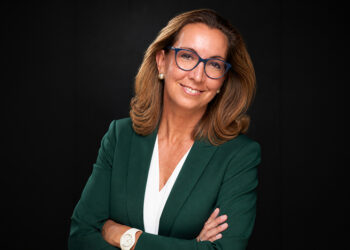
Susanne Karner is a care expert who provides professional support to help relatives organise care for their parents from a distance. In this interview, she explains why providing support from afar is often more challenging than it appears from the outsider’s perspective, how relatives can recognise signs that something is changing at an early stage – and what needs to change to ensure that care at home is more successful, even in areas far from urban centres.

SBC: Ms Karner, how does support from a distance differ in fundamental terms from a situation where relatives live in the same town or in the same household?
Karner: The difference lies in the tasks and the emotional challenges. Those who provide support from a distance primarily focus on organizing and coordinating: They stay in touch, often through regular phone calls, and they build and manage a supportive network on the ground. Those who live nearby, on the other hand, more often take on practical tasks—helping with household chores, personal care, and shopping.
From a distance, the question constantly arises: How do I organize all of this—on top of my job and my own life? On top of that, there are very practical hurdles, such as the availability of government offices and doctors. And often you can’t form your own opinion; you have to rely on feedback from others. Naturally, that’s unsettling, too.
Emotionally, it very often revolves around feelings of guilt: not being there, not doing enough. Added to that is the constant worry that something could happen at any moment. A mental load is present in both situations. Mental load refers to the psychological strain caused by constantly thinking things through, planning ahead, and feeling responsible—even when no specific task is being carried out at the moment. In long-distance caregiving, this burden is different from that of in-home caregiving: Those who are physically close tend to struggle more with setting boundaries, because constant proximity can be stressful and exacerbate conflicts.
And it makes a difference whether you’re an only child or have siblings to share the burden. As an only child, the burden rests on your own shoulders; if you have siblings, that can lighten the load—but it can also make things more prone to conflict. Two other factors aren’t specific to living far apart, but they’re harder to manage from a distance: Age and illness change a person—in terms of behavior, cognition, and hearing—and a role reversal takes place. The parents, who used to provide support, now need support themselves. When contact is only sporadic, it’s harder to cope with this.
SBC: How can family members recognise, from a distance, that everyday life is no longer running smoothly and that more support is needed?
Karner: It’s helpful to compare with how things were before: How was it during the last visit, a month ago, a year ago? I look at three areas in particular. Physically: Are there any restrictions on movement? Is it harder to manage everyday tasks – such as going up and down the stairs, or even just coping with daily life in general? Mentally: Has the person’s mood changed? Do the person seem more downcast or anxious, or are they withdrawing? And cognitively: Are there changes in memory or orientation – in terms of time, place, or even in everyday situations?
The key question is how such changes affect daily life—and whether social participation suffers as a result. Someone with hearing loss might avoid their beloved weekly get-together with friends. Someone who can no longer reliably control urinary incontinence might avoid situations where there isn’t a restroom nearby—or drink less. I base my approach on the ICF, the International Classification of Functioning, Disability, and Health, a global standard established by the World Health Organization. It broadens our perspective: After all, it’s never just about a single limitation—such as no longer being able to walk—but about its consequences for independence, social life, and daily routines.
SBC: What is essential when providing remote support—and what can be prepared in advance, before an emergency arises?
Karner: It’s best to start before anything happens at all. My advice: Talk to your parents early on about how they envision their lives in old age: What are their wishes, and what do they absolutely not want? Figure out for yourself whether and how you want to provide support—and what fits your own life situation. Have this conversation with your siblings and other relatives as well: Who is willing to do what? And take care of the formalities in a timely manner—powers of attorney, living wills—and put together an emergency folder containing all important documents.
Once the situation arises, start by getting an overview: What’s needed right now, and what else might come up? Build a local support network—neighbors, friends, volunteer services and organizations, and care providers—and clarify responsibilities: Who is in charge of what, and who is the point of contact for doctors and government agencies? Gather important documents, contacts, and medical information in one place so you can access them quickly if needed. Stay in regular contact—for example, via video call—to catch any changes early on. And perhaps most importantly: Get support; don’t try to handle everything on your own.
SBC: If the need ever arises – how can you ensure you’re prepared for an emergency, even from a distance?
Karner: With an emergency plan. In practical terms, this means: A folder – physical or digital – containing everything relevant: Power of attorney, living will, health insurance card, insurance documents, important keys. Plus the contact details of people who can get to you quickly in an emergency – a relative, a grandchild, someone from the neighbourhood. So, once again: A network. And most importantly: The people involved need to know where this folder is kept, or at least have the login details. An emergency plan that nobody knows about is of no use in a real emergency.
SBC: In your experience, what are the biggest hurdles?
Karner: Firstly, the distance itself – not being able to get there quickly when something happens. Then there’s the feeling of not doing enough or overlooking important changes, and then, of course, juggling it all alongside work and personal life. It’s often difficult to get a clear picture from a distance: What is really needed, and what sort of support is needed? The often difficult conversations with parents about help and change, the emotional strain caused by worry, feelings of guilt and constant responsibility. And last but not least, the financial side – travel costs, accommodation costs, and possibly also lost earnings.
I often see just how much this affects people’s own lives. One client was driving 150 kilometres to visit her mother three times a week, on top of her job – at some point, her husband said to her: ‘I don’t get to see you at all anymore.’ Caring for one person can then lead to conflict with one’s own family and friends. At this very point, it is no longer just about organisation, but about quality of life – that of the parents and that of their relatives. These two things cannot be separated.
SBC: How do you work with those who come to you?
Karner: I provide case-by-case advice on very specific questions. A typical inquiry goes like this: “I’m an only child, I live 500 kilometers away, and my father had a stroke—what do I do now? I work and have a family of my own.” My clients can choose a one-time consultation, during which I explain the most important steps and provide guidance, or ongoing support for a period of their choosing, during which they can reach out whenever they have questions or need to make decisions.
Communication is almost always a major issue here: How do I bring up difficult topics with my parents without causing a conflict? Added to this is the practical search for suitable services—such as home care services, a spot in a care facility, or, in the case of children, therapy slots. During this phase, many people have neither the time nor the energy to work their way through inquiries and waiting lists.
What’s important to me: There’s no right or wrong way to provide care. Some people start by saying, “My guilty conscience is eating away at me”—and we work together to figure out what’s possible for them and what feels right, without giving up their own lives. One client didn’t want to take on the caregiving herself anymore and wanted to delegate everything; I supported her on that path, too. I don’t judge that. It’s about the step the person wants to take—and sometimes the right step is to step back.
SBC: What changes would need to take place socially and politically to ensure that local support is more effective?
Karner: Above all, the expansion of home-based care structures – particularly in rural areas. This starts with mobility: Transport services, community buses and similar services make it easier to access GPs, therapies and support. In my view, there is also a need for regional networking between GPs, care services, therapists, clinics, pharmacies, medical supply shops and shopping services. Concepts such as neighbourhood management and neighbourly support form part of this, as do community health nurses and services that enable people to participate in community life. Loneliness is a major problem in old age.
Digital services are another key component – not as a replacement, but as a complement to face-to-face care and support: These range from telemedicine and digital counselling, through apps for coordinating care remotely, to sensor technology that detects falls, warns of fires or shuts off the water in an emergency, and services designed to combat loneliness. These solutions already exist, and they must now be made visible and accessible. Last but not least, attractive working conditions are needed for skilled workers, including – and particularly – in structurally weaker areas.
SBC: What advice would you share with relatives who are currently organising care and support from a distance?
Karner: That no question or feeling is wrong. That there is no right or wrong way to care for someone – only the approach that suits your life. And that you don’t have to do it alone. Those who seek support and get their affairs in order often regain what is initially lost in the midst of caring: The feeling of being able to act again.
Thank you for the interview!
Dr. Susanne Karner is a nursing expert who helps family members provide support and care from a distance—a practice known as “distance caregiving.” She offers case-by-case advice on organizing care, finances, and communication. For more information, visit susanne-karner.de

Author: Anja Herberth
Chefredakteurin