Thursday, August 27, 2026
  • en English
  • de Deutsch
SmartBuildingsCompass
Header SBC English
  • Home
  • Housing
  • Everyday aids & Technology
  • Dementia & Health
  • Care & Relief
  • Download: Housing Tips
  • Find a solution
    • Dementia
    • Special Feature: Age-friendly Construction & Renovation
    • Home & Living
    • Tools & Solutions
    • Crisis-resilient caregiving household
    • Stay healthy
No Result
View All Result
  • Home
  • Housing
  • Everyday aids & Technology
  • Dementia & Health
  • Care & Relief
  • Download: Housing Tips
  • Find a solution
    • Dementia
    • Special Feature: Age-friendly Construction & Renovation
    • Home & Living
    • Tools & Solutions
    • Crisis-resilient caregiving household
    • Stay healthy
No Result
View All Result
SmartBuildingsCompass
No Result
View All Result
Home Care & relief

Costs for care homes: How can families prepare in advance, Ms Gromes?

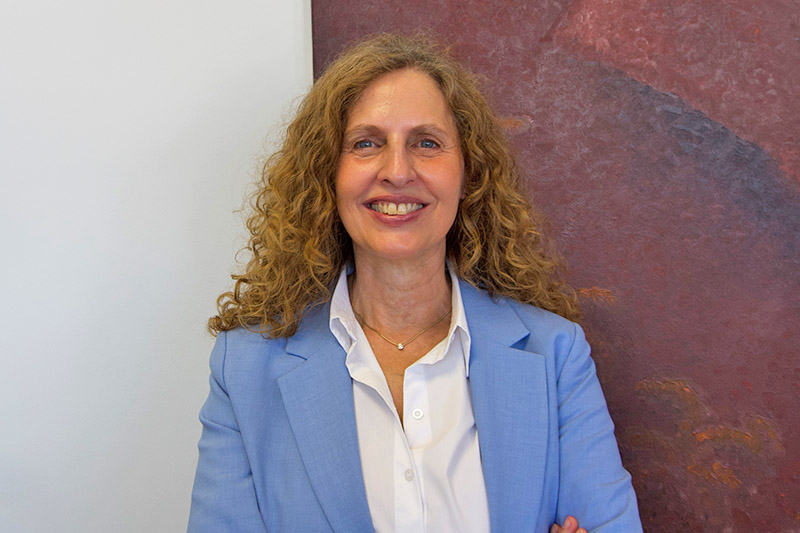
Our interviewee: Stefani Gromes, an attorney from Darmstadt who specializes in the intersection of family and social law. Credit: Gromes Law Firm

Our interviewee: Stefani Gromes, an attorney from Darmstadt who specializes in the intersection of family and social law. Credit: Gromes Law Firm

This article is also available in: Deutsch

A spot in a nursing home has been found — and suddenly there’s a funding shortfall: Social Security and pension benefits aren’t enough to cover the monthly care costs. When parents become in need of care, families in Germany are suddenly faced with a crucial question: Who pays for residential care?

This is because in Germany, the so-called “parental support” regulations determine when children must cover their parents’ nursing home costs. Since the 2020 Relatives’ Relief Act took effect, an income threshold of 100,000 euros has been in place. Once a person’s annual income reaches this threshold, children are required to contribute to their parents’ care costs if the parents’ assets and pension are insufficient.

You might also be interested in

Our interviewee: Andreas Gruber of "because we care"; Credit: "because we care"

“Our system produces several losing parties”: Andreas Gruber on working caregivers

27. August 2026
Our interviewee: Nursing expert Dr. Susanne Karner (Photo credit: Tanja Kibogo)

Care despite distance: How can we organize support from afar, Susanne Karner?

14. August 2026
Our interview partner: Silvia Merschitsch (Photo credit: Private/KI)

How can we manage our finances in later life, Ms. Merschitsch?

9. May 2026
Reconciling work and care is becoming increasingly important - especially for women, who are usually responsible for care in the family. Credit: Shutterstock

Reconciling work and care: New guide published

21. March 2026

Stefani Gromes is an attorney from Darmstadt who specializes in the intersection of family and social law. In this interview, she explains where the most costly mistakes lie—and how families can address issues such as spousal support, gifts, and potential nursing home costs in a timely manner.

Header SBC English

Note: This interview is intended to provide general information and is not a substitute for individual legal advice. The provisions described herein apply only to the legal situation in Germany. You should seek legal counsel to assess your specific case.

SBC: Ms. Gromes, you specialize in issues at the intersection of family and social law. This includes parental support, which becomes relevant when parents in need of care can no longer cover their own nursing home costs. What exactly does this entail?

Gromes: In Germany, the term “parental support” refers to the situation where children are financially responsible for their parents. Specifically, this means they cover the nursing home costs that their parents can no longer cover themselves with their pension, long-term care insurance benefits, and disposable assets. This system has essentially existed in Germany for a long time. Before 2020, all children were liable on a pro-rata basis according to a set ratio as soon as a parent entered a nursing home and could not cover the costs themselves. In 2020, the Relative Relief Act was introduced. Since then, only children whose gross annual income exceeds 100,000 euros are liable.

SBC: How is this parental support assessed?

Gromes: First, they always check whether the person in need of care is actually eligible for assistance. They add everything up: retirement or pension benefits, long-term care insurance benefits, and the person’s own assets. Then you compare that to the cost of the nursing home—and the difference represents the remaining need. If a child’s income exceeds 100,000 euros, they are notified in writing. If the annual income is below that amount, the person is eligible for social assistance, and the difference is paid by the social services office.

According to case law, the social services office may only contact the children if there is concrete suspicion that someone earns more than 100,000 euros. For example, if someone at the home mentions that their son is a chief physician, or if someone pulls up in a Porsche. In practice, however, some agencies send letters to everyone across the board, which is actually not permitted.

And even if a child is served with a demand for support, they are not liable for their entire income. Of their adjusted net income—that is, after deducting retirement savings, private health insurance, loans, and similar expenses—only 50 percent of the remaining amount must be used to pay parental support. This is a privileged maintenance obligation—unlike child or spousal support, where a significantly larger portion must be allocated. Furthermore, the former obligation of children-in-law to provide support has been eliminated since 2020; children-in-law are no longer required to pay parental support.

In my experience, most families can afford the amount they ultimately have to pay. It almost exclusively becomes a real problem when a property suddenly becomes the focus of the discussion due to a failed gift.

In practice, this law isn’t always socially just. After all, the main criterion right now is simply annual income. I have clients with annual incomes below the 100,000-euro threshold who possess substantial assets—such as people living off their investments who own many properties. They do not pay parental support, even though they have substantial assets. From my professional perspective, it is quite possible that the law will change in this regard.

Ist in Deutschland stationäre Pflege notwendig, wird eine vorhandene Immobilie für den Eigenanteil herangezogen. Credit: Shutterstock
SBC: Let’s take a closer look at the situation when real estate is involved. Many families assume that their children or grandchildren will eventually inherit the family home. When can this become a challenge if a family member is admitted to a nursing home?

Gromes: Here’s how it works in practice: Anyone who moves into a nursing home and applies for welfare must disclose whether they have made any gifts in the past ten years. If this was the case, they must truthfully check “Yes” —anything else would constitute welfare fraud. The social services office then reviews the case, requests a copy of the notarized contract, and contacts the children who co-signed the gift agreement. Finally, they determine whether the gift must be reversed.

In practice, this is usually not feasible at all, because the children often live in these homes themselves and have already renovated them and added value to the property. In this case, they must pay the remaining balance. A nursing home spot costs about 4,500 to 5,000 euros; part of this is covered by long-term care insurance and Social Security—and the rest remains unpaid. In practice, this averages out to about 2,000 euros per month. This pushes many families to the brink of financial ruin.

SBC: Are there ways out of this very stressful situation for families? And when should people start addressing this issue in a timely manner?

Gromes: Many people try to protect their home by gifting it away during their lifetime through a notarized contract. The ten-year period is crucial here: If the gift was made less than ten years ago, the state can demand that it be reversed. As a result, ownership reverts to the care recipient’s estate, and the assets can be tapped to cover long-term care costs.

>> Many people try to protect their home by gifting it during their lifetime through a notarized contract. The ten-year period is crucial in this regard. <<

To avoid this deadline, you would have to transfer ownership of a property fairly early on. The average age of admission to a nursing home is over 81, so you should start planning for this no later than when you are between 65 and 70 years old. In the notarized contract, you can also protect yourself further as part of the gift, for example, with a registered right of residence or a right of usufruct . (Editor’s note: A right of usufruct is the use of another person’s property or assets without being the owner.)

The problem, of course, is that most people have just finished paying off their home and are already expected to pass it on to the next generation. That’s emotionally difficult, and I understand anyone who hesitates. But realistically, there’s only this short window of time to settle the matter reliably. Some people end up in a nursing home as early as age 60 after suffering a stroke—so you can never be completely prepared.

When it comes to supporting parents, a different timeframe applies: If it’s foreseeable that a parent will soon need to move into a nursing home, the children should seek legal advice about half a year to a year in advance. That way, there’s still time to make preparations and plan things out.

But this can only be done in advance. Once the social services office sends a letter, it’s too late. The tricky part is that a fall or a hospital stay often triggers everything suddenly—then the parent can’t return home, and the window of opportunity has closed.

SBC: Are there any pitfalls to watch out for when drafting a gift agreement?

Gromes: Something that’s often overlooked is that a right of residence or usufruct has a real monetary value. If this right is worth, say, 20,000 euros a year, the beneficiaries—such as the children—may have to pass this amount on to the nursing home annually.

>> A right of residence or usufruct has a real monetary value. If this right is worth, for example, 20,000 euros a year, the beneficiaries—such as the children—may have to pass this amount on to the nursing home annually. <<

That is why the contract should clearly stipulate that the right of residence ends when the person moves permanently into a nursing home—not only upon death. For example, you can stipulate that after six months in a nursing home, the move is considered permanent. Especially in old age, moving into a nursing home is usually final anyway. If this is specified in the contract, you’re on the safe side.

And here’s another common, costly mistake: If an existing right of residence is subsequently revoked without compensation, this legally constitutes a new gift—and the ten-year period starts over. Many people overlook this as well.

SBC: If the property only becomes an issue upon the person’s death, could a bill still come from social services?

Gromes: That depends on what benefits the deceased person received. For benefits intended solely for living expenses, nothing is reclaimed. For long-term care benefits, however, it is—in which case the heirs may be held liable. However, this is always limited to the value of the inheritance; there’s a cap on that.

Here’s an example of such a case: If one spouse is still living in the house, it’s protected and won’t be seized. When that spouse dies, the children inherit the house—and that’s when social services gets involved. Some agencies, such as the one here in Darmstadt, even have themselves entered in the property registry.

SBC: In your experience, what are the most costly mistakes that family members and those affected make?

Gromes: Children far too often pay out of their own pockets without checking whether they’re actually required to. I see this happen all the time in practice: Someone moves into a nursing home, there’s a shortfall between the costs and their pension, and the children simply cover it. But there’s a perfectly normal legal provision for this: social assistance. After all, the children are only liable if their income exceeds the annual income threshold of 100,000 euros. Nevertheless, many pay out of their own pockets without asking themselves whether they’re actually obligated to do so.

>> All too often, children pay out of their own pockets without checking whether they actually have to. <<

An application for welfare should be filed immediately—not after six or twelve months. An exempt asset of 10,000 euros may remain in the account. Often, the application is delayed out of shame or fear of the social services office, even though there is nothing to hide. That is the real, costly mistake.

Furthermore, my clients often pay more than is necessary. Here’s an example: When care costs rise, it’s sometimes due to investment costs. It’s perfectly fine to ask: What exactly was invested? What formula is used to allocate these costs? I had a case where someone had to move into a room that was four square meters smaller, yet the rent remained the same—and when I asked for an explanation, I received no answer. As a family member, this can make you unpopular, and you have to realize that the nursing homes hold all the cards. Anyone who withholds payments certainly risks having their contract terminated. But you don’t have to accept every increase without question. It’s worth asking questions.

SBC: What advice would you give to families who are currently dealing with a caregiving situation?

Gromes: Get a clear picture of all the figures regarding pensions, assets, and costs as early as possible. Don’t worry if a parent is still living in the house or apartment. That person is allowed to stay there—they don’t have to move out just because the house might be too big. Of course, in the case of very large properties, social services will eventually check whether the property needs to be sold. But often these are older homes in need of renovation that aren’t all that easy to sell or rent out.

And this is what matters most to me: Don’t provide care at home any longer than necessary. Time and again, I see family members providing care far beyond their limits and becoming ill themselves in the process. The wife who cares for her husband day in and day out, even though she herself has long needed care—out of fear of losing the house. This happens far too often and goes on for far too long.

And finally: Seek advice early on, not just when the letter from social services arrives. If you wait too long, you’ll lose the very options you would have had before.

Thank you very much for the interview!

Stefani Gromes has been practicing law in Darmstadt since 2000 and is a certified specialist in social law. At her law firm, she specializes in social and family law, with a focus on parental support, long-term care, pensions, and issues related to reduced earning capacity. Learn more at http://www.arbeitsrecht-da.de.


Anja Herberth
Author: Anja Herberth

Chefredakteurin

Tags: Care & the systemRelatives: Organising
Previous Post

How can we adapt our homes to suit elderly people, Rene Pecovnik?

Related Posts

Our interviewee: Andreas Gruber of "because we care"; Credit: "because we care"
Care & relief

“Our system produces several losing parties”: Andreas Gruber on working caregivers

27. August 2026
Our interviewee: Nursing expert Dr. Susanne Karner (Photo credit: Tanja Kibogo)
Care & relief

Care despite distance: How can we organize support from afar, Susanne Karner?

14. August 2026
Our interview partner: Silvia Merschitsch (Photo credit: Private/KI)
Care & relief

How can we manage our finances in later life, Ms. Merschitsch?

9. May 2026
Reconciling work and care is becoming increasingly important - especially for women, who are usually responsible for care in the family. Credit: Shutterstock
Care & relief

Reconciling work and care: New guide published

21. March 2026
Let yourself be a little nuts - and don't feel guilty about it! Credit: Shutterstock
Care & relief

International Women’s Day: Who bears the burden of care – and for how long?

7. March 2026
Our interview partner: Health Economist & Dean of the Faculty of Social Sciences, Economics and Business Administration at the JKU Linz, Prof. Dr. Prof. Gerald J. Pruckner (Credit: Andreas Röbl)
Dementia & health

Healthcare system under pressure: What needs to be clarified now

6. March 2026

Leave a Reply Cancel reply

Your email address will not be published. Required fields are marked *

  • Deutsch
  • English

Solutions for specific Situations

  • Adapt your apartment/house
  • When Dementia is a factor
  • Organizing Care & Support
  • Tools & Solutions
  • Crisis-resilient caregiving households
  • Municipalities

.

loader

Newsletter

What tools and concepts are available for senior living, care and support - and where can they be found? Our newsletter provides answers!

I accept the terms and conditions

Recent News

Our interviewee: Stefani Gromes, an attorney from Darmstadt who specializes in the intersection of family and social law. Credit: Gromes Law Firm

Costs for care homes: How can families prepare in advance, Ms Gromes?

27. August 2026
Our interviewee: Rene Pecovnik, CEO of Hilma (Credit: Hilma)

How can we adapt our homes to suit elderly people, Rene Pecovnik?

27. August 2026
Our interviewee: Andreas Gruber of "because we care"; Credit: "because we care"

“Our system produces several losing parties”: Andreas Gruber on working caregivers

27. August 2026
Our interviewee: Dr. Alexia Zurkuhlen, Executive Director of the Kuratorium Deutsche Altershilfe (KDA) - Credit: KDA

Zurkuhlen: “Age-friendly means thinking about life across generations”

27. August 2026
Photo credit: m2 mühle nursing beds

Alternatives to traditional nursing beds: When you don’t want it to look like a hospital

14. August 2026
SmartBuildingsCompass

Made with care. For you.

Our research and interviews on safe and independent living in old age are written by our team with a great deal of energy and passion. We hope you enjoy reading them!

Do you need more information? If so, you are welcome to contact us at redaktion@sbc.co.at.

All rights reserved (2025).

  • Deutsch
  • English

Follow us

Instagram
  • Home
  • Subscribe to our newsletter
  • Glossary
  • About us
  • Contact
  • Marketing: Information for businesses
  • Download your 10 tips for independent, safe living in older age
  • Presentations & workshops for local authorities & nonprofits
  • Contact & Legal Notice
  • FAQs
  • Disclosure Statement
  • Nettiquette
  • Data protection
  • General Terms and Conditions (GTC)

© 2025 by owl lab e.U. Wir navigieren Wandel.

We use cookies on our website. Some of them are essential, while others help us improve this website and your experience.
Cookie SettingsAccept All
Manage consent

Privacy Overview

This website uses cookies to improve your experience while you navigate through the website. Out of these, the cookies that are categorized as necessary are stored on your browser as they are essential for the working of basic functionalities of the website. We also use third-party cookies that help us analyze and understand how you use this website. These cookies will be stored in your browser only with your consent. You also have the option to opt-out of these cookies. But opting out of some of these cookies may affect your browsing experience.
SAVE & ACCEPT
No Result
View All Result
  • Home
  • Home & Living
  • Everyday Aids & Technology
  • Care & Relief
  • Dementia & Health
  • Download: 10 tips
  • Find a solution
    • Special Feature: Age-friendly Construction & Renovation
    • Dementia
    • Crisis-resilient caregiving household
    • Stay healthy
  • Deutsch
  • English

© 2025 by owl lab e.U. Wir navigieren Wandel.

Safe & independent living in old age

27 pages of tips for independent, safe living in old age—download now!

Download our PDF with tipps now!
loader

Email addresse*
I accept the privacy policy and agree that SmartBuildingsCompass.com may contact me beyond this request to send me its regular newsletter. I can unsubscribe at any time.

Sicher & selbstbestimmt Wohnen im Alter!

27 Seiten Tipps für sicheres, selbstbestimmtes Wohnen im Alter - jetzt downloaden!

Jetzt gleich downloaden!
loader

Email addresse*
I accept the privacy policy and agree that SmartBuildingsCompass.com may contact me beyond this request to send me its regular newsletter. I can unsubscribe at any time.