
This article is also available in:
 Deutsch
At least one apple a day, enough exercise, no alcohol, quitting smoking in time: When it comes to healthy aging, the responsibility almost always falls on the individual. Anyone who gets sick simply hasn’t taken good enough care of themselves—that’s the unspoken subtext of many health campaigns.
But is this picture accurate? How much of our health is actually determined by our own behavior—and how much by the circumstances in which we live: our home, the street outside, our income, the people around us? And what would it mean to take prevention seriously, rather than waiting to fix things only after they’ve long since broken down?




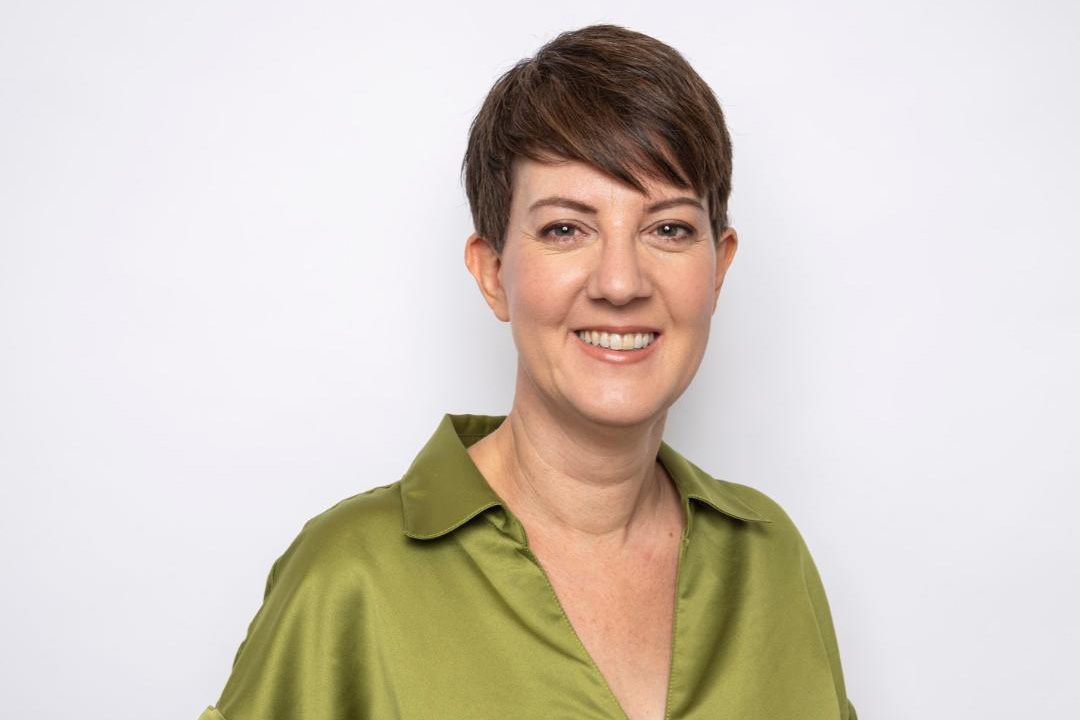
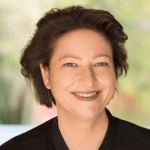
Margret Jäger approaches these questions from a slightly different perspective: she is an anthropologist specializing in medical anthropology. She has gained experience far beyond Austria’s borders: She spent several years in Brazil, where community and school nurses have been a given for decades, and conducted research for the Vienna Social Fund, during which she observed mobile nursing services.

In this interview, she explains why healthy aging is far more than a matter of self-discipline, why she considers community health nurses to be one of the most powerful levers for change—and why the most important starting point for healthier aging lies in kindergartens and schools.
SBC: Ms. Jäger, when it comes to healthy aging, the responsibility usually falls on the individual. Is this view accurate from an anthropological perspective?
Jäger: Only partly. We very often make the mistake of attributing everything to the individual—to some extent, “blaming the victim.” Yet research—whether in medicine, anthropology, or other disciplines—shows very clearly: Social determinants of health play a far greater role than we realize. Where I live affects my health. For example, people who live on a busy street are exposed to fine particulate matter and noise. That’s why health is also a responsibility of cities and municipalities, not just of individuals.
I like the “Health in All Policies” approach best: incorporating health considerations into all policy areas. In Austria, we don’t put this into practice.
Here’s an example: If a mother has to reduce her working hours because her child has a developmental delay and can’t get a spot in therapy, this can lead to poverty in old age for her later on. Ultimately, this is a health issue—but it’s decided in entirely different government departments.
SBC: Where is it most evident that these connections are being overlooked?
Jäger: This is very evident in the debate over heat. In 2003, more than 50,000 people died in France due to the heat. Nearly 23 years later, new nursing homes in Austria are still being built without air conditioning. People living in nursing homes are already very ill and vulnerable. They’re at a disadvantage here, too, because they can no longer just “go out” whenever they want. And then they set up fans, and the staff gets one free ice cream a week. That’s not a serious response to such a pressing issue.
The same applies to prevention: We know very clearly from public health research which measures are effective. In Australia, a pack of cigarettes costs more than 30 dollars—and that works. Here, we allow alcohol advertising while at the same time having hundreds of thousands of people with severe addictions. Telling someone who’s addicted, “That’s unhealthy, stop,” doesn’t help—we know that from addiction research.
There are effective methods, but we don’t implement them because we bow to the industry lobby. We’re constantly reinventing the wheel, even though we’ve known for a long time what works—and what doesn’t.
SBC: What would be the most effective lever for shifting from today’s reactive medicine to preventive care?
Jäger: When it comes to older adults, I’m deeply convinced that we need community health nurses. Once they’re in place, the demand for them will grow—because people will then have a point of contact where they can get information and start a conversation about preventive care. Who has a power of attorney for healthcare, and who has a living will? These are precisely the issues that cause a great deal of human suffering—and, at the same time, very high costs—at the end of life, because no one asked the right questions or sought information in a timely manner.
The information is often hard to find, too. Here’s an example from my own family: After my father had a health crisis, we were desperately searching for solutions. I happened to get the information from my cousin about who to call—and then a caregiver funded by the state of Salzburg came to my parents’ home, provided a comprehensive consultation, left the forms there, and explained everything in detail. That was perfect, but without that chance tip, this service would have been nearly impossible to find—especially for older people who aren’t very comfortable using the internet.
A community health nurse who holds office hours in the community and makes house calls would provide exactly the kind of support and guidance needed in such a case. She knows what kinds of funding and services are available in the region and in the state. I’ve seen this in other countries—in Brazil, community and school nurses have been the norm for decades. Here, the Medical Association long blocked the introduction of school nurses; Vienna is now implementing them anyway. When EU funding for community nurses expired, many locations lost their funding or saw it drastically reduced. Lower Austria continues to fund them, while in Vienna the program continues as part of the Vienna Social Fund. Things are changing—but far too slowly.
SBC: You also say that the most important starting point lies somewhere else entirely—with the children, in schools and preschools. Why?
Jäger: Because we can reach entire families through the children. When children learn about recycling or nutrition in school, it might change behavior at home—among parents and even grandparents. We have enormous opportunities to influence behavior, but we’re not taking advantage of them: There are Coke vending machines in schools, and the school cafeterias serve unhealthy food. We’ve been discussing school cafeterias for twenty years—little has changed, partly because corporations like Coca-Cola pay schools money. In other countries, there are regulated school meals for everyone, planned by dietitians.
School is no longer just from 8 a.m. to 12 p.m., after which the child goes home to their mother—that conservative image no longer holds water. We need teams in schools: school nurses for health promotion, as well as psychologists and social workers.
School is the one place where everyone comes together—including parents. Viewing it more strongly as a place of health would be one of the most powerful levers we have. Because if the foundation isn’t right in childhood, it affects the rest of a person’s life.
SBC: Let’s move on to another topic—loneliness in old age is considered a major problem. What’s the issue here?
Jäger: For one thing, there are many services that no one knows about, and of course, not every service is a good fit for everyone. I shadowed the mobile care service for the Vienna Social Fund and saw more loneliness there than ever before—but sometimes it was also a loneliness that people had chosen for themselves.
I’ll never forget a 95-year-old man who had previously cared for his own mother. The home care worker asked him, “Wouldn’t you like to go to the day center sometime? You’d be around other people there.” His reply: “I’m not interested in that—there are only old, sick people there.” People are turning down these offers—and at the same time, we don’t have enough options that are truly a good fit.
There’s a lack of participation. We should ask people much more often: What do you actually want? But often they don’t know exactly themselves, and the day center has a negative connotation—even though it offers a program, shared meals, and interaction with other people. I visited one myself for work and thought: Before I sit at home all alone, why not give it a try?
By the way, I’m firmly convinced that neither of us will be lonely.
SBC: What do you mean by that?
Jäger: Loneliness also has a generational aspect. Studies consistently show that older women report feeling lonely. The 70+ generation in Austria often stopped working after getting married, raised their children alone, and viewed friendships differently than people do today. If they aren’t active in church or community groups, they report feeling a loneliness associated with suffering. For these people living in seclusion, the most important places to go today are the very places we take for granted: the pharmacy and the supermarket.
For this generation of women, there’s often the added factor that they had too few financial resources—too few to go to the theater or participate in other activities. After all, participation sometimes simply comes down to money, and this gap will, unfortunately, continue to widen.
I’m convinced that our generation won’t face this problem in the same way—because we’re already aware of it today and because we cultivate diverse friendships, some even across national borders.
The real challenge, therefore, is this: How do we get information about these opportunities to people? We can reach the 60-plus generation through radio and television; we haven’t been able to reach anyone under 40 through those channels for quite some time now. If we can’t come up with something truly effective, even the best opportunities will fall flat.
We also lack a culture of participation in neighborhood development: In Vienna’s Seestadt, for example, a neighborhood management group is trying out various formats—yet still struggles with the simple question of who will actually show up.
SBC: Let’s go back to the social system—where does the system have the biggest gaps?
Jäger: At the transition points. People tend to put off seeking medical care for their symptoms and go long periods without seeing a doctor—and by the time they do, it’s often already a condition requiring treatment that leads to hospitalization. This creates a gap, because we have virtually no transitional or short-term care. Rehabilitation facilities usually only admit those for whom an assessment indicates a realistic prospect of returning to independent living—they are not waiting rooms for a spot in a nursing home.
A key area is discharge planning, which often fails to fulfill its purpose in Austria—in part because the staff responsible lack adequate training. My urgent advice to family members: Do not allow anyone to be discharged from the hospital without first speaking with the discharge management team—and if you live in Vienna, call the Vienna Social Fund (Fonds Soziales Wien). It’s a true one-stop shop for information; every state should have something like this.
SBC: What would you like to see done to improve the effectiveness of support services?
Jäger: A more holistic approach. Medical anthropology asks: What does a person need to be and stay healthy—and to be able to contribute to society? This goes far beyond a visit to the doctor. It includes mental health as well as consultations with a social worker or a debt counseling service. After all, someone who becomes depressed under a mountain of debt falls ill—but actually has a different problem. That, too, is health promotion.
That’s why we need more of them—clinical social workers in hospitals, for example. As far as I know, there are two at St. Anna Children’s Hospital, and they’re swamped with work because families are facing increasingly complex situations.
And I hope we’ll stop talking about “the others.” In meetings, I sometimes stand up and say: We are the patients. We are the citizens of this country. It’s our healthcare system; it’s our social welfare system. So the real question is: How do we want to live together?
Thank you very much for the interview!
Margret Jäger is an anthropologist specializing in medical anthropology, a researcher, and an educator. Her work includes medical education as well as UX design and evaluation. She is a member of Solar Plexus Austria, an organization that connects people who want to make a difference in the healthcare sector. For more information, visit her LinkedIn profile at Margret Jäger | LinkedIn
Author: Anja Herberth
Chefredakteurin