Dieser Beitrag ist auch verfügbar auf:
Deutsch
There are homes that appear friendly, tidy and practical at first glance – and yet still cause unease. A dark doormat can look like a hole, a mirror like a stranger, a shiny floor like a body of water. Anyone accompanying a person with dementia often only realizes in everyday life how much of an impact rooms can have – and how quickly an environment can unsettle them that seems completely unproblematic to others.
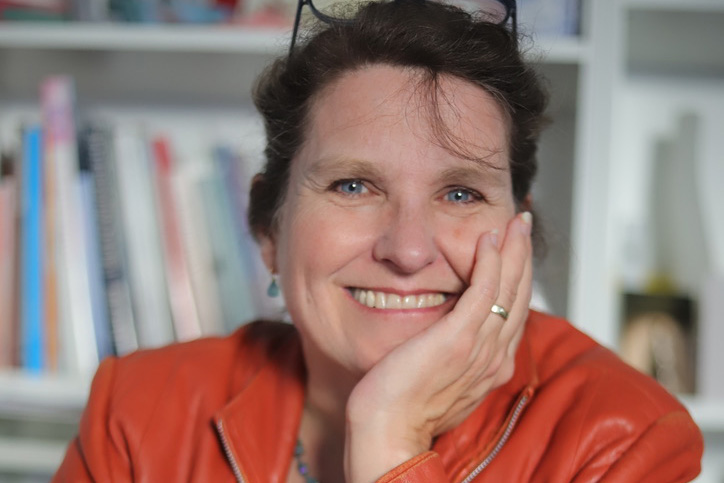
This is exactly what we talked to interior designer Melanie Mikalauskas about: she works intensively on the interplay between dementia, perception and the living environment. Our conversation shows why it’s often not major renovations that make the difference, but a closer look at what people perceive on a daily basis.
When the familiar suddenly no longer works
For Melanie Mikalauskas, the topic of dementia-sensitive architecture began with a personal experience: her foster mother called her, asked questions – and called again a short time later with the same questions. Mikalauskas answered patiently for a long time. But on one stressful day, she reacted impatiently: “But you only called ten minutes ago.” After that, it went quiet.
“I felt her dismay 750 kilometers away over the phone,” says Melanie Mikalauskas. Her foster mother never called her again after that. For her, this moment was a turning point: she began to focus intensively on dementia and the question of what people with dementia need at home.
For those affected and their relatives, dementia often begins not with a diagnosis, but with uncertainty: with small disruptions in everyday life, with feelings of guilt, with the experience that familiar routines suddenly no longer work.
Melanie Mikalauskas sums it up like this: “A person with dementia crosses a bridge, so to speak, and can no longer simply return to our world. This makes it all the more important that we approach them, take their reality seriously and try to perceive their needs in their world. Because we can still go back and forth between the two worlds – they usually can’t.”
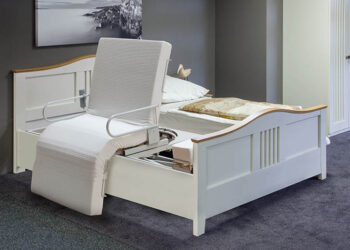
If you lie in bed a lot, you see a room differently than someone who moves around freely. The ceiling, windows and view, light and wall design suddenly become key factors in whether you feel comfortable. Credit: Melanie Mikalauskas
Heavily patterned or visually unstable floors can flicker, unsettle and increase the risk of falling. Credit: Melanie Mikalauskas
White grab rails and a white toilet seat against a white background quickly become invisible to people with dementia. Contrasts are needed for things to be noticed at all. Credit: Melanie Mikalauskas
Make water a little more visible with a small dash of fruit juice so that the drink is better perceived. Tableware with clear contrasts also helps in everyday life. Credit: Melanie Mikalauskas
Why rooms are suddenly unsettling
The fact that familiar homes suddenly become difficult to read has a lot to do with a change in perception. As we get older, our eyesight often deteriorates, along with eye diseases and a restricted field of vision, and depth perception can also decrease. The consequences: Contrasts become weaker, colors change, many things appear blurrier or more yellowish.
This explains why even well-intentioned, functionally well-furnished rooms are suddenly irritating: “It is all the more important to design rooms in such a way that they remain easy to read – with clear contrasts, easily recognizable transitions and an environment that conveys security instead of uncertainty,” says the interior designer.
But what does that mean in concrete terms? White grab rails on a white wall, a white shower seat against a white background or a toilet seat that barely stands out from the room quickly become invisible. Contrasts are needed for things to be noticed at all. “Floors, walls, doors, handrails and sanitary objects such as a toilet seat should stand out clearly from the background. Red, for example, is a color that will be recognized for a very long time,” explains Mikalauskas.
Reflective surfaces, shimmering patterns or shiny floors can also be irritating. Dark mats suddenly appear like deep holes, shimmering blue or shiny floors like water surfaces. What looks like a design detail to others can be a real barrier for a person with dementia. The story of a man who sat screaming in his room and could not be calmed down is particularly impressive. It was only when the black doormat outside his door was removed that he relaxed. For him, it was not an everyday object, but a hole. Mikalauskas: “Behaviors that are considered difficult in people with dementia are often not ‘quirks’, but logical reactions to an environment that is no longer understood. It is often just a sign that something is wrong.”
Dementia-sensitive architecture is more than just accessibility
When people talk about age-appropriate living, accessibility is often the first thing that comes to mind. Wider doors, level-access showers, fewer thresholds. That’s important – but it’s not enough. This is because many older people perceive rooms from a different perspective: bent over, usually looking down at the floor, using a walking frame or cane, or from bed. People who lie in bed a lot or only experience a room from the top of their feet see it differently than someone who moves around freely. Then the ceiling, windows, light and wall design suddenly become central factors.
“People often look up at the ceiling, at the wall or out of the window. This makes it all the more important in this situation to have light that doesn’t dazzle and a view that is pleasant and does you good,” says Mikalauskas. The floor also plays a key role: heavily patterned or visually unstable floors can shimmer, unsettle people and increase the risk of falling. Mikalauskas therefore recommends natural materials and calm surfaces: “Wooden floors convey a warm feeling of being on the ground.”
The effect of rooms determines whether people feel secure or remain tense. Sterile, completely white rooms in particular do not automatically have a calming effect. On the contrary: if visual anchors, natural nuances and emotional points of reference are missing, this can increase stress: “In stressful situations, the brain searches for orientation, reassurance and security. If there are no visual or emotional stimuli in a room, the brain lacks important information. The sympathetic nervous system, the part of the nervous system responsible for performance in stressful situations, then remains active and the body remains tense,” explains Mikalauskas.
Incidentally, a 1984 study by Roger Ulrich shows just how effective a friendly environment can be: hospital patients with a view of greenery not only needed less painkillers, but also recovered more quickly, which is why a design that is more strongly oriented towards nature is helpful: Warm tones, subtle shades, lively but not overwhelming surfaces. Gentle patterns can also provide relief – especially for people who spend a lot of time in bed and whose gaze wanders along walls or ceilings.
“For people who are no longer mobile, it is a relief for the brain if they can walk with their eyes on the wall, if they can follow patterns with their eyes. These imaginations promote distraction, pain is no longer perceived as strongly and delirium occurs less frequently,” says Mikalauskas. However, it is important to work with wall glazes or gentle patterns rather than strong, vivid images, which can be irritating.
Rooms that support
The high-risk bathroom often shows particularly clearly how much the environment can make everyday life easier. It’s not always major renovations that help, but often simple adjustments. “If possible, electrical appliances should not be left lying around openly, but should be put away so that they do not become an additional source of danger. Hot water is also often underestimated: If it is heated to a high temperature by a solar system, for example, it can quickly cause scalding in summer. A retrofitted temperature limiter can be a simple but very effective solution here. These measures also make sense for the kitchen,” says Mikalauskas.
There is no magic formula for taps either: studies show that some people get on better with classic two-handle taps because they are familiar with the separate operation of hot and cold water from earlier times. Others use a single-lever mixer more intuitively. “The decisive factor is what remains understandable and easy to operate for the respective person in everyday life,” says Mikalauskas.
As mentioned above, playing with contrasts is particularly helpful in the bathroom: a red toilet seat, colored handles or marked washbasin edges can provide orientation and maintain independence for as long as possible. On the other hand, elements that visually blend in with the background – such as a white folding shower seat against a white wall – are unfavorable.
Light is also much more than just illumination: it influences our biorhythm and has a direct effect on our well-being. Natural daylight is particularly important here: bright, rather bluish light activates, warm light in the evening signals calm. This rhythm can be lost, especially if older people spend little time outside.
Artificial lighting systems that simulate the course of the day can provide support – but here, too, the following applies: technology must remain comprehensible and suitable for everyday use. “A central ceiling light is often not a good solution because it dazzles and creates unfavorable shadows. With a central ceiling light, you cast shadows on yourself with almost every movement. Indirect light is therefore usually a much better solution for general lighting,” explains Mikalauskas. Indirect light does not illuminate a room directly from a single light source, but is reflected via walls, ceilings or other surfaces, creating a softer, more uniform and often more pleasant effect.
Stickers, pictures or clear pictograms on drawers and doors can help with orientation. Credit: Melanie Mikalauskas
Even care homes are not always designed to be dementia-sensitive: Reflective surfaces, flickering patterns or shiny floors can be irritating. Credit: Melanie Mikalauskas
Creative toilet signs may look charming in restaurants - but they are often simply incomprehensible to people with dementia. Credit: Melanie Mikalauskas
Drinking, eating: Visual stimuli & contrasts
Eating and drinking are often more dependent on the surroundings than you might think. A glass of water can simply be overlooked – for example, when a colorless drink is placed in a clear glass on a white table.
“That’s why simple visual stimuli can be very helpful. It can make a difference to make water a little more visible with a small shot of fruit juice so that the drink is better perceived. Tableware with clear contrasts also helps in everyday life. A plate with a red rim, for example, stands out better and can help to make eating and drinking more noticeable,” explains the expert. These are small things – but they help decide whether things that are taken for granted, such as drinking or eating, succeed or increasingly disappear from everyday life. (Note: Details on eating and drinking aids can be found here)
Orientation instead of frustration
Anyone who accompanies a person with dementia knows that orientation in everyday life cannot be taken for granted. Where are the shoes? What’s in which drawer? Which door is the toilet behind? This is precisely why it is worth designing the home in such a way that it does not cause additional confusion.
Glass doors on wardrobes can reveal what is behind them. In some cases, it can even make sense to remove doors altogether – for example in closets. However, it is important to sort things out first: Because an overview only helps if not too much is visible at once. Stickers, pictures or clear pictograms on drawers and doors can also help. Creative toilet signs may look charming in restaurants – but they are often simply incomprehensible for people with dementia. Clear pictograms in combination with writing are usually better recognized.
However, orientation is not only provided by images. As dementia progresses, feelings, memories and familiar stimuli are often retained longer than cognitive performance. This is precisely why scents can also play a role. “As dementia progresses, orientation is increasingly less controlled via the cognitive level, while feelings, memories and familiar stimuli are often retained for a long time. This is precisely why scents can also play a role. The smell of freshly brewed coffee can point the way to the kitchen, a familiar cake scent can awaken memories, and even certain scents for individual days of the week can help to provide structure. Such stimuli don’t work through logic, but through familiarity – and that can be very relieving in everyday life,” says Mikalauskas.
People with dementia often have a strong urge to move. Today, this is deliberately referred to as a tendency to wander rather than “running away”, as many of those affected follow something that appeals to them, attracts them or seems familiar. The environment should therefore be designed all the more sensitively. Solutions that work with deception – such as bookshelf-style door foils – may seem practical, but often create additional irritation. People who already find that familiar things are no longer clearly recognizable don’t need any more tricks, they need an environment that remains comprehensible.
Real, understandable solutions are more helpful: A curtain in front of a door, a seat in the hallway, a round table that you can walk around, or familiar objects that are actually recognizable as such.
Quiet, acoustics and small aids with a big impact
Even when cognitive abilities decline, people with dementia can often be reached on other levels for a long time: Through music, touch, smells or feelings. This is why it is so important to think of rooms not only in functional terms, but also in terms of atmosphere.
“A quiet environment can do a lot to relieve stress. Sound-absorbing materials help to reduce noise, because too much noise means stress for many people. A classic wing chair can be more than just a piece of furniture: it creates a protected retreat, a small island of peace in the midst of an often confusing everyday life,” says Mikalauskas.
There are also technical aids that can provide security without making everyday life unnecessarily complicated: A stove switch-off that kicks in if the stove is forgotten. Door sensors that sound an alarm when doors are opened. Telephones with large buttons or with pictures. Fall prevention also remains a key issue: carpets, cables and extension cords are easily overlooked and can quickly become tripping hazards. In addition to removing these trip hazards, handrails and anti-slip coatings can also make a big difference.
And sometimes it’s also worth looking at things that are easy to overlook: Poisonous plants are better removed if there is a risk of them being eaten. Herb pots are often the better alternative: they appeal to the senses, have a pleasant scent and bring something familiar into the room.
What supporting relatives can take away
As the skills and sensory perceptions of older people and dementia sufferers decline, the living environment is required to provide security and orientation. It is also important to note that no one has to solve these issues alone. Depending on the region, there are advisory services available in Germany and Austria – for example via dementia advice centers (e.g. Desideria, MAS Alzheimerhilfe and Promenz), local authorities and specialized contact points for dementia-sensitive living can also provide help and advice. Housing advice on barrier-free planning and building can help to reduce the barriers at home.
In Germany, there are several funding options for home adaptations: Care insurance funds can currently grant subsidies of up to €4,180 per person with an existing care degree – for a maximum of four people per household, provided the measure promotes independence or relieves the burden on family members providing care. There are also KfW subsidies: Firstly, investment grants for barrier-reducing measures, which are based on certain standards and are often quickly exhausted, and secondly low-interest conversion loans for corresponding adaptations. Depending on the federal state, other state funding programmes may also be available, which are best enquired about regionally or from aid organizations – they usually have a good overview.
In Austria, different subsidies are available depending on the federal state. In Vienna there is currently a subsidy for age-appropriate conversion. As care is also a topic in the federal states in Austria, it is best to ask the state governments and aid organizations for an overview.
These subsidies are important as 85% of people in need of care are cared for and supported at home. And they help to adapt the environment as people’s ability to adapt decreases. Mikalauskas concludes: “Good living with dementia does not start with perfection, but with attention, with orientation instead of excessive demands. With an environment that doesn’t trick, but supports.” And perhaps that is the most important thought in the end: dignity often begins in small things. And in a home that doesn’t have to be perfect – but reliable.
Read and find out more:
- Find out more about Melanie Mikalauskas:
- LinkedIn: https://www.linkedin.com/in/melanie-mikalauskas-räume-wirken-immer/
- Dementia ambassador for South Baden
- Pia – Women in architecture: https://www.pia-net.de/mitglieder/melanie-mikalauskas
Book recommendation: Dr. Birgit Dietz, Demenzsensible Architektur, Planen und Gestalten für alle Sinne, published by Fraunhofer IRB Verlag
Author: Anja Herberth
Chefredakteurin