Saturday, April 11, 2026
  • en English
  • de Deutsch
SmartBuildingsCompass
Header SBC English
  • Home
  • Housing
  • Everyday aids & Technology
  • Dementia & Health
  • Care & Relief
  • Download: Housing Tips
  • Topic search
    • Dementia
    • Tools & Solutions
    • Constructing & Renovating
    • Crisis-resilient caregiving household
    • Stay healthy
No Result
View All Result
  • Home
  • Housing
  • Everyday aids & Technology
  • Dementia & Health
  • Care & Relief
  • Download: Housing Tips
  • Topic search
    • Dementia
    • Tools & Solutions
    • Constructing & Renovating
    • Crisis-resilient caregiving household
    • Stay healthy
No Result
View All Result
SmartBuildingsCompass
No Result
View All Result
Home Home & Living

Living together, the right way: The power of effective matching

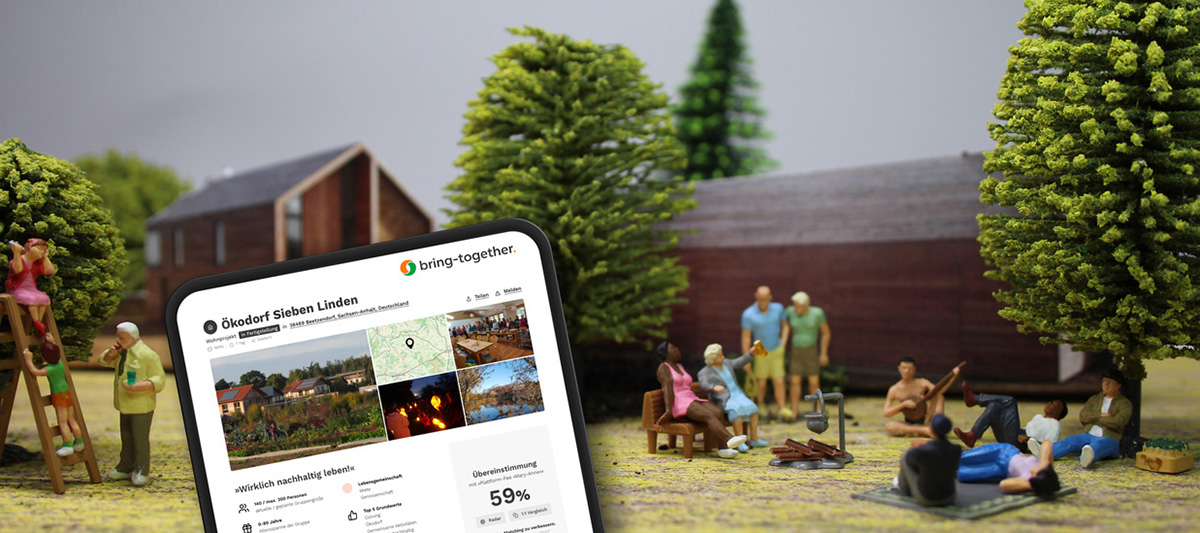
To many people, communal living arrangements sound like a nice idea at first. But there is often a long way to go between a good idea and a viable project.  (Credit: bring-together.de)

To many people, communal living arrangements sound like a nice idea at first. But there is often a long way to go between a good idea and a viable project. (Credit: bring-together.de)

Dieser Beitrag ist auch verfügbar auf: Deutsch

For many, communal forms of living sound like a great idea at first: Less loneliness, more togetherness, mutual support. In an ageing society, where living space is becoming scarcer and traditional family structures are becoming more fragile, such models almost seem like a logical answer to many problems at the same time. But there is often a long way between a good idea and a viable project.

We spoke to Karin Demming, co-founder of the matching platform bring-together.de, about why good matching is much more than just getting to know each other, why projects often fail not because of money but because of communication – and what people should pay particular attention to if they are seriously considering communal living in Germany or abroad.

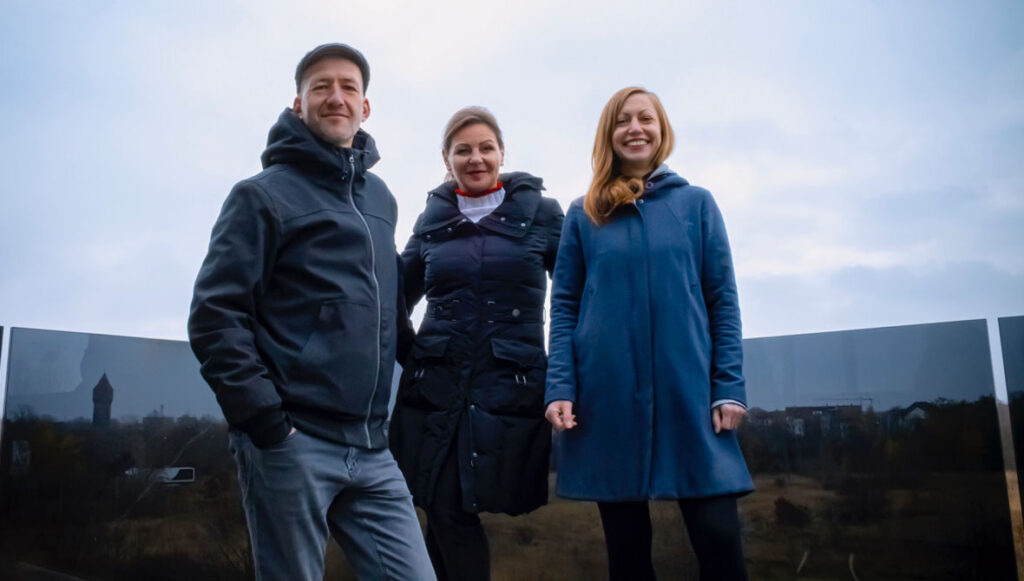
Interview partner Karin Demming (center) with her co-founders Christoph Wieseke and Mary-Anne Kockel (Credit: Alexandra Demming)
“More like Parship than Tinder”

The founders of bring-together have been bringing people together with suitable housing projects in Germany and abroad for many years. “The digital platform arose from the observation that for a long time there were many prejudices about communal living, but little guidance. The projects often took a very long time to develop, and many uncertainties delayed their foundation and construction. We first wrote about this in an online magazine and later developed it into a matching platform. Today, we provide support on several levels: With information, education, workshops and matching, and also with offers that help people to move from ego to we or to develop a shared vision as a group,” explains Karin Demming.

Header SBC English

Communal living does not simply mean that a few people move in together nicely. It’s about lifestyles, values, the need for closeness and distance, about everyday life. Demming’s comparison is both apt and clear: “We are more like Parship than Tinder.” It’s about long-term relationships and not quick decisions.

This is precisely why users of the bring-together.de platform have to fill out a lot of information when they create a profile. According to Demming, this is not only important for matching, but also for self-reflection: How much community do I actually want? How much space do I need? How much retreat do I need? What lifestyle suits me?

Why matching is more than just sympathy

So what makes a good match? It doesn’t mean that all residents have the same hobbies, they should tick in the same way – in other words, the basis should be right. Rather, the decisive factor is that “the canon of values should resonate in the same way”. The basic attitude to living together should be right. That’s why we talk on several levels: According to personal needs, lifestyles, diet, sense of space and the desired level of privacy. For some, a small room with lots of communal space is enough, while others need more privacy. It is precisely these differences that need to become apparent early on.

The need for this matching has risen sharply in recent years. There is a serious observation behind this: many people today are not only looking for a new form of housing, but also an alternative to loneliness, isolation and a life model that has focused on “higher, faster, further” for too long. According to Demming, communal living is not the complete solution to all social challenges – but for many, it is at least part of the solution. Demming: “Solidarity, neighborliness and mutual support are becoming much more important again.”

This also increased the need for professional support for these projects. In Demming’s view, there are often other reasons for projects going wrong than many would initially assume. “It usually fails because of communication and not because of finances,” she says. Money plays a role, of course, and it is often discussed openly far too late. At the beginning, there is often an enthusiastic core group, well-attended information events, a lot of attention and interest in the projects. And at some point, the moment comes when it becomes clear what each person has to contribute personally and financially in order to finance and implement the project. At this point, many interested parties suddenly drop out again. “This could often be avoided if the expectations and costs were transparent from the outset,” explains Demming.

What’s more, many people start communal living with a romantic idea. We’ll move in together, it’ll be fine. But wherever people live together, conflicts arise – and when several people come together, often not less, but more than in a couple relationship. This also applies when planning with friends: Especially when people have known each other for a long time, old dynamics, unspoken expectations and different ideas often come into play. What initially sounds like closeness and familiarity can later intensify conflicts.

Demming therefore advises getting support: “This can start with financing, continue with the development of a shared vision and extend to the question of how decisions should be made in a group in the first place. Some projects only seek professional support when the situation has already escalated. Good initial support and ongoing maintenance of the community are crucial to prevent these mistakes from occurring in the first place and to prevent smouldering conflicts from escalating.”

After all, it is not just a matter of resolving conflicts when they are already there, but of establishing structures that can intercept conflicts as early as possible. This is why many projects now work with external advice, mediation or regular process support right from the start. Community doesn’t just come from a good atmosphere, but also from clarity, commitment and the willingness to deal with difficult issues in good time. Support for communal forms of living is already available on the market in various areas. In addition to the possibility of matching, i.e. bringing like-minded people together, and process support, other professions have now also specialized in this form of housing – for example in the fields of financing, architecture and mediation.

Community also needs protection

Communal living thrives on openness, trust and the desire to do things together. But that is precisely why it also needs protection. Karin Demming advises people not to go into community projects with naive eyes – regardless of whether they are set up in their own country or abroad. Where community, the search for meaning and alternative ways of life become attractive, projects or groups emerge that you should look at carefully: “Make sure that they are not guru structures or other groups that have nothing to do with your world view.”

Where big promises are made, you should take a close look: Who is behind the project? How is it financed? Are there clear structures, comprehensible decisions and a sustainable organization? Are the financial flows comprehensible and the sums justified? Even if problematic projects are not the rule, they do exist. This makes it all the more important not to confuse romantic notions with reality. Demming: “It is important to examine projects, to have a clear stance and, if necessary, to reject concepts.”

In her view, good support is therefore not a luxury, but a quality criterion. Precisely because the scene is diverse – the projects range from spiritual to pragmatic, from very Christian to very alternative – attention needs to be paid to the nuances. Demming: “A platform like ours can never be responsible for everything. But we set standards, take a close look at the projects and can sensitize the community to quality.”


Waking up on the Côte d'Azur to the sound of the waves - who doesn't dream of that? But even the greatest longing is no substitute for good planning. (Credit: Anja Herberth)
Living abroad: longing alone is not enough

Things get particularly exciting when communal living comes together with the desire to live abroad. Living in Italy, Spain or France in old age sounds tempting. However, Karin Demming advises against simply following your desire. The decisive question is first of all: do I join an existing project – or do I want to initiate one myself? Anyone joining an existing project should pay particular attention to seriousness and check the background. If you want to set up your own project, you first need to take a very sober look at the legal and structural framework conditions in the country. Building law, ownership issues, financing – all this comes before the actual community issue. If you are not familiar with the country in question, you can easily be “ripped off”.

She also believes that inexpensive properties in the south are not a sure-fire success. They seem charming, but should be examined very carefully. A viable project abroad therefore not only needs people who fit together on a personal level, but also complementary skills within the group – for example in terms of law, construction, technology or organization. This is “half the battle”. What’s more, language and local integration are not a minor matter. Anyone who acts as a closed group and isolates themselves from their surroundings is quickly perceived as a foreign body. According to Demming, it is better to focus on contact, openness and integration.

Where the opportunities lie

Karin Demming sees great opportunities in communal living – especially for rural areas. In many places, there are vacancies, old farms, large houses and a noticeable demographic imbalance. Demming: “Community housing projects can create new vitality and new perspectives in regions. Such projects often have a beacon effect – especially when they involve local people.” She talks about ideas relating to old farms, solidarity farming and places where new forms of everyday life and support are emerging.

At the same time, this reaches its limits in places where the infrastructure has already largely disappeared: where there is no internet, no local supplier and no ATM, it becomes much more difficult to implement community projects – for example, when it comes to finding the right people.

Karin Demming explains that more and more people are now thinking about models such as “living for help” or living together in a single-family home. When children have moved out and a house becomes too big, new questions arise: Could you take someone in? A young family, a single parent, someone to help? From their point of view, such considerations are increasing, even if they are still accompanied by fears for many: Of disturbance and noise, of disorder, of the loss of habit.

Clarity before harmony

Perhaps the most important learning from this conversation is that communal living should neither be romanticized nor talked down to. It can make a lot possible: Less loneliness, more mutual support, new forms of everyday life – new forms of living are needed, especially in an ageing society. But it takes more than good intentions: It needs suitable people and the willingness to engage with others.

Want to find out more about shared living? Click here to go to the platform bring-together.de – Matching with housing projects at home and abroad

Anja Herberth
Author: Anja Herberth

Chefredakteurin

Previous Post

When rooms confuse: What a dementia-friendly home needs

Related Posts

The pension study clearly shows that Austrians are very worried when they think about their pension - 40 percent rate their own risk of poverty in old age as high. Credit: Alexander Caminada/Ageing without limits
Home & Living

Study on retirement provision 2026: The fear of the future

14. January 2026
Bruges, West Flanders: With its Dementievriendelijk Brugge project, this Belgian city in the northwest of the country is demonstrating what active inclusion and quality of life in urban areas can look like. Photo: Shutterstock
Dementia

Bruges shows how it’s done: A city becomes dementia-friendly

3. July 2025
Anyone who buys an apartment or house now in their old age—or plans to renovate—has the opportunity to think about tomorrow today. Credit: Shutterstock
Constructing & Renovating

How to recognize whether a house is suitable for old age

16. June 2025
Free assistance service for boarding, changing trains, and alighting (at around 600 stations in Germany and 150 stations in Austria). Registration at least 24 hours in advance (by telephone or online). Credit: OEBB/Harald Eisenberger
Home & Living

Accessibility on vacation: How to travel safely and comfortably

3. June 2025
Hitze muss kein Risiko sein – wenn man weiß, wie man sich schützt. Wer frühzeitig Vorkehrungen trifft, auf Warnzeichen achtet und bei Bedarf moderne Hilfsmittel einsetzt, kann den Sommer auch im Alter genießen.  Credit: Shutterstock
Constructing & Renovating

Stay cool: How older people can get through the summer safely

27. May 2025
Remote monitoring
FAQs

Care and support in rural areas: Between challenge and opportunity

26. May 2025

Leave a Reply Cancel reply

Your email address will not be published. Required fields are marked *

  • Deutsch
  • English

.

loader

Newsletter

What tools and concepts are available for senior living, care and support - and where can they be found? Our newsletter provides answers!

I accept the terms and conditions

Recent News

To many people, communal living arrangements sound like a nice idea at first. But there is often a long way to go between a good idea and a viable project.  (Credit: bring-together.de)

Living together, the right way: The power of effective matching

11. April 2026
Interview: Interior designer Melanie Mikalauskas, who works intensively on the interplay between dementia, perception and the living environment. Credit: Melanie Mikalauskas

When rooms confuse: What a dementia-friendly home needs

10. April 2026
Small solution, big impact: Ramps create more independence in everyday life. Credit: ALTEC

Ramp instead of retreat: How small solutions open up big paths

10. April 2026
Our interview partner: Austrian rheumatologist and immunologist Prof. Dr. Josef Smolen. He led the international working group of 50 experts to update the treatment recommendations for rheumatoid arthritis. (Credit: MedUni Vienna/feelimage)

New therapy recommendations for rheumatoid arthritis

10. April 2026
Interview: The two dementia experts Raphael Schönborn and Dr. Sara Silvaieh (Credits: left/Thomas Werchota, right/private)

Dementia up to 45% delayable: What prevention can achieve

27. March 2026
SmartBuildingsCompass

Made with care. For you.

Our research and interviews on safe and independent living in old age are written by our team with a great deal of energy and passion. We hope you enjoy reading them!

Do you need more information? If so, you are welcome to contact us at redaktion@sbc.co.at.

All rights reserved (2025).

  • Deutsch
  • English

Follow us

Instagram
  • Home
  • Subscribe to our newsletter
  • Glossary
  • About us
  • Contact
  • Marketing: Information for businesses
  • Download your 10 tips for independent, safe living in older age
  • Presentations & workshops for local authorities & nonprofits
  • Contact & Legal Notice
  • FAQs
  • Disclosure Statement
  • Nettiquette
  • Data protection
  • General Terms and Conditions (GTC)

© 2025 by owl lab e.U. Wir navigieren Wandel.

We use cookies on our website. Some of them are essential, while others help us improve this website and your experience.
Cookie SettingsAccept All
Manage consent

Privacy Overview

This website uses cookies to improve your experience while you navigate through the website. Out of these, the cookies that are categorized as necessary are stored on your browser as they are essential for the working of basic functionalities of the website. We also use third-party cookies that help us analyze and understand how you use this website. These cookies will be stored in your browser only with your consent. You also have the option to opt-out of these cookies. But opting out of some of these cookies may affect your browsing experience.
SAVE & ACCEPT
No Result
View All Result
  • Home
  • Housing
  • Everyday Aids & Technology
  • Care & Relief
  • Dementia & Health
  • Download: Housing Tips
  • Topic search
    • Dementia
    • Tools & Solutions
    • Constructing & Renovating
    • Crisis-resilient caregiving household
    • Stay healthy
  • Deutsch
  • English

© 2025 by owl lab e.U. Wir navigieren Wandel.

Safe & independent living in old age

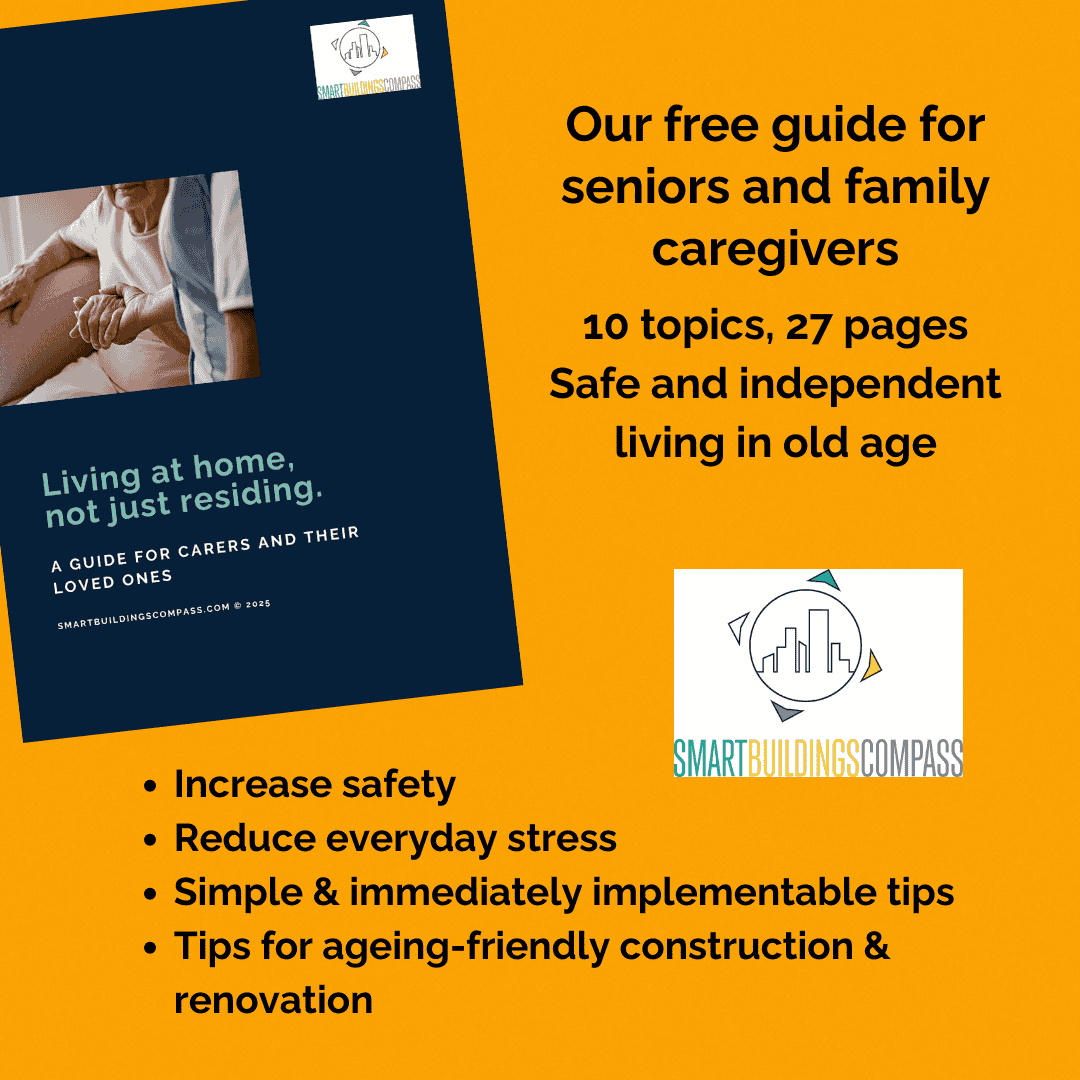
27 pages of tips for independent, safe living in old age—download now!

Download our PDF with tipps now!
loader

Email addresse*
I accept the privacy policy and agree that SmartBuildingsCompass.com may contact me beyond this request to send me its regular newsletter. I can unsubscribe at any time.

Sicher & selbstbestimmt Wohnen im Alter!

27 Seiten Tipps für sicheres, selbstbestimmtes Wohnen im Alter - jetzt downloaden!

Jetzt gleich downloaden!
loader

Email addresse*
I accept the privacy policy and agree that SmartBuildingsCompass.com may contact me beyond this request to send me its regular newsletter. I can unsubscribe at any time.