Dieser Beitrag ist auch verfügbar auf:
Deutsch
In our special feature on age-appropriate building and renovation, we ask experts what solutions are available on the market. In this interview, we focus on those affected and the relatives who support and care for them: what perspective should they take on a renovation project? After all, needs vary greatly from person to person, and it is important to be able to put them into words or even set them out in a plan.
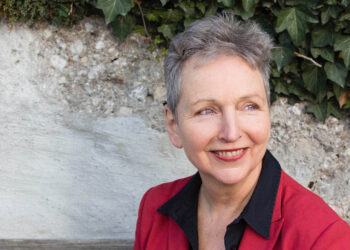
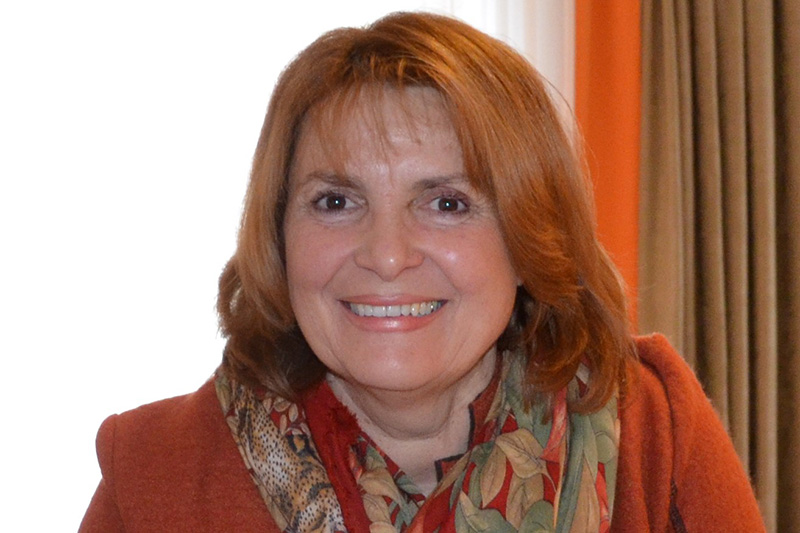
We spoke to Kornelia Grundmann: She is an architect and an expert in accessible construction. In this interview, she talks about her professional and personal experiences, as she relies on a wheelchair due to her multiple sclerosis.
We talk to her about the most important fundamental issue in refurbishments, asserting wishes, the limits of standards – and what she would see differently today.
SBC: Ms. Grundmann, how should those affected and their relatives approach a renovation project? Standards and trades only provide a framework – in reality, refurbishments, just like care situations, are very individual. How do you find the right approach?
Grundmann: First of all, you have to distinguish why you are renovating. Plan individually and with foresight instead of relying solely on standards.
If someone unexpectedly finds themselves in a care situation, many people are overwhelmed by the situation. Some rely on the trusted tradesman and say: “I need accessibility – please do it.” On the other hand, those who plan early and with foresight have time to gather information and make informed decisions.
Ask yourself the following questions: How do we want to live – today and in the future? Don’t ask: What does the norm say? And don’t assume: It’ll all work out somehow. Accessibility isn’t an off-the-shelf product. It is the result of individual movement patterns, habits, limitations, care plans and lifestyles. That’s why you should take everyday life very seriously – and involve family and carers right from the start.
A clearly defined requirements profile is important – almost like a mini business plan: What do I need? What do I want? What might change in the future? After all, anyone renovating today with certain limitations should take ageing into account too. An accident that happens early on is often exacerbated later by age-related ailments. What works today may not work tomorrow.
A holistic concept for accessible building is almost impossible to implement without expert advice. The various trades are closely interlinked – drywall construction, tiling, screeding, plumbing and glazing. Ultimately, mistakes can happen. The money you invest in good advice will save you hassle, time and additional costs.

At a glance:
- Clarify the initial situation: Distinguish between forward-looking planning and acute emergency situations (e.g. after an accident/operation).
- Prioritize individual needs: The focus should be on personal movement sequences and lifestyle, not on standard solutions.
- Create a requirements profile: Define current and future requirements in writing (similar to a project plan-first things first).
- Think long-term: Take into account that additional restrictions may arise in old age.
- Involve everyone involved: Family and caregivers must be integrated into the planning from the outset.
- Use specialist advice: A holistic concept requires expert knowledge due to the many interlocking trades.
SBC: How do I explain to a craftsman what I need – especially if he doesn’t know about accessibility or doesn’t take it seriously?
Grundmann: You have to know exactly what you want and communicate this clearly. A craftsman is not a doctor, so they are only guided by standards. Standards are recommendations, not laws. For a good individual solution, you can and sometimes have to deviate from them. If the standard has been contractually agreed, the client can waive it in writing.
It is important to bring all trades together at an early stage. A well thought-out solution can only be created if everyone has the same level of information. One example: the bathrooms we plan are flush with the floor and have no thresholds. Many tradespeople are not familiar with this and are initially skeptical. If you explain to them that it makes sense, they implement it – and often later adopt it as standard.
It is crucial that no trade undermines the work of another. A level-access shower, for example, is useless if a fixed glass element later blocks the movement area. Therefore: plan together, understand together.
SBC: Compliance with standards is mandatory for some subsidies. How should you proceed in this case?
Grundmann: With individual renovations, the focus is always on personal needs. If funding is strictly tied to standards, you should seek a discussion with the funding provider. There is usually understanding if you explain why a different solution is better for the person concerned. The important thing is to be open about it.
SBC: How has your view of spaces changed since you yourself became wheelchair-bound? What do you see today that you used to overlook?
Grundmann: There are three questions that always have priority for me today: How do I get there? How do I get in? And how do I get around the building?
I used to evaluate buildings first in terms of aesthetics and function. Today, I look first: Is the surrounding infrastructure easy for me to use? Are there parking spaces, public transport links? Can I get to the letterbox? Can I use the garbage cans in the basement? How is the signage – clear, unambiguous and legible for people with visual impairments? Is everything high-contrast enough for older people to find their way around?
Barriers don’t just affect me. When I go to a restaurant, a museum or a wedding, it affects my family and friends. Hotels lose business for weddings and anniversaries because they are not barrier-free. Family celebrations don’t need artificial barriers that exclude family members and friends. For the catering and hotel industry in particular, it is therefore fundamentally important to incorporate flexibility and accessibility into the concept.
What really concerns me in this context: How many buildings were planned with completely different considerations in mind – at a time when no one was thinking about an ageing society. You can see that. And that has to change. Because it’s about not excluding people from the outset.
Here, the conversion of the Hotel Pfandler into barrier-free hotel rooms is still in full swing ... (Credit: Das Pfandler)
... and here we see the final result at the wheelchair-friendly hotel "Das Pfandler" in Pertisau - Credit: Martin Raffeiner
SBC: What are the three most important renovation steps if someone is suddenly confined to a wheelchair? Which measures have the best cost-benefit ratio?
Grundmann: It can’t be reduced to just three points – but these basic questions always need to be clarified: How do I get there? How do I get in? How do I move around the building?
These basic questions must always be clarified: How do I get there? How do I get in? How do I move around the building?
In concrete terms, this means:
- Check door widths: At least 90 cm, many old buildings only have 70-80 cm
- Ensure movement areas: Can I get into the bedroom? Is the kitchen wheelchair-accessible and can everything be reached?
- Adapting the bathroom: Floor-level showers, suitable tap heights, wall reinforcements for grab rails – the bathroom is usually the most important room.
- Further points: Level transitions without thresholds in the house and to the outside. Is there an elevator or can it be retrofitted?
My principle is to plan according to the principles of universal design. What is usable for everyone works just as well for wheelchair users as it does for parents with baby carriages, people with plaster casts or older people with rollators. Universal design does not solve individual problems – it prevents them from the outset.
SBC: What is the most common mistake in age-appropriate refurbishment – even before the first tradesman arrives?
Grundmann: Don’t be tempted by vague marketing terms and inadequate detailed planning that later result in expensive corrections. Be careful with marketing phrases: Terms such as “low-barrier”, “barrier-reduced” or “senior-friendly” are not legally protected and are often meaningless terms of art. Classic planning errors:
- Doors that open inwards in bathrooms (risk of blockage in an emergency).
- Missing wall reinforcements for later installation of grab rails.
- Inaccessible fittings (especially from a sitting position).
- Avoidable door thresholds and edges.
Cost myth: Accessibility costs only a minimal surcharge if planned at an early stage. Subsequent conversion measures are significantly more expensive. And social relevance: In view of the ageing population, barrier-free living space is an economic necessity in order to maintain independence and avoid nursing home costs.
SBC: Do you have an example from a private refurbishment that makes you particularly proud?
Grundmann: Happy would be a better term in this case. The example of a girl with a muscle disease shows that true quality lies in long-term usability.
Planning ahead means:
- Think in terms of future scenarios: plan not only for the current situation (lifting a child), but also for the future (need for a ceiling lift in 10 years’ time).
- Avoid structural obstacles: Plan details such as door lintels so that lifts can glide between rooms without barriers.
- Lack of solutions from the construction industry: Where building contractors have no answer, specialized planning is needed.
Correct planning saves a lot of money years later and ensures quality of life in your familiar home. A refurbishment is successful if it works even with progressive physical limitations without the need for a new conversion.
SBC: What advice would you give to your younger female architect self?
Grundmann: You shouldn’t see accessibility as a niche issue, but as a fundamental task of good architecture for all people. My advice to the next generation is to consistently eliminate thresholds – every threshold is one barrier too many and should be avoided at all times. Empathy through observation: look closely at what users and residents really need instead of just planning according to standards. Flexibility as standard: rooms must be designed in such a way that they can adapt to the changing phases of life. And accessibility is not a special issue: accessibility affects everyone – whether through age, accident, illness or in the family – and should therefore be a natural part of every design. Architects should not create artificial barriers, but design living spaces that work for everyone.
Thank you very much for the interview!
About Kornelia Grundmann: As an architect, expert and wheelchair user, she combines specialist knowledge with a genuine user perspective (www.gabana.net).
Author: Anja Herberth
Chefredakteurin