SBC: What exactly are the biggest obstacles to living there in old age?
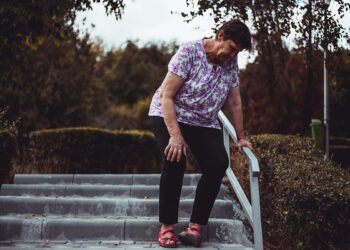
Planck: First and foremost, as I’ve already mentioned, is the large number of stairs due to the hillside location. Second are the narrow passageways, because doors here in Spain tend to be built rather small, and that often starts right at the entrance to the house. That’s a major problem for walkers and wheelchairs.
The windows are also usually small to keep the sun out and prevent heat from entering the houses in the first place. This, together with the dark wood typically used in Spanish homes, makes lighting a major consideration. Anyone who wants to go from the bedroom to the bathroom at night should be able to find their way without tripping or having to turn on all the lights.
I also see major challenges in the bathrooms. They’re often very cramped, and in most cases, the washing machine is also located there. Space and freedom of movement are very limited. Often, the bathtub is positioned right in front of the window. This is usually the only spot where the window could be installed, since the bathrooms are so small. In new construction, there’s also the incredible view you get from the bathtub. However, if you want to convert it into an accessible shower, the window is very inconveniently located and can only be reached by stepping into the shower. On top of that, if the shower is installed exactly where the bathtub used to be, there’s only a small entrance to the shower, making it inaccessible with a walker or even a wheelchair.
So, for me, the real challenge is to arrange the space so that the shower, sink, and toilet are within easy reach, while still leaving enough room to move around. In most cases, it’s simply not possible to meet the dimensions specified in the DIN standards.
SBC: That sounds as though accessibility wasn’t a consideration at all when these apartment complexes and houses were built.
There is no real awareness of accessible, senior-friendly construction and renovation, either among expats or in the real estate sector. Even today, I still walk into brand-new homes and see showers that you can only step into if you’re slim and very agile. Or staircases that are very narrow, just to make more room in the living room.
While there are some providers who talk about accessibility, they really mean home-magazine aesthetics and don’t have well-thought-out concepts. This leads to major challenges in old age.
SBC: That sounds like a lot of investment would be needed. Is renovating always worth it, or is selling sometimes the better decision?
Planck: That’s the first question that needs to be answered: Should we renovate or sell? If the house no longer works in old age and a renovation doesn’t make sense due to the necessary investment, then you might consider buying something more suitable. Or you can sell the house and move into a nursing home. That’s where I help with the decision-making process.
Once this has been decided and the choice is to renovate, the goal is to design the homes so that residents can live there as long as possible, even with home care. I generally recommend starting as early as possible and planning any renovation that’s already on the agenda to take later stages of life into account.
SBC: What role do emergency call systems and smart home technology play in your consultations?
Planck: That’s always a sticking point in the consultation. On the one hand, many clients feel like they’re being monitored by these technologies. On the other hand, they need help.
For me, it’s important to tailor smart home solutions precisely to the individual. The technology shouldn’t be complicated; it should run as independently as possible in the background and reliably call for help in an emergency. It’s also important to keep in mind that the emergency response and transport can take longer here, and it makes a difference whether someone has private or public health insurance. Many homes are located on steep slopes or a bit out of the way, with narrow driveways and stairs leading up to the entrance. People often lack detailed knowledge of the area, which is why a clearly documented address and access information are particularly important in the event of an emergency call. It’s also important that emergency responders know immediately upon arrival whether a patient has private insurance, so that the patient can be taken directly to the correct hospital without any detours.
SBC: How dependent are people in these rural areas on cars? How mobile are people on the Costa Blanca if they can no longer or no longer want to drive?
Planck: In most regions here, you need a car unless you live right in the city center. Especially in the hillside urbanizaciones, it’s almost impossible to get around without a car. Something that’s often overlooked: In Spain, a driver’s license must generally be renewed every five years starting at age 65. This involves a medical fitness exam that tests, among other things, vision, hearing, coordination, and reaction time. The specific deadlines that apply in each individual case depend on various factors, such as health status, place of residence, and the country where the driver’s license was issued.
There are far too few taxis, and here in Moraira, you can sometimes wait an hour in the evening until another one pulls up at the taxi stand. Don’t forget: We live out here in the countryside in towns with 10,000 or 20,000 residents, which host up to 200,000 people in the summer. I’m not aware of any discounted ride services for seniors here, like the subsidized municipal taxi schemes in Austria. They might exist in some cities. But of course, there are supermarkets that deliver to your home.
SBC: When you look ten years into the future, what should senior-friendly living on the Costa Blanca look like, and what can expats and their families do about it today?
I hope that in ten years, when buying or renovating a home, we’ll naturally consider what life in that home might look like later on. Senior-friendly housing should be designed so that you feel comfortable and can remain independent for as long as possible. On the Costa Blanca, this also includes the location: How will my daily life work when I can no longer drive?
Expatriates and their families can start thinking together today about what will be important down the road. Anyone who is planning to renovate the bathroom or modify the entrance to their home anyway should seek advice beforehand. Many aspects can be planned for in advance that would otherwise require further renovations later on. I wouldn’t advise anyone to remodel their entire house as a precaution. But when it comes to changes that are on the horizon, it’s worth thinking a step ahead.
Thank you very much for the interview!
Michael Planck worked for many years as a real estate agent in Germany; he has been living on Spain’s Costa Blanca for nearly six years. He works locally as a real estate agent and provides consulting services on senior-friendly renovations of houses and apartments. For more information, visit planck-immobilien.com



 Deutsch