Saturday, April 25, 2026
  • en English
  • de Deutsch
SmartBuildingsCompass
Header SBC English
  • Home
  • Housing
  • Everyday aids & Technology
  • Dementia & Health
  • Care & Relief
  • Download: Housing Tips
  • Topic search
    • Dementia
    • Tools & Solutions
    • Constructing & Renovating
    • Crisis-resilient caregiving household
    • Stay healthy
No Result
View All Result
  • Home
  • Housing
  • Everyday aids & Technology
  • Dementia & Health
  • Care & Relief
  • Download: Housing Tips
  • Topic search
    • Dementia
    • Tools & Solutions
    • Constructing & Renovating
    • Crisis-resilient caregiving household
    • Stay healthy
No Result
View All Result
SmartBuildingsCompass
No Result
View All Result
Home Constructing & Renovating

Risk of falling: Why prevention and adaptation of the living space should start early

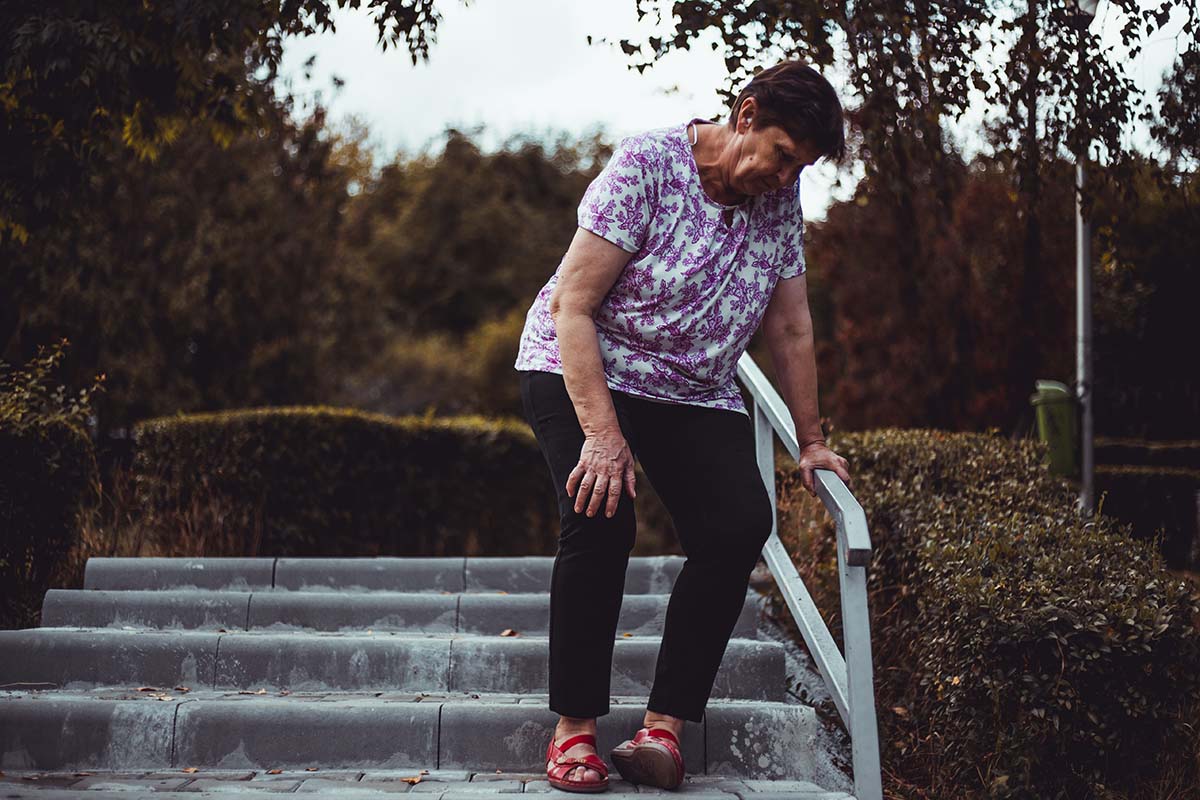
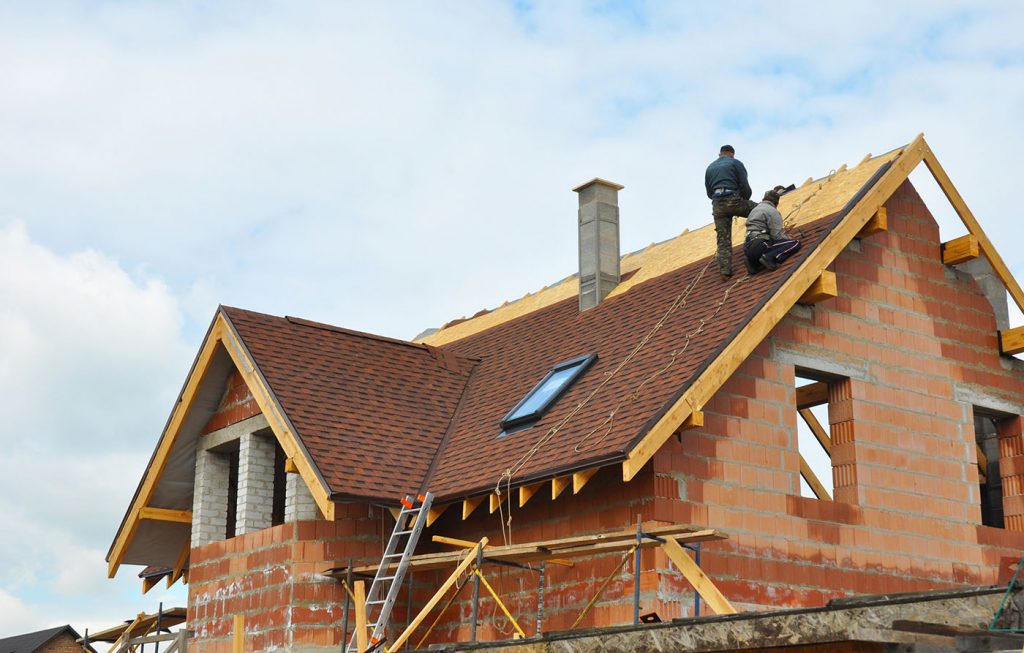
A fall can cost you your independence and fundamentally change your life at home: Around a quarter of falls are so serious that medical treatment is necessary. Credit: Shutterstock

A fall can cost you your independence and fundamentally change your life at home: Around a quarter of falls are so serious that medical treatment is necessary. Credit: Shutterstock

Dieser Beitrag ist auch verfügbar auf: Deutsch

After a fall, everyday life is often shaken. Things that were previously taken for granted can suddenly become unsafe: The way to the bathroom, the step outside the front door, getting up at night, shopping at the supermarket. A fall is therefore often far more than just a brief moment of shock. It can be the start of a development that costs independence and fundamentally changes life at home.

This is precisely why fall prevention should start much earlier and more comprehensively – long before the first accident occurs. It starts with exercise, strength and health, but also with the question of how safe and suitable a home and its surroundings are for everyday use. Thresholds, steps, a lack of handrails and seating, narrow corridors or unfavorable paths in the living environment are not trivialities. In old age, they can have a decisive influence on whether or not you can continue to move around safely at home and outside it.

We spoke to the two experts Angelika Kuhn and Roland Wallner from Hilfswerk Österreich about why falls are so often underestimated, what causes them and why prevention shouldn’t just start when something has already happened.

Header SBC English

Why falls in old age are not a marginal issue

In Austria, around 800,000 to 1 million falls occur each year among people over the age of 65. Around a quarter of these are serious enough to require medical treatment. Hip fractures are particularly serious: in 2024, they led to 9,800 cases of hospitalization. Many of these falls could have been avoided. At the same time, there is still a lack of reliable data in Austria to systematically record causes, consequences and effective countermeasures.

International examples such as Sweden show how expensive fall-related injuries can be – if applied to Austria, this would correspond to around 1.7 billion euros per year. There is also a problem that often receives too little attention in the public debate: A lack of aftercare and inadequately coordinated treatment plans. They often lead to revolving door effects, permanent restrictions and a permanent need for care.

A look at Germany also shows how big an issue this is: According to the federal government, 23.8% of people aged 65 and over had fallen at least once within twelve months in 2022 – that corresponds to around 4.4 million older people. This makes it clear that falls in old age are not a marginal issue for individual households, but one of the major health and social challenges in ageing societies.

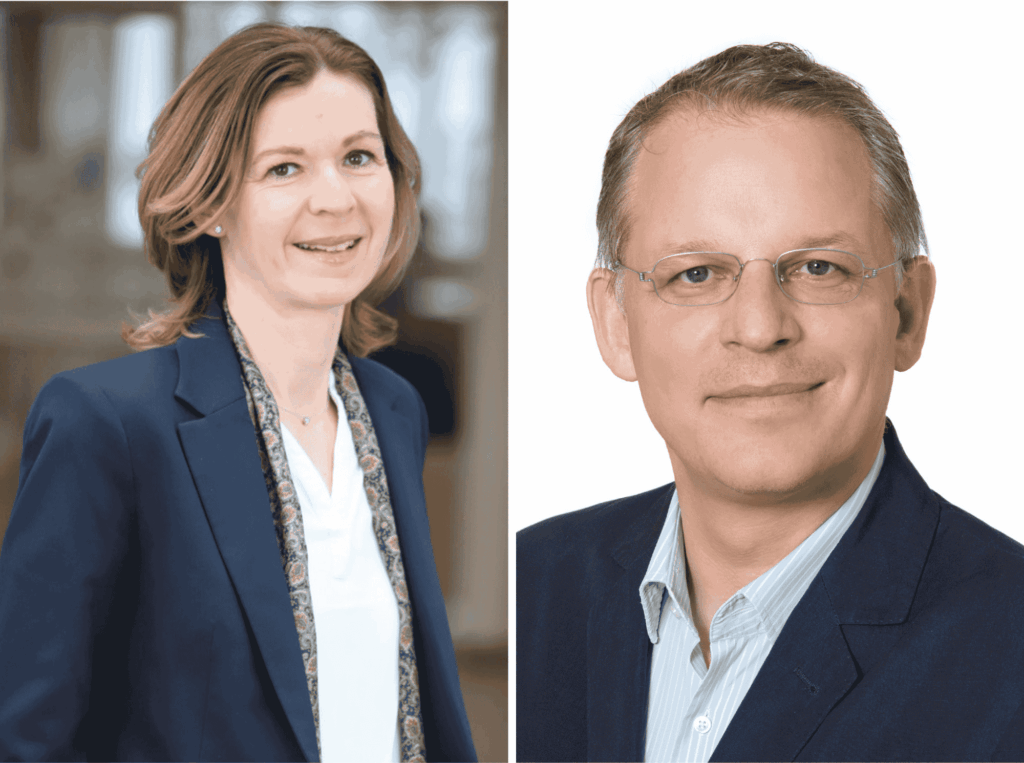
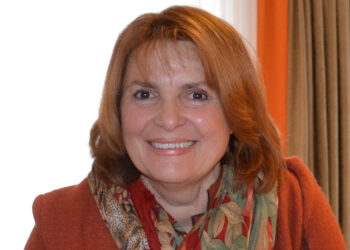
Our interview partners: Angelika Kuhn & Roland Wallner (Credits: left - Andreas Kuhn, right - Hilfswerk)
SBC: Ms. Kuhn, why do you think the issue of falls in old age is still underestimated?

Kuhn: Because many people first think of the accident itself when it comes to falls – in other words, the moment when someone falls. In practice, however, we see that the actual problem often starts much earlier and continues for a long time afterwards. A fall is often not just a single event, but part of a development.

People become more insecure, move less, lose strength and self-confidence. And if the right support is then lacking, this can very quickly lead to a permanent loss of independence. This is precisely why the issue is much bigger than it is often perceived.

SBC: In your opinion, what are the most common causes of falls?

Kuhn: It’s almost never just a single trigger. A very important point is mobility. Many people start thinking about how fit and stable they still are far too late. Balance, strength and mobility shouldn’t wait until you’re older to address them.

In addition, many older people have several illnesses at the same time and therefore take different medications. These medications can interact with each other, and a key factor here is dizziness. In our view, this is far too rarely systematically checked.

Then, of course, there are the external factors: carpets, steps, lack of handrails or poorly adapted living conditions. But you can’t just reduce it to the visible tripping hazards. There is also nutrition, which is often underestimated in the discussion. As we get older, we lose muscle mass and bone mass. This makes exercise and a good diet all the more important in order to maintain strength, stability and mobility for as long as possible. In my opinion, a lot could be improved here in particular.

We often talk about fall prevention, but far too rarely about the fact that obesity, lack of exercise and an unfavorable diet further increase the risk.

SBC: Does that mean that fall prevention doesn’t just start with adapting your home?

Kuhn: Exactly. Adapting living space is important, but it’s only one part. Prevention starts much earlier. Movement and mobility should actually be promoted long before the age of 65. But it’s also about very basic things: How do I get up from the floor? How confident am I when walking? How good is my balance? These skills should be trained and maintained much earlier. However, this awareness is often completely lacking.

SBC: Mr. Wallner, what specific role does the living environment play?

Wallner: Basically, most people naturally want to grow old at home – and that is a completely legitimate wish. The problem begins when we too rarely ask ourselves whether our home will still really suit us in the later stages of our lives. In our culture, it is not very common to see housing as something that can change with our lives. In other countries, it is much more normal to adapt your living space to changing life situations or to move on when your needs change. There is still far too little awareness of how housing needs change over the course of a person’s life. There is often a lack of planning and knowledge about what you actually need and when.

In contrast, we are often still dominated by the idea that you move into a property once and stay there until the end of your life if possible. This is not always wise. In some phases of life you need more space, for example with children, but later on you often need much less. Nevertheless, many people stay in apartments or houses that no longer suit their situation – not necessarily because they want to stay there, but because a change of residence is often financially unattractive.

Often, a smaller, more suitable home ends up being more expensive than the large property in which you are no longer in good hands. This creates a kind of housing trap: you remain in a home that may be financially viable, but is becoming increasingly difficult in everyday life and with regard to care or support.

We often build large houses for our families, but later we need much less space. Credit: Shutterstock
SBC: Can you give us a specific example of where the transition to more suitable forms of housing in old age works better than here?

Wallner: In countries like Denmark, people are thinking much more ahead. There, there are often age-appropriate apartments in the immediate living environment that are provided by the municipality – with wide doors, grab rails and suitable sanitary facilities. As long as it works well there, you can stay in this environment, and mobile services also come there.

If more support is needed, people move on to a more assisted form of living – preferably in a familiar environment. In other words, you stay in the region where you feel at home and where social relationships, friendships and family contacts continue. Only when this is no longer sufficient does a care home become an option. This form of gradual living is still far too little considered in our country.

SBC: Ms. Kuhn, what do you think should happen sooner?

Kuhn: From a care perspective, advice would be a very important point – and not just when the situation has already escalated. At the latest from the age of 75 or in any case from the time when care allowance is first applied for. In other words, not just giving money when there is already a need for care and support, but looking at things earlier: How does someone live? Where are the risks? What adjustments would make sense? Where could small changes make a big difference?

We have deliberately linked this to the care allowance because, although it is an important and sensible system in Austria, we believe that after more than three decades it urgently needs to be further developed and evaluated. The central problem is that support is currently usually only provided when care and support is already needed – not before. This is too late, especially from a preventative perspective. If we really want to prevent falls, excessive demands and loss of independence at an earlier stage, we need advice and support before the actual need for care arises.

SBC: If we broaden our view a little: Why is public space an essential part of fall prevention?

Kuhn: Because fall prevention doesn’t stop at the front door. The environment also plays a role: Are there benches? Is there shade? Are the sidewalks pleasant? Are the paths wide enough for a rollator? Is it easy to get into buses, doctors’ surgeries or stores? If people go out less and less for such reasons, this accelerates physical deterioration. This is why the issue is not just one for indoor spaces, but also for public spaces.

Wallner: The extent to which people walk depends not only on their physical condition, but also on how attractive and accessible their surroundings are. The traffic planner Hermann Knoflacher showed back in the 1980s how strongly the living environment influences the willingness to actually walk. In an unattractive environment, this willingness decreases very quickly – sometimes after just a few hundred meters. In contrast, it increases significantly in an attractive, lively environment.

What does that mean in concrete terms? People are more likely to walk if a street space offers something: If there is something to see, if there are trees, open facades, light, life and quality of stay. In contrast, a monotonous, forbidding environment with no passage, no seating and no orientation is discouraging. However, this is precisely the kind of space that is often created: fenced-in housing estates, paths that are only oriented towards cars, steps that are too high, a lack of benches or too little shade.

Stores are also often too narrow, or waiting rooms and restaurants offer armchairs without armrests. Even a short walk to the post office, the doctor or breakfast with other people becomes an obstacle. The result is often withdrawal – and thus an even faster physical decline.

SBC: What do relatives often experience in this context?

Kuhn: Very often, relatives find that they slip into a supporting role much earlier than expected. They first notice minor insecurities, then perhaps a first fall, then another. And at some point it becomes clear that it’s no longer enough to simply look after them. Then it’s suddenly all about doctor’s appointments, medication, adapting your living space, organization and aftercare.

Relatives often have to be extremely supportive because many of those affected are no longer able to coordinate these steps themselves. And if no one makes proper plans after a stay in hospital, a lot is left up to the families. This is often overwhelming.

SBC: If a fall has already occurred, what is particularly important during rehabilitation and the transition home?

Kuhn: Make sure you provide care that lasts until you can live independently again. As a relative, you often really have to be behind this. A central problem today is often the deep gap between hospital and home. Resources are scarce in acute hospitals, so the focus is on short stays. This often leaves too little time for careful transition planning. At the same time, mobile services, therapy services or rehabilitation places are not always available quickly – sometimes months pass before the necessary support actually begins. This is particularly problematic for older people, as their condition can deteriorate significantly in just a few weeks. Those who are not mobilized quickly after a fall often lose strength, independence and safety very quickly.

This makes it all the more important to provide care that does not simply dismiss people after a fall, but supports them until they are as stable and safe as possible in their everyday lives. Those with sufficient financial resources can bridge some gaps with private services – for example with mobile therapy or additional support at home. Those who cannot do this are often left to fend for themselves. This is precisely why we need stronger regional networks, more mobile therapy services and significantly better transitions between hospital, rehabilitation and everyday life.

This is not only humane, but also makes economic sense: those who can continue to live at home with targeted support usually incur significantly lower costs in the long term than someone who has to move permanently to an inpatient facility due to a lack of transitions.

SBC: To summarize: Where do you see the biggest misconception in the public discussion?

Kuhn: That prevention is often reduced to a very narrow area – according to the motto: more personal responsibility, more healthy lifestyle, then it will all work out. It’s not that simple. Of course, exercise and diet are important. But equally important are well-coordinated medication, good aftercare and coordinated care, suitable living conditions and an environment that makes exercise possible in the first place.

And if we really want to take prevention seriously, then we need to think about it more broadly. Otherwise, we only react when something has already happened – and then many things are much more difficult and expensive to repair.

SBC: What would you like to say to our readers at the end?

Kuhn: Perhaps above all this thought: a fall is often not just bad luck. It is very often a warning sign. For a lack of mobility, for side effects of medication, for an unsuitable living environment or for gaps in care.

If you take this seriously, you start looking earlier – not just after the femoral neck fracture, but when unsteadiness, dizziness or stumbling begin.

Wallner: A place doesn’t become attractive just by repaving the main square or putting up a few pretty lanterns. Rather, the decisive factor is whether a place actually functions in everyday life: whether there are social encounters, short distances, amenities, quality of life and offers that people can actually use. A center does not live from its surface, but from the fact that life actually takes place there.

This shows a fundamental problem with many places: they don’t just function badly for older people, but often for people in general. These weaknesses only become more visible and more serious with age. Because what younger people can still compensate for with a car and greater mobility quickly becomes a daily hurdle later on. Or to put it another way: if a place doesn’t work well for younger people, it usually doesn’t work at all for older people.

Thank you for the interview!

Click here to go to the guide (only in German)

Click here to go to the web portal “Stay mobile – live independently” (only in German)

Anja Herberth
Author: Anja Herberth

Chefredakteurin

Tags: Konzepte Zuhause
Previous Post

What makes a bathroom age-friendly and safer

Next Post

Building and renovating for old age: What really makes a difference

Related Posts

The bathroom is one of the most dangerous rooms in the home - and also one of the most important. Hardly any other room has such a decisive influence on whether you can live independently at home. One possible solution: a shower tray with a side door for easy access. Credit: HSK Duschkabinenbau KG
Constructing & Renovating

What makes a bathroom age-friendly and safer

24. April 2026
Our interview partner: Axel Albrecht, Managing Director of Assisted Home Solutions. Credit: Assisted Home Solutions
Constructing & Renovating

Care at home: What new solutions are needed, Mr. Albrecht?

23. April 2026
Interview: Interior designer Melanie Mikalauskas, who works intensively on the interplay between dementia, perception and the living environment. Credit: Melanie Mikalauskas
Constructing & Renovating

When rooms confuse: What a dementia-friendly home needs

10. April 2026
Small solution, big impact: Ramps create more independence in everyday life. Credit: ALTEC
Constructing & Renovating

Ramp instead of retreat: How small solutions open up big paths

10. April 2026
Assistance solutions are very unobtrusive and can be seamlessly integrated into a home. Credit: WOQUAZ Weiterstadt
Special Feature: Housing & Renovation

More safety, more overview: Why digital assistance systems are becoming relevant now

22. March 2026
Living spaces are more than just a place to live - they determine how independently, safely and comfortably we can live our everyday lives in old age. Paying attention to a suitable living environment early on lays the foundation for a healthy life at home - even in old age. Credit. Shutterstock
Constructing & Renovating

Moving home in old age: What is important for a new home

22. March 2026
Next Post

Building and renovating for old age: What really makes a difference

Leave a Reply Cancel reply

Your email address will not be published. Required fields are marked *

  • Deutsch
  • English

.

loader

Newsletter

What tools and concepts are available for senior living, care and support - and where can they be found? Our newsletter provides answers!

I accept the terms and conditions

Recent News

Our interview partner: the renowned neurologist Prof. Werner Poewe (Credit: Merz Pharma Austria GmbH/APA-Fotoservice/Martin Hörmandinger)

Parkinson’s: What early detection, therapy and research are achieving today

25. April 2026

Building and renovating for old age: What really makes a difference

25. April 2026
A fall can cost you your independence and fundamentally change your life at home: Around a quarter of falls are so serious that medical treatment is necessary. Credit: Shutterstock

Risk of falling: Why prevention and adaptation of the living space should start early

25. April 2026
The bathroom is one of the most dangerous rooms in the home - and also one of the most important. Hardly any other room has such a decisive influence on whether you can live independently at home. One possible solution: a shower tray with a side door for easy access. Credit: HSK Duschkabinenbau KG

What makes a bathroom age-friendly and safer

24. April 2026
Our interview partner: Axel Albrecht, Managing Director of Assisted Home Solutions. Credit: Assisted Home Solutions

Care at home: What new solutions are needed, Mr. Albrecht?

23. April 2026
SmartBuildingsCompass

Made with care. For you.

Our research and interviews on safe and independent living in old age are written by our team with a great deal of energy and passion. We hope you enjoy reading them!

Do you need more information? If so, you are welcome to contact us at redaktion@sbc.co.at.

All rights reserved (2025).

  • Deutsch
  • English

Follow us

Instagram
  • Home
  • Subscribe to our newsletter
  • Glossary
  • About us
  • Contact
  • Marketing: Information for businesses
  • Download your 10 tips for independent, safe living in older age
  • Presentations & workshops for local authorities & nonprofits
  • Contact & Legal Notice
  • FAQs
  • Disclosure Statement
  • Nettiquette
  • Data protection
  • General Terms and Conditions (GTC)

© 2025 by owl lab e.U. Wir navigieren Wandel.

We use cookies on our website. Some of them are essential, while others help us improve this website and your experience.
Cookie SettingsAccept All
Manage consent

Privacy Overview

This website uses cookies to improve your experience while you navigate through the website. Out of these, the cookies that are categorized as necessary are stored on your browser as they are essential for the working of basic functionalities of the website. We also use third-party cookies that help us analyze and understand how you use this website. These cookies will be stored in your browser only with your consent. You also have the option to opt-out of these cookies. But opting out of some of these cookies may affect your browsing experience.
SAVE & ACCEPT
No Result
View All Result
  • Home
  • Housing
  • Everyday Aids & Technology
  • Care & Relief
  • Dementia & Health
  • Download: Housing Tips
  • Topic search
    • Dementia
    • Tools & Solutions
    • Constructing & Renovating
    • Crisis-resilient caregiving household
    • Stay healthy
  • Deutsch
  • English

© 2025 by owl lab e.U. Wir navigieren Wandel.

Safe & independent living in old age

27 pages of tips for independent, safe living in old age—download now!

Download our PDF with tipps now!
loader

Email addresse*
I accept the privacy policy and agree that SmartBuildingsCompass.com may contact me beyond this request to send me its regular newsletter. I can unsubscribe at any time.

Sicher & selbstbestimmt Wohnen im Alter!

27 Seiten Tipps für sicheres, selbstbestimmtes Wohnen im Alter - jetzt downloaden!

Jetzt gleich downloaden!
loader

Email addresse*
I accept the privacy policy and agree that SmartBuildingsCompass.com may contact me beyond this request to send me its regular newsletter. I can unsubscribe at any time.