Dieser Beitrag ist auch verfügbar auf:
Deutsch
When it comes to age-friendly renovations, most people first think of the shower or the flooring. But the toilet is the place where independence and dignity are most directly intertwined, and where caregiving situations arise that deeply intrude on privacy. The solutions available on the market today are technically advanced, aesthetically pleasing—and often easier to install than you might think.
We spoke to Christian Babinetz, Sales Manager at LAUFEN Austria, about what is important when choosing a toilet, what role shower toilets play in care – and why an empty pipe can make a big difference later on.
SBC: Mr. Babinetz, what contribution can shower toilets make to care and support?
Babinetz: Bidet toilets play an important role because they allow independent and hygienic personal hygiene in old age, thereby enhancing comfort and independence in daily life. They are an indispensable part of modern, senior-friendly bathrooms. Our shower toilets are designed for very simple and intuitive usability, which is practical for people of all ages.
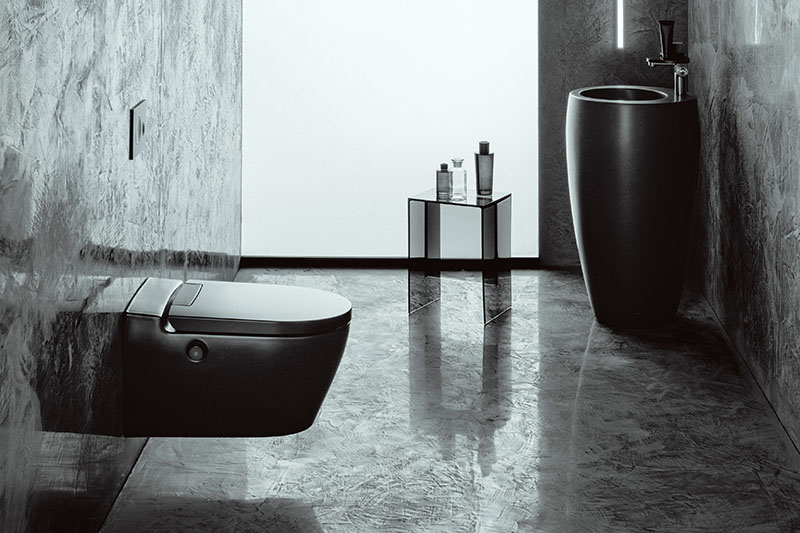
RIVA shower toilet from LAUFEN (Credit: LAUFEN)
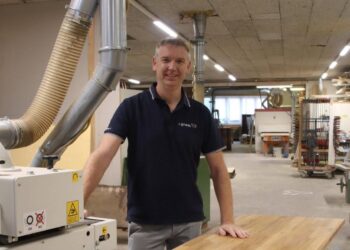
Our interview partner: Christian Babinetz, Sales Manager at LAUFEN (Credit: LAUFEN)
SBC: What factors should be considered when making a selection?
Babinetz: There is a wide selection on the market for different requirements. Multi-stage hygiene concepts range from a thorough shower and hairdryer function, to self-cleaning after each use, simple cleaning and automated descaling. These are also available with a raised seat with all the functions of a modern shower toilet.
For renovations where a complete conversion is not possible, there are also retrofittable solutions. They can be installed on an existing toilet and bring the essential functions of a shower toilet into the bathroom without the need for a new installation. We call these solutions CLEANET SIT.
SBC: What is the most common mistake when choosing a toilet for an age-friendly bathroom?
Babinetz: I recommend paying attention to the seat height. Raising the seat by five centimeters makes a big difference for people with limited mobility: The sitting position is more upright and comfortable than on conventional toilets. And since the knee angle is about 90 degrees with the seat raised, standing up and sitting down is also much more comfortable and easier.
Since the seat on our products extends fully with the ceramic, the difference in height is not noticeable to the eye. These raised seats are also available for our shower toilets. As a result, the bathroom does not have a hospital-like feel, but elegantly combines function with design. These solutions can also be used in bathroom renovations, as their standard installation dimensions allow them to fit existing wall connections and are compatible with all common in-wall flush tanks.
SBC: What do I need to consider technically when installing a shower toilet?
Babinetz: The most common obstacle is the electrical setup. A shower toilet requires a power connection—and older bathrooms often don’t have one. So if you’re currently renovating, you should definitely plan for a power outlet for the shower toilet, even if you intend to install it later.
Water isn’t a problem: The systems are supplied with water via the toilet tank connection, but the electrical supply must be planned in advance.
Thank you for the interview!
More information at LAUFEN Austria – www.laufen.co.at | You can view the solutions in the LAUFEN space: Vienna, 1st district
Author: Anja Herberth
Chefredakteurin