Dieser Beitrag ist auch verfügbar auf:
Deutsch
When people talk about the future of care, it is almost always about the same bottlenecks: too few staff, too little time, too little money. At the same time, the pressure in the home environment is increasing. In Austria and Germany, around 85% of people in need of care are already cared for at home. At the same time, there are likely to be significantly fewer relatives who can take on this task by 2030. One of the reasons for this is that the next generation is smaller, families are living differently today and many women are working. In addition, there is a growing shortage of skilled workers while the need for care is increasing.
This is precisely why the question of how support in everyday life can be organized earlier, more reliably and more intelligently – and how both caregiving relatives and professional services can be effectively relieved. In this article, we take a look at what digital, AI-supported assistance systems can already do today.
Why new concepts are needed
To clarify: these systems do not replace care or human attention. However, they can help where the greatest risks often arise in everyday life: When changes in health are noticed too late, when help does not arrive in time after a fall or when relatives constantly have the feeling that they have to keep an eye on everything at the same time.
This is precisely where their strength lies: not in replacing relationships, but in better recognizing, forwarding and classifying information. They record data, recognize patterns and developments and forward relevant information to the right people. These can be relatives, care services, who can plan better as a result, or, in an emergency, the neighborhood, rescue services or other support structures.
This is particularly relevant where conventional solutions reach their limits. Although traditional home emergency call bracelets or alarm clocks are well known, they only solve many problems to a limited extent. They often provide too little context, cause false alarms and reach their limits in practice – also because a significant proportion of alarms are not triggered by medical emergencies, but also by loneliness, insecurity or everyday problems such as heating or electrical faults. Good assistance solutions can provide significantly more background information here and thus help to better assess situations.
What’s more: Emergency call bracelets or alarm watches need to be charged or maintained regularly and are not always worn consistently, especially by very elderly people. Modern assistance systems therefore rely more on inconspicuous sensors in the living environment, on networked devices and on systems that not only detect a single event, but also recognize changes in context.
The basic idea behind it is simple: a single sensor usually only knows that something has moved or a door has been opened. Only when several pieces of information are combined does a useful overall picture emerge. AI links this data and can thus recognize patterns, deviations and developments.
In which situations assistance tools unfold their benefits
The capabilities of such systems are now much broader than many people assume. Sensor technology and analysis platforms have developed considerably in recent years. Good solutions on the market today can do the following, among other things:
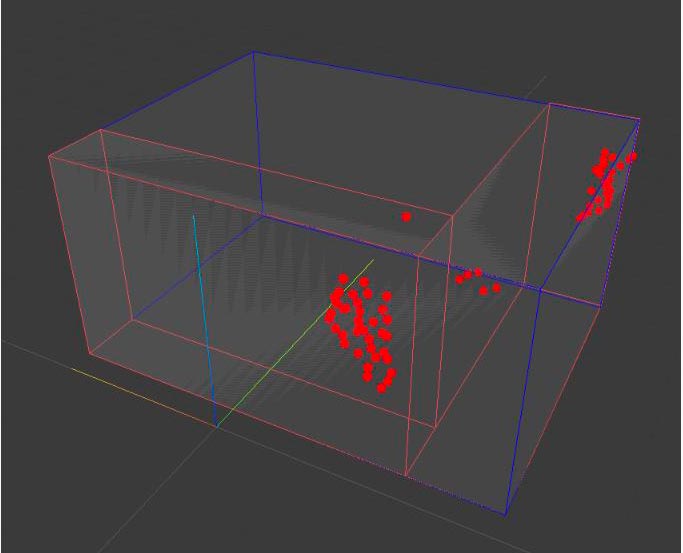
- Recognize acute emergencies quickly. Falls and other critical situations can be automatically detected. If the person in question does not respond, an alarm chain can be triggered after a short time—initially to family members, neighbors, or emergency services. Some systems now rely solely on radar sensors, rather than image or video footage. With these systems, only point clouds are analyzed today (see image above). This ensures that privacy and personal space are protected.
- Customize warnings individually. Systems can be customized to meet the specific health needs of the person being cared for. They track presence and absence, detect whether someone is in bed or has gotten up, and can thus provide important insights into issues such as the tendency to wander among dementia patients or nighttime restlessness.
- Include vital data. Depending on the solution, data such as respiration, heart rate or measured values such as blood sugar can be integrated and merged with other information.
- Making changes visible in everyday life. Especially as people age, problems often don’t arise suddenly but give warning signs: Restless nights, changes in movement patterns, getting up more frequently, increasing unsteadiness, or a decline in daily skills. Digital systems can help identify such developments earlier. This not only benefits those affected, as it allows for better management of any deterioration in their condition. It also keeps family members and care providers better informed, enabling them to provide more effective support. Furthermore, this can be relevant for documentation purposes—for example, to demonstrate eligibility for a specific care level or grade.
- Recognize recurring stresses. Some systems can also alert users to certain factors after prolonged use, such as excessive heat or other environmental factors like pollen counts, which can exacerbate symptoms. This makes it possible to better prepare for these challenges.
- Improve building and everyday safety. Some assistive solutions can be integrated with other sensors and control systems—such as stove shut-off, shading, fire and burglar alarms, air quality monitoring, or heating controls. As a result, their usefulness goes far beyond that of a traditional emergency call.
- Better networking of local support. Digital assistance systems don’t stop at the front door. Good solutions can be combined with coordination tools, voluntary help networks and regional offers. This creates platforms that bring together people seeking help, organizations and volunteers.
Many everyday support needs do not require highly specialized care. It is often a matter of companionship, orientation, little help, social integration or quickly organized relief. If such tasks are better coordinated, this not only relieves the burden on relatives, but also on care services and emergency call structures, which are already under heavy strain in many places.
It makes sense to deploy professional care staff where their skills are actually needed. Other tasks can – if well organized – be taken over by support staff, technology or support services. There are now also platforms that bring together support needs and available help in the vicinity. In our interview with Christine Freymuth, an expert in community-oriented work with senior citizens, we explain what caring communities are..
Another advance: newer generations of sensors and local processing hubs can evaluate data directly in the home. You don’t have to access a cloud first, making them more secure in terms of data protection and able to react much faster in critical situations.
New solutions for new challenges
Digital assistance systems will not solve the structural problems in care. However, they can be an important building block. Assistance and e-healthcare solutions are already more widespread in countries such as Australia, Canada and the USA – partly because care has to be organized over long distances there. If the nearest hospital is several hundred kilometers away, new solutions are needed. The health data of diabetics and heart patients, for example, can be monitored remotely, deviations can be detected early and necessary reactions can be initiated more quickly.
Such systems can make changes visible earlier, point out critical situations and create security before excessive demands escalate. Solutions that learn routines and detect deviations can, for example, provide indications of deteriorating mobility or changes in behavior that point to cognitive problems. This can make a significant difference, especially for people with the onset of dementia, as it enables them to react earlier. What’s more, people with dementia fall more often – making it all the more important that help can be organized quickly.
When selecting a system, it is important not to fall into the old technology trap. The decisive factor is not what a system can theoretically do, but whether it is low-threshold, suitable for everyday use and useful in a specific application. Technology must adapt to people’s lives – not the other way around.
And something else is key: digital solutions can improve information, coordination and access, but they are a tool and not a caring community. They can facilitate communication, make services more visible and help to better bring together support needs and assistance. However, they cannot make up for a lack of responsibilities, a lack of funding or a weak local infrastructure.
This is precisely the crucial point in the debate: AI is not an end in itself. It only becomes powerful when it is embedded in sustainable structures. This includes the connection to outpatient services as well as the question of who responds in an emergency, who classifies information and how people who are not able to cope well with technology themselves are supported. So it’s not just sensors and software that are needed, but also clear contact persons, good coordination and reliable local support. Otherwise, even the best technology will only produce new data – but not better care.
And perhaps this is the most important classification of all: AI-supported assistance systems make sense when they empower people. If they do not create additional hurdles, but make everyday life easier. If they don’t want to replace relationships, but help to ensure that help arrives earlier, the burden is reduced and independence is maintained for longer. This is precisely when they can become part of the answer – not to everything, but to some of the very specific issues that will concern us in the coming years.
Author: Anja Herberth
Chefredakteurin